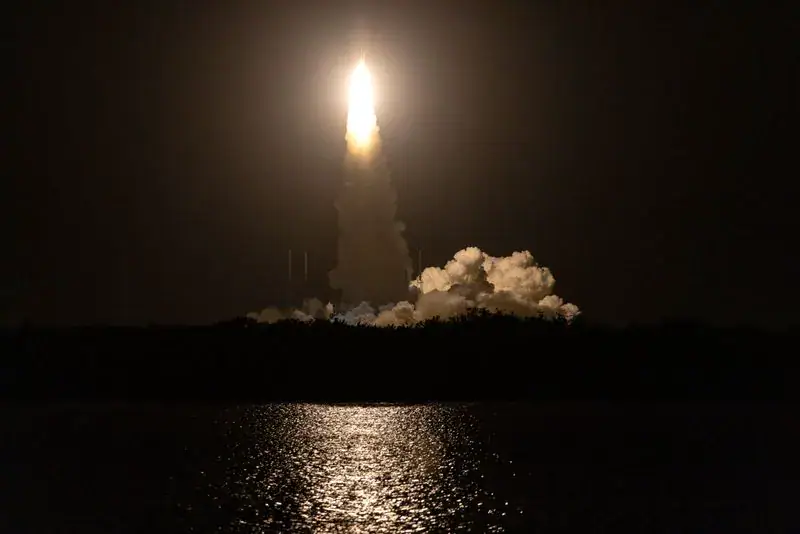
A Vulcan rocket owned by United Launch Alliance, a joint venture between Boeing and Lockheed Martin, failed on Sunday, November 15, shortly after liftoff from Florida's Cape Canaveral Space Force Station. The rocket, carrying 40 satellites from Amazon's Leo internet network, destroyed its payload due to an anomaly 10 minutes into the flight. This was the first mission failure for the two-decade-old company.
The cause of the failure is not yet clear, and United Launch Alliance stated that they do not have specific data to understand what occurred. The company confirmed that the Vulcan vehicle suffered an anomaly and failed to deliver the Amazon mission to orbit. This failure is expected to lead to a lengthy technical investigation, keeping the rocket off the market for months and potentially deepening a US launch bottleneck.
The failed mission, named LV-01, was Vulcan's fifth since its debut in 2024 and the first in nine months. The rocket had been grounded due to separate technical investigations into its solid rocket side boosters and core BE-4 engines, supplied by Blue Origin, founded by Amazon's Jeff Bezos. Blue Origin is working with United Launch Alliance to investigate Sunday's failure.
The failure is a setback for Amazon as it races to deploy satellites for its Leo internet network, rivaling SpaceX's Starlink. Amazon has been relying on third-party launch providers, which have experienced groundings and failures. Since 2025, 398 Leo satellites have been deployed across 14 launches, about 12% of the 3,236 satellites needed for global service coverage.
United Launch Alliance was formed in 2006 from a merger of Boeing's Delta rocket program and Lockheed Martin's Atlas rocket program. The company had previously enjoyed a 100% mission success record. The failure is expected to impact Amazon's plans to start initial internet service this year and may affect the company's ability to rival SpaceX's vast Starlink network.
SpaceX's Falcon 9, the world's most active rocket, is no longer accepting bookings, and its looming retirement may exacerbate the US launch bottleneck. Amazon stated that there is risk with any launch, especially inaugural missions like LV-01, and that they believe United Launch Alliance will learn from this mission and deliver on their long-term plans for Vulcan.
The investigation into the failure will likely involve Blue Origin, which supplied the BE-4 engines for the Vulcan rocket. The BE-4 engine had a launchpad explosion in May, and its investigation determined the engine was the cause. United Launch Alliance and Blue Origin will work together to determine the cause of Sunday's failure and implement corrective actions.
Key points
- United Launch Alliance's Vulcan rocket failed mid-flight, destroying 40 Amazon satellites due to an anomaly 10 minutes after liftoff.
- The failure is expected to lead to a lengthy technical investigation, keeping the rocket off the market for months and potentially deepening a US launch bottleneck.
- The setback may impact Amazon's plans to start initial internet service this year and rival SpaceX's vast Starlink network.