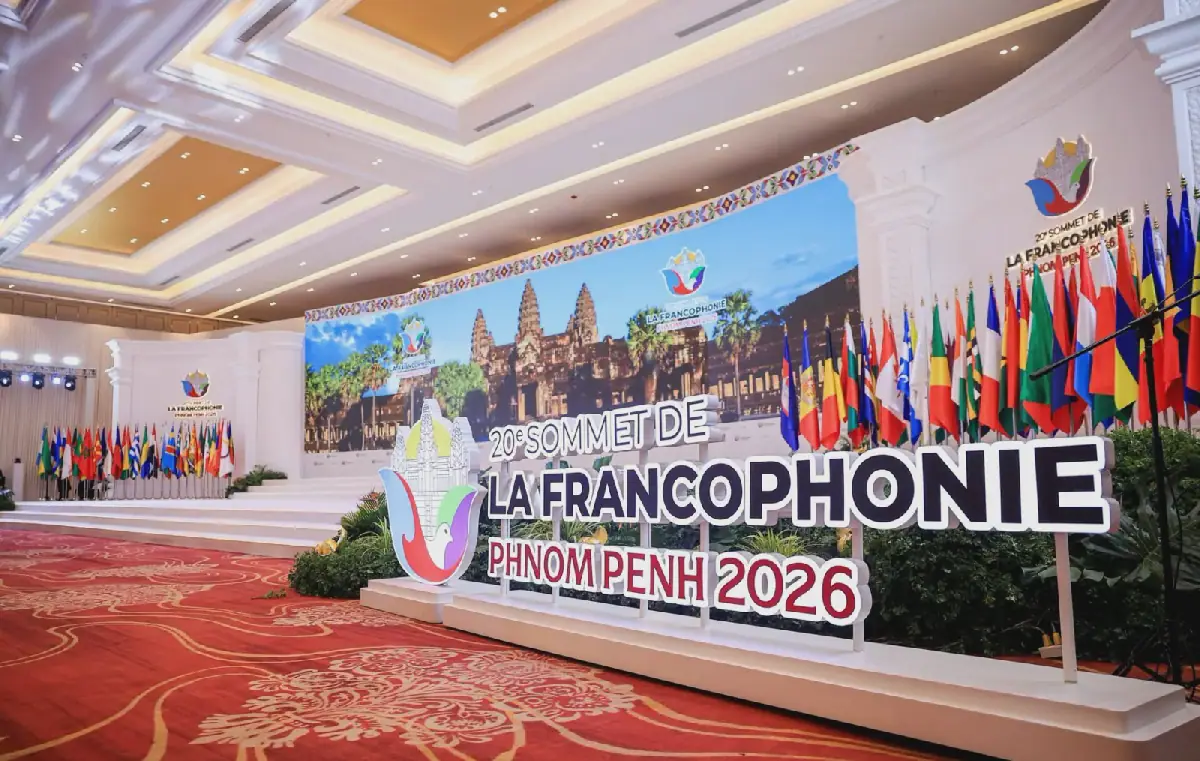
The 20th Francophonie Summit, held in Phnom Penh, Cambodia, brought together leaders from 90 states and governments to promote peace, dialogue, and shared prosperity. French President Emmanuel Macron emphasized the importance of the French language in fostering dialogue and mediation, calling it an instrument of rapprochement among peoples. He urged member states to translate their solidarity into concrete commitments, respecting international law and the UN Charter.
Cambodian Prime Minister Samdech Hun Manet highlighted the historical roots of the Francophonie, born in Africa in 1970, and its transcontinental dimension. He proposed three key areas of action: preventing conflicts, preparing future generations for technological changes, and promoting shared prosperity. Hun Manet also suggested establishing a Francophone network for conflict prevention and mediation, as well as a program for training in artificial intelligence.
The Prime Minister of Cambodia announced plans to create a national center for artificial intelligence and data science, in collaboration with the French Development Agency. He also revealed that his country has requested the establishment of a Francophone economic cooperation office in Phnom Penh, aiming to facilitate investments and bring together Francophone and Asian businesses.
Louise Mushikiwabo, Secretary General of the International Organization of La Francophonie (OIF), defended the organization's relevance in the international landscape, citing its presence on five continents. She highlighted the significance of the Phnom Penh summit, marking a return to Asia nearly 30 years after the Hanoi summit in 1997.
The choice of Phnom Penh as the summit location is seen as a strategic move, demonstrating the Francophonie's global vocation. Mushikiwabo also emphasized the transformations undertaken by the OIF since 2019, including a process of diagnosis, reform, and implementation, which she believes have yielded tangible results.
However, behind the scenes, the selection of the next secretary general has sparked controversy, with Rwandan Louise Mushikiwabo seeking a third term, opposed by the Democratic Republic of Congo. Four candidatures were initially registered, but Kinshasa's withdrawal of its candidate, Juliana Amato Lumumba, in favor of Romanian Dacian Cioloș, has sparked criticism from Rwanda.
The diplomatic debate has also involved Burundi, with its Foreign Minister Édouard Bizimana denouncing attempts to impose candidates within an international organization. The outcome of the leadership succession will be closely watched, as it may impact the unity and future direction of the Francophonie.
Key points
- The Francophonie summit highlights the organization's commitment to peace, dialogue, and cooperation among its member states.
- The selection of the next secretary general has sparked controversy, with opposing views from Rwanda and the Democratic Republic of Congo.
- The summit also addresses pressing issues such as conflict prevention, technological advancements, and shared prosperity.
Reporting sources
- Francophonie : entre quête de paix et bras de fer diplomatique · malikonews.com