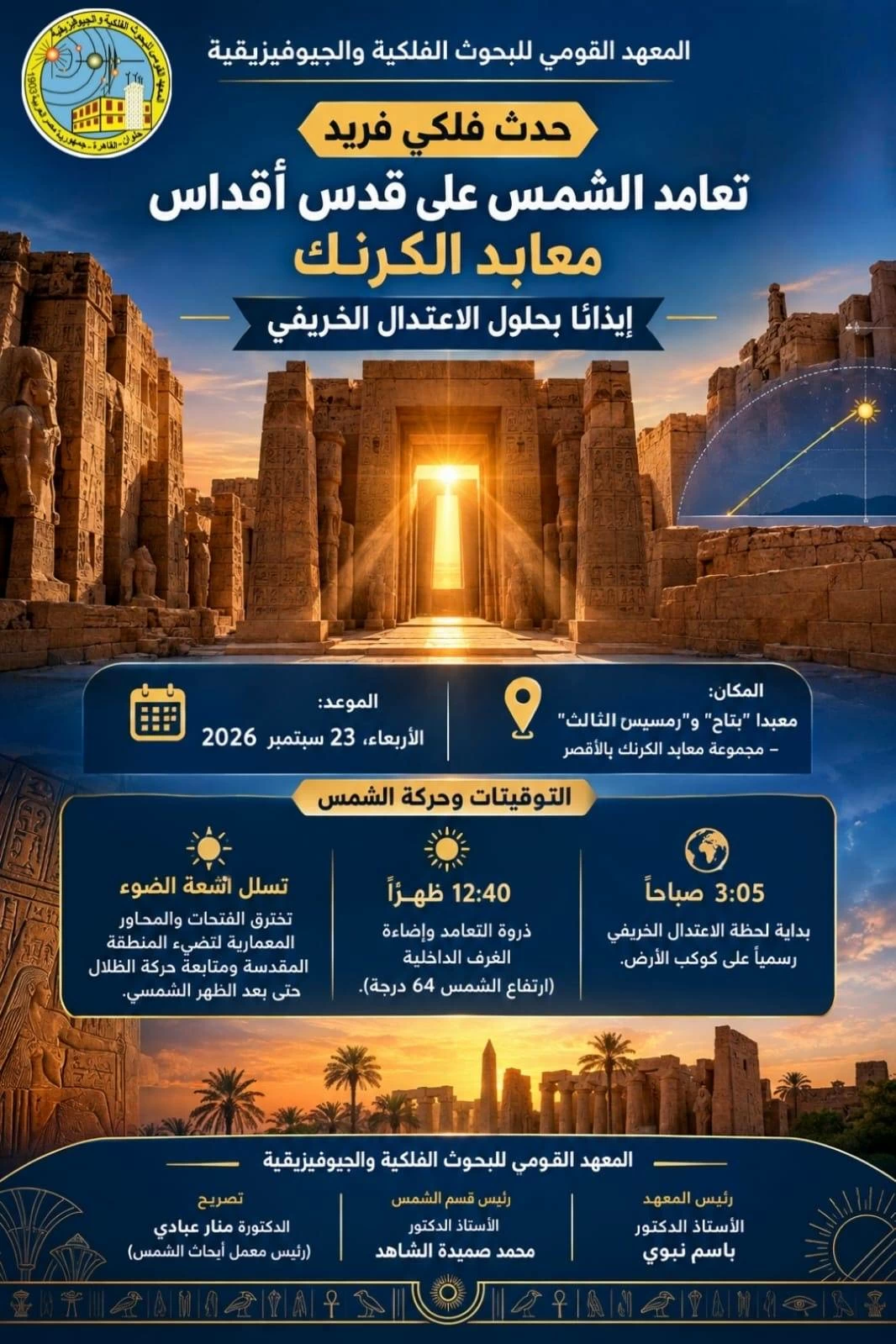
On September 23, 2026, a rare solar phenomenon will occur at Luxor's Karnak Temple, where sunlight will illuminate the sacred chambers of the Patah and Ramses III temples. This event coincides with the autumnal equinox, showcasing the ingenuity of ancient Egyptian architects who designed the temples to align with celestial movements. The phenomenon highlights the connection between Egyptian architecture and astronomy.
According to Dr. Manar Abbadi, head of the Solar Research Laboratory at the National Institute for Astronomical and Geophysical Research, the autumnal equinox officially begins at 3:05 am on September 23, 2026, marking the start of autumn and equal daylight and nighttime hours. This event is a significant astronomical occurrence that has been anticipated by the scientific community.
The phenomenon is made possible by the precise alignment of the temples' architectural features with the sun's rays. As the sun reaches its peak at around 64 degrees at noon, its rays will penetrate the sacred chambers, illuminating the inner rooms of the Patah and Ramses III temples. This spectacle will be visible at around 12:40 pm, with the position of the light and shadows changing throughout the day.
The Karnak Temple complex in Luxor is renowned for its impressive architecture and historical significance. This solar phenomenon demonstrates the advanced understanding of astronomy possessed by ancient Egyptians, who designed their temples to align with celestial events. The event showcases the intricate relationship between the temple's architecture and the movement of the sun.
Luxor's Karnak Temple has been a site of interest for astronomers and historians, with its alignment with celestial bodies and events being a subject of study. The temple's design reflects the ancient Egyptians' deep understanding of astronomy and their ability to incorporate it into their architectural creations. This phenomenon is a testament to the ingenuity and knowledge of ancient Egyptian civilization.
The solar phenomenon at Karnak Temple is a significant event that attracts attention from around the world. It highlights the importance of preserving ancient monuments and understanding their cultural and scientific significance. As the sun's rays illuminate the sacred chambers, visitors and scientists alike will be able to appreciate the beauty and complexity of ancient Egyptian architecture and astronomy.
The convergence of architecture and astronomy at Karnak Temple is a unique and fascinating occurrence. As the autumnal equinox marks the beginning of a new season, this event serves as a reminder of the advanced knowledge and skills possessed by ancient Egyptian civilization. The phenomenon will be a memorable experience for those who witness it, and it will continue to inspire scientific inquiry and curiosity.
Key points
- The solar phenomenon at Karnak Temple marks the beginning of autumn and showcases the connection between ancient Egyptian architecture and astronomy.
- The event is made possible by the precise alignment of the temples' architectural features with the sun's rays.
- The phenomenon highlights the advanced understanding of astronomy possessed by ancient Egyptians, who designed their temples to align with celestial events.