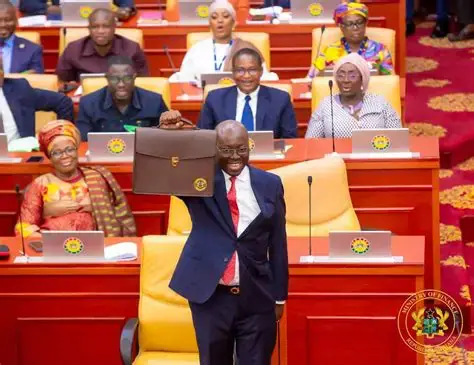
The Secretary-General of the Ghana Federation of Labour, Abraham Koomson, has expressed confidence in the government's commitment to restoring a functional 24-Hour Economy. He insists that the necessary foundations must first be established to make the policy sustainable. Koomson praised Finance Minister Dr. Cassiel Ato Forson for not introducing new taxes in the 2027 Budget presented to Parliament on November 12, 2026.
According to Koomson, excessive taxation on local businesses and smuggling contributed significantly to the collapse of Ghana's 24-Hour Economy system in the 1970s. He argued that the successful implementation of a 24-Hour Economy requires more than political promises, stressing that the government must first establish the economic conditions necessary to attract private investors and encourage businesses to expand their operations.
Speaking on Ahotor FM's Yepe Ahunu programme on Saturday, November 14, Abraham Koomson said the government's decision to abolish what he described as nuisance taxes, rather than introduce new ones, demonstrates its commitment to creating an enabling environment for businesses to thrive. He suggested that those demanding immediate results may not fully appreciate the structural and economic preparations required to make the 24-Hour Economy initiative successful.
Mr Koomson maintained that the policy cannot reasonably be expected to become fully operational within just two years, dismissing criticisms from sections of the opposition, particularly the New Patriotic Party (NPP), over the government's 1:3:3 shift employment proposal. He cited Ghana's first President, Dr Kwame Nkrumah, who pursued a seven-year development plan, to illustrate that meaningful national development requires proper planning, patience and sustained commitment.
The government inherited an economy burdened with several taxes introduced under the previous NPP administration, many of which have since been scrapped as part of efforts to ease the financial pressure on businesses. Mr Koomson believes the removal of these taxes is part of the broader foundation being laid to revive the 24-Hour Economy, adding that businesses cannot expand and create additional employment opportunities in an environment characterised by excessive taxation.
Mr Koomson cautioned against rushing the implementation of major economic policies, arguing that the government must first address the challenges inherited from the previous administration before embarking on an ambitious programme such as the 24-Hour Economy. He expressed strong confidence that the current government's efforts to reduce the tax burden, improve the business environment and attract private-sector investment will eventually create the conditions needed to restore the 24-Hour Economy.
“I have a strong belief that it will happen,” he maintained. Koomson further explained that Ghana must demonstrate a genuine commitment to supporting the private sector if it hopes to attract investors who relocated their businesses to neighbouring countries due to what he described as unfavourable tax policies under the previous administration. According to him, investors will only return when they are convinced that the government is committed to maintaining a stable and business-friendly environment.
Key points
- The Ghana Federation of Labour praises Finance Minister Ato Forson for not introducing new taxes in the 2027 Budget.
- The labour union believes that abolishing nuisance taxes will create a favourable business environment for a 24-Hour Economy.
- The implementation of a 24-Hour Economy requires proper planning, patience and sustained commitment.