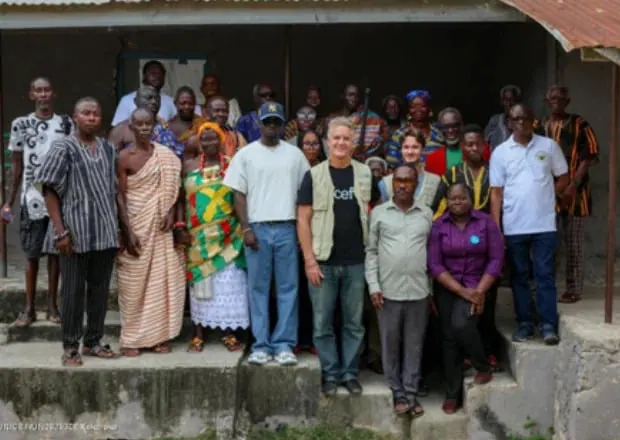
A joint effort by UNICEF, the Births and Deaths Registry (BDR), and Ghanaian musician Kuami Eugene has led to a field visit to Bepowase, a community in the Ayensuano District of the Eastern Region. The visit aimed to draw attention to the importance of birth registration and the right of every child to a legal identity and access to essential social services. The community, with a population of about 3,000, has been identified as an area with low birth registration coverage.
Ghana has seen a decline in birth registration in recent years, with 663,226 births registered in 2023, representing a 90.8% registration rate. This is a decrease from 677,140 births and a 92.3% rate in 2022. According to the Ghana Health Service, the BDR figure for 2023 represented 84.3% of births captured by health facilities. By the end of 2025, the number of registered births stood at 588,972, representing 73.4% of expected coverage.
The Eastern Region, where Bepowase is located, has recorded relatively low coverage in birth registration. There is a significant disparity in registration levels between urban and rural communities, with urban areas having 73% coverage and rural areas having 51%. Geographical access is a major challenge, with registration offices and outreach services often located far from rural, remote, and island communities.
Financial challenges also affect registration, with unofficial charges sometimes faced by parents, and late registration attracting official fees and additional procedures. The BDR faces shortages of funding, personnel, and logistics, which affect the availability of registration forms and certificates, transportation for outreach exercises, and the ability of officers to reach communities.
UNICEF Ghana Country Representative Andy Brooks emphasized the need for renewed efforts to reach communities with low coverage, citing a decline in birth registration from about 90% to roughly 74-75%. He advocated for a continuous referral system between health facilities and the BDR, allowing children to benefit from free registration during their first year.
The Regional Registrar for the Eastern Region, Edward Abrahams, identified poor internet connectivity as a major operational challenge, particularly in communities where officers are expected to complete digital registrations. He also noted that the registry is severely understaffed and relies heavily on volunteers who have grown demotivated due to the lack of financial compensation or incentives.
Kuami Eugene, who visited Bepowase to stress the importance of registering children, noted that about 80% of children in the community remain unregistered. He emphasized that birth registration is crucial not only for proving nationality or facilitating future travel but also for protecting children against risks such as abduction and trafficking by creating an official identity record.
Key points
- The visit aimed to draw attention to the importance of birth registration and the right of every child to a legal identity and access to essential social services.
- Ghana has seen a decline in birth registration in recent years, with 663,226 births registered in 2023, representing a 90.8% registration rate.
- The BDR faces shortages of funding, personnel, and logistics, which affect the availability of registration forms and certificates, transportation for outreach exercises, and the ability of officers to reach communities.