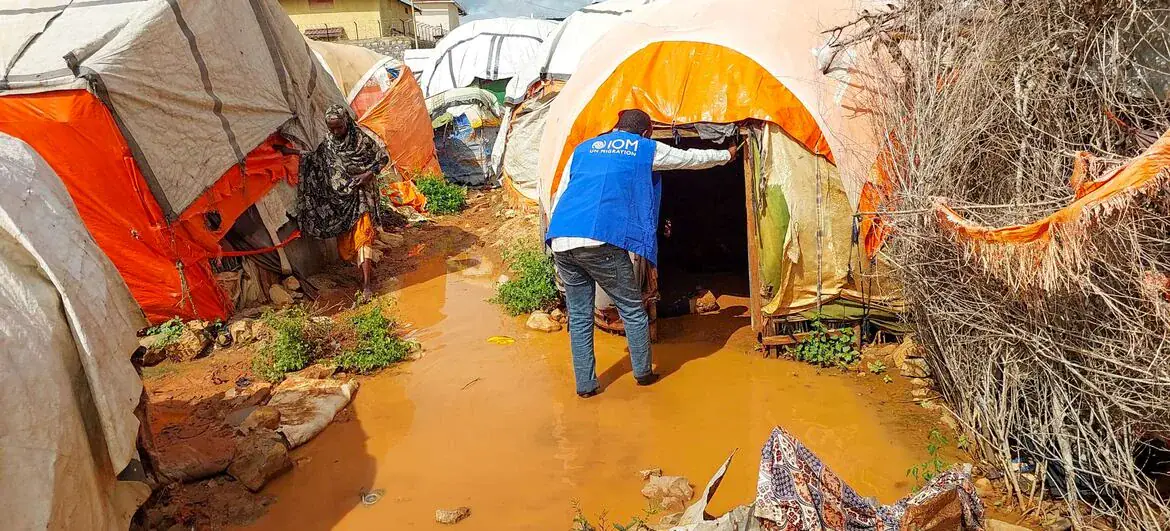
The UN refugee agency (UNHCR) has released a report titled No Escape III, warning that three-quarters of refugees, approximately 90 million people, reside in countries exposed to severe climate hazards such as drought, floods, and extreme heat. This report comes ahead of the COP31 climate summit. The UNHCR highlighted that refugees are facing a "double injustice," being forced to flee conflict they did not cause and now bearing the brunt of a climate crisis they contributed little to.
According to the report, fragile and conflict-affected host nations receive only about 10 percent of global climate-change financing, leaving refugee-hosting communities under-funded. Assistant High Commissioner for Operations Antón Leis García emphasized the plight of refugees, who are disproportionately affected by climate change. The report profiles eight displaced individuals, including Sudanese refugee Monira Bahraldin, who fled Darfur in June 2023 and now lives in a settlement in eastern Chad where drought and heat intensify water scarcity.
The UNHCR report estimates that by 2050, one in three refugee settlements across sub-Saharan Africa could experience at least 100 days of dangerous heat annually. Recent weather-related disasters have displaced hundreds of millions worldwide, and severe El Niño-linked flooding is expected to force three million people in Somalia, Kenya, South Sudan, and Uganda to flee by year-end. This projection underscores the urgent need for climate financing to support refugee-hosting communities.
The report also highlights innovative adaptation efforts by refugees and host communities, such as solar-powered water systems in the Sahel and climate-resilient agriculture in Uganda. These initiatives demonstrate the resilience and resourcefulness of refugees and host communities in the face of climate change. However, the report emphasizes that more needs to be done to support these efforts and ensure the long-term sustainability of refugee-hosting communities.
The UNHCR report notes that more than two-thirds of refugees who returned home in the first half of 2026 did so to nations highly vulnerable to climate hazards, underscoring the difficulty of lasting solutions. This trend highlights the need for a more comprehensive approach to addressing the root causes of displacement and supporting refugees in their host countries.
Antón Leis García urged that COP31 become a turning point, calling for recognition of refugee leadership and the translation of bold commitments into concrete investments reaching those most at risk. The report emphasizes that refugees and host communities must be involved in the development of climate-resilient solutions and that their needs and perspectives must be taken into account.
The UNHCR report concludes that the climate financing gap has severe consequences for refugees and host communities, who are already bearing the brunt of climate change. The agency is calling for increased support and investment in climate-resilient solutions to address the needs of these vulnerable populations.
Key points
- Three-quarters of refugees live in high-risk climate zones.
- Host nations receive only 10% of global climate funds.
- By 2050, one in three refugee settlements across sub-Saharan Africa could experience at least 100 days of dangerous heat annually.