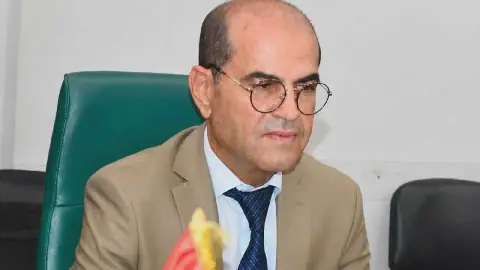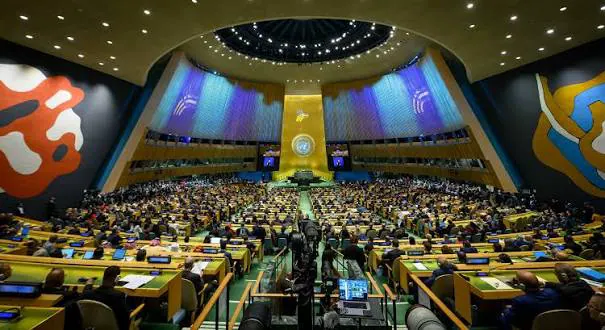
The President of the United Nations General Assembly, Khalilur Rahman, has expressed deep concern over Africa's exclusion from permanent membership of the UN Security Council, describing it as a "continuing injustice". He made these remarks while closing the General Debate of the 81st session of the UN General Assembly in New York. Rahman emphasized that meaningful reform is needed to address the imbalance in the Council's representation. He stressed that administrative changes alone would not address the deeper political challenges facing the organisation.
Rahman highlighted that the UN80 initiative must go beyond restructuring, budget adjustments, and administrative reforms. He stated that genuine reform should be measured by whether the UN delivers "better, faster and more fairly" for the people it serves. The UNGA President noted that Africa's demand for permanent representation on the Security Council remained central to the reform debate. He reiterated that no reform agenda, including UN80, could be considered complete without addressing Africa's long-standing inequity in the Council.
The Assembly President also addressed the forthcoming appointment of the next UN Secretary-General, describing it as one of the General Assembly's most consequential responsibilities. He noted that the UN Charter provides that the General Assembly appoints the Secretary-General following a recommendation from the Security Council. Rahman emphasized that the selection process must be transparent, inclusive, and merit-based, adding that it should strengthen rather than undermine the legitimacy, independence, and moral authority of the office.
Reviewing the General Debate, Rahman reported that more than 193 delegations had taken the podium, including 113 heads of state and government, one Crown Prince, 11 vice-presidents, seven deputy prime ministers, and 48 ministers. He observed that "peace" was the dominant theme across the speeches, but noted that it was discussed less as a distant aspiration and more as an urgent need to defend the UN Charter, international law, and civilians caught in conflicts.
Other major issues raised during the debate included peace and security, the Sustainable Development Goals, debt burdens, climate change, human rights, and gender equality. Rahman also highlighted the growing prominence of artificial intelligence in global discussions. He noted that while only five delegations had mentioned AI during the debate four years ago, the technology was addressed by 128 delegations this year.
Rahman stressed that global AI governance must remain human-centred, inclusive, and responsive to the needs of developing countries. He noted that many countries were increasingly framing AI as a governance issue, asking who designs the technology, who benefits from it, who bears its risks, and who should be held accountable when harm occurs.
The 81st session of the General Assembly will continue its substantive work from October 1 through December. The 193-member Assembly is expected to debate major global issues, elect key officials, and consider the UN budget. Among the most consequential decisions ahead is the appointment of the next UN Secretary-General, who will succeed António Guterres when his tenure ends on December 31, 2026.
Key points
- Africa's exclusion from permanent membership of the UN Security Council is a "continuing injustice".
- The UNGA President calls for meaningful reform to address the imbalance in the Council's representation.
- The selection process for the next UN Secretary-General must be transparent, inclusive, and merit-based.