The notions of "crime against humanity" and "genocide" have become integral to discussions on mass violence, yet they are often invoked interchangeably and misunderstood. To grasp their significance, it is essential to understand their genesis in the early 20th century. The evolution of public opinion and the emergence of international justice for victims can be observed through historical events and media coverage. The terms are closely tied to the development of international penal law, representing different approaches to addressing severe mass violence against civilians.
The concept of "crime against humanity" has its roots in the 19th century, with sporadic mentions as international law and humanitarian law began to take shape. However, it wasn't until after World War II and the Nuremberg trials between 1945 and 1946 that it became a punishable crime under international justice. On the other hand, the term "genocide" was coined to describe the systematic extermination of Jews by the Nazis during World War II and gained international recognition in 1948 at the United Nations.
The term "crime de lèse-humanité" was used in the late 18th century to describe slavery and its dehumanizing effects. In the early 19th century, the idea of intervention for humanitarian reasons was discussed but faced opposition from jurists who considered it a moral rather than legal issue. The Geneva Conventions in 1864 and the Hague Conventions in 1899 and 1907 marked significant steps towards establishing "laws of humanity," laying the groundwork for international justice.
The French press played a crucial role in highlighting violations of humanitarian law, particularly during the Boer War (1899-1902) and the massacres of Herero by Germans in 1905. These events demonstrate an increasing sensitivity towards mass violence against civilians and the beginnings of a broader discussion on international justice. For instance, an article by Camille Pelletan in 1902 criticized the English government's systematic violations of humanitarian law during the Boer War.
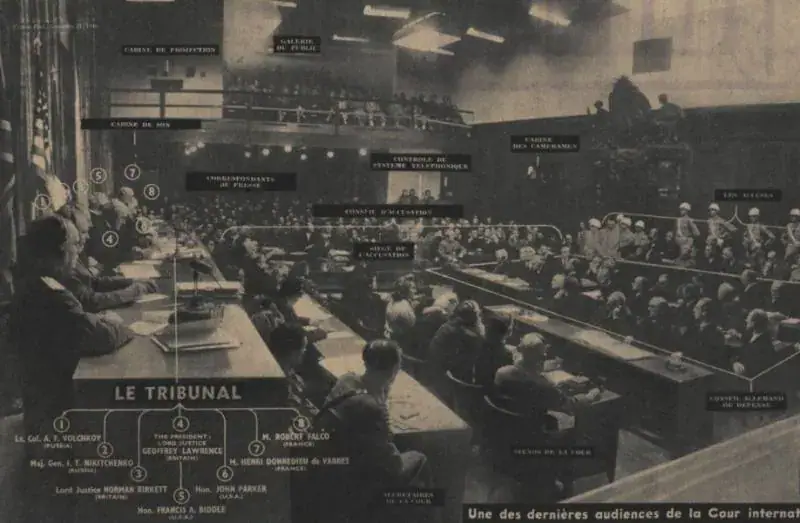
The Nuremberg trials marked a pivotal moment in the development of international penal law, with "crime against humanity" being introduced as a new charge. This development reflected a growing recognition of the need for international accountability for mass atrocities. The trials set a precedent for future international criminal justice, emphasizing the responsibility of individuals for crimes committed during wartime.
The concept of "genocide" was formally introduced into international law in 1948, following its coining by Raphael Lemkin in 1944. The term specifically referred to the Nazi policy of exterminating Jews during World War II. The adoption of the Genocide Convention by the United Nations in 1948 underscored the international community's commitment to preventing and punishing such crimes.
Educational materials, such as those developed for French schools, aim to contextualize the origins and distinctions between "crime against humanity" and "genocide." These resources cover historical events, including World War I and II, and are designed for various educational levels. They emphasize the importance of understanding these concepts within the broader framework of international law and humanitarian principles.
Key points
- The terms "crime against humanity" and "genocide" originated in the 20th century as part of the development of international penal law.
- The Nuremberg trials and the 1948 Genocide Convention were pivotal in establishing these concepts as punishable crimes under international law.
- Educational initiatives aim to clarify the distinctions and significance of these terms in the context of mass violence and international justice.