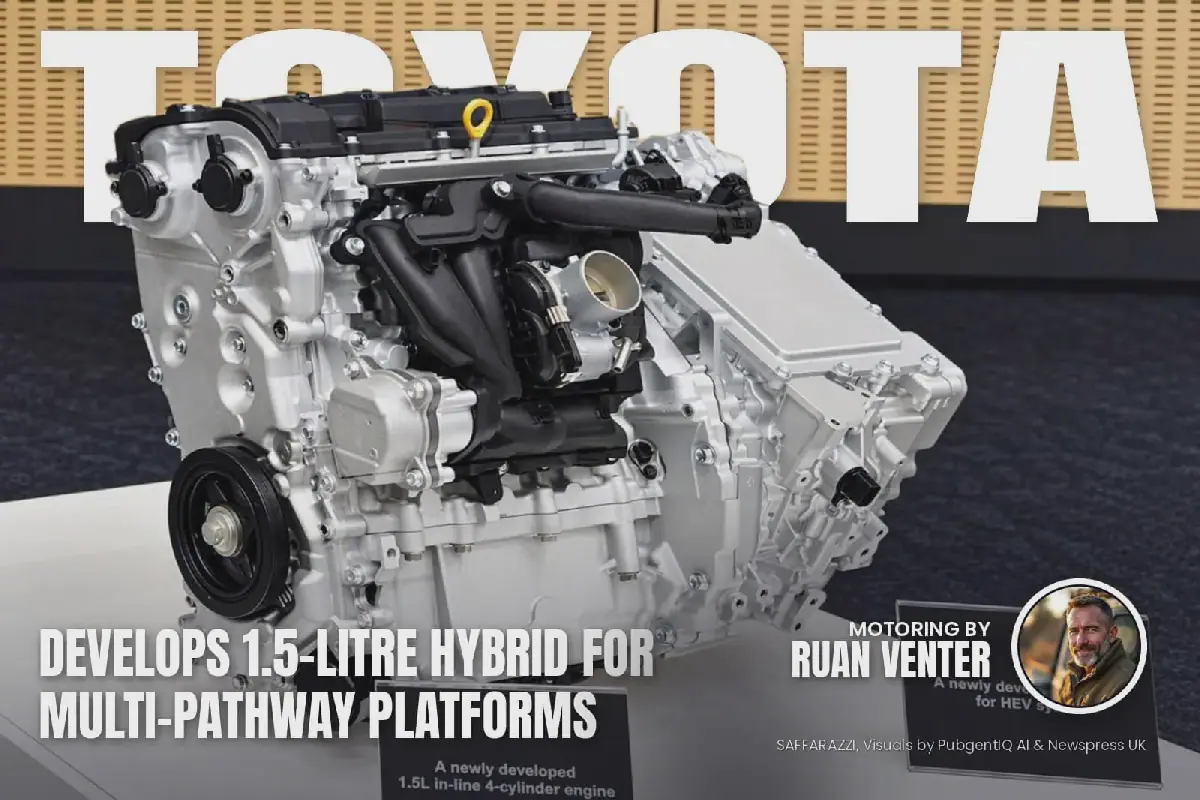
Toyota is working on a next-generation hybrid powertrain for its future multi-pathway vehicle platforms. The system pairs a new family of four-cylinder 1.5-litre engines, in naturally aspirated and turbocharged form, with lighter and more compact electric motors, power control units, and inverters. This new hybrid powertrain is designed to support flexibility in both development and manufacturing.
The new 1.5-litre engine family is modular and includes naturally aspirated and turbocharged versions. Toyota developed the engine, hybrid system, and power electronics together as a single integrated powertrain. The units were designed for electrification from the start and are smaller and more efficient than their predecessors. The naturally aspirated version is intended to cover the performance range currently served by the 1.8-litre engine and the current 1.5-litre three-cylinder engine.
The targeted improvement in fuel economy for the new hybrid powertrain is more than 15%. This gain is expected to come from lower mechanical friction, improved thermal management, reduced electrical losses, and a lower drag coefficient. Toyota-developed silicon carbide (SiC) power electronics form part of the package, and integrating the components more closely is intended to reduce losses across the whole system.
The hybrid system is much smaller than before, allowing it to be packaged within new platforms designed for battery electric vehicles. Hybrid and plug-in hybrid powertrains can share the same basic architecture without affecting silhouette, interior space, or capability. A lower-profile engine package also allows lower bonnet heights and gives designers fewer constraints when shaping a vehicle.
The common architecture for hybrid and electric models should let factories adjust the powertrain mix to closely match customer demand. Spreading development and production investment across combined volumes of all three types is expected to bring greater financial and engineering economies of scale. Toyota plans to increase external sales of its new engine and hybrid technologies in the coming years.
Toyota sees efficient hybrid technology as a continuing part of its route to carbon neutrality, and the system is being developed to run on renewable and carbon-neutral fuels. The company believes that this new hybrid powertrain will play a crucial role in reducing emissions and improving fuel efficiency. The development of this technology is part of Toyota's efforts to offer a range of electrified powertrains.
The new hybrid powertrain is expected to be available in various markets, with production planned to start in 2026. Toyota's multi-pathway approach responds to different energy circumstances, customer needs, and preferences by region and country. The company's goal is to provide a range of electrified powertrains and adjust the mix to demand.
Key points
- Toyota targets over 15% better fuel economy with its new 1.5-litre hybrid powertrain.
- The new hybrid system is designed to be smaller and more efficient than its predecessors.
- Toyota plans to increase external sales of its new engine and hybrid technologies in the coming years.