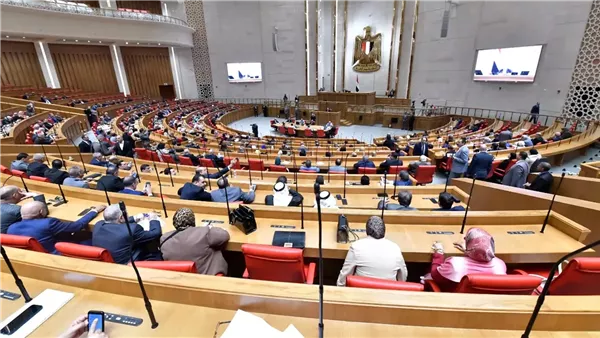
Egypt's House of Representatives is scheduled to reconvene this week under the leadership of Counselor Hisham Badawi. As the second session begins, many are inquiring about the regulations governing the formation of a new government. This interest comes as some anticipate a possible government reshuffle. The constitutional texts organize the controls and procedures for changing the government.
According to Article 146 of the Egyptian Constitution, the President of the Republic tasks the Prime Minister with forming a government and presenting its program to the House of Representatives. If the government fails to gain the confidence of the majority of the House members within 30 days, the President appoints a new Prime Minister based on the recommendation of the party or coalition with the most seats. If this new government also fails to gain confidence within 30 days, the House is considered dissolved.
The Constitution sets a maximum period of 60 days for the selection process. In the event of the House of Representatives being dissolved, the Prime Minister presents the new government's formation and program to the newly elected House in its first session. When selecting ministers from the party or coalition with the majority, the President, in consultation with the Prime Minister, chooses the ministers of Defense, Interior, Foreign Affairs, and Justice.
The Constitution also outlines the tasks and competencies of the government in Article 163, defining it as the supreme executive and administrative body of the state. The government consists of the Prime Minister, his deputies, ministers, and their deputies. The Prime Minister leads the government, oversees its work, and directs it in performing its duties.
Article 164 of the Constitution sets conditions for appointing the Prime Minister, including being Egyptian by birth from Egyptian parents, not holding any other nationality, enjoying civil and political rights, having completed military service or been exempted by law, and being at least 35 years old. For government members, they must be Egyptian, enjoy civil and political rights, have completed military service or been exempted, and be at least 30 years old.
The Constitution prohibits combining government membership with being a member of the House of Representatives. If a council member is appointed to the government, their seat in the council becomes vacant from the date of appointment. These regulations are crucial in understanding the procedures for forming a new government as Egypt's parliament reconvenes.
As the House of Representatives begins its second session, these constitutional provisions provide a framework for the potential changes in the government. The procedures emphasize the importance of the House's confidence in the government's program, ensuring accountability and representation.
Key points
- The Egyptian Constitution outlines specific procedures for changing the government, including the President's role in appointing a Prime Minister and the conditions for government members.
- The government must gain the confidence of the House of Representatives within a specified timeframe, and there are consequences if this is not achieved.
- The Prime Minister leads the government and oversees its work, directing it in performing its constitutional duties.