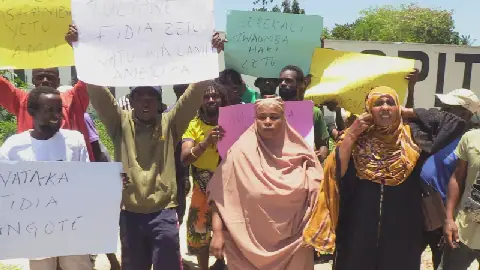
The Obasanjo administration from 1999-2007 has been criticized for its role in the privatization and commercialization of public institutions in Nigeria. The administration's policies led to the privatization of strategic public institutions such as NNPC, NITEL, NEPA, and Federal Hotels without following due process. This move was allegedly done to satisfy the interests of a certain group of politicians at the expense of the majority of the population.
Social rights in Nigeria include access to quality education, security of employment, free medical care, clean water, electricity, information, good roads, shelter, and clothing. However, the government has been accused of not doing enough to provide these basic social amenities. The commercialization of education has made it an exclusive preserve of the rich, leaving the majority of Nigerians with access to only half-baked education in poorly equipped schools.
The struggle for improved education in Nigeria has been ongoing for decades. In 1978, the "Ali-must-go protests" led to the closure of all federal universities. The National Union of Nigerian Students (NUNS) protested against the commercialization of education, which led to the indiscriminate shooting, maiming, and killing of innocent students. Since then, successive administrations have done little to improve the education sector.
The Nigerian government has also been criticized for its handling of the education sector. Despite the importance of education in national development, no government has convened an Education Summit to produce a blueprint for sustainable quality education. The lack of quality education has retarded national development, and it is an indisputable fact that without quality education, life will be of no avail.
In the 1990s, the National Association of Nigerian Students (NANS) and the Academic Staff Union of Universities (ASUU) actively protested against the government's decision to take a loan from the IMF to fund the education sector. The loan was seen as a retrogressive move that would worsen the already crisis-ridden educational situation in the country. The protests led to the closure of not less than three federal universities.
Cultural rights are also an essential part of human rights in Nigeria. Culture has been defined as a mirror of accepted usage and a way of life that has gained acceptance among people over the years. Nigerian cultural heritage includes cultural songs and dance, traditional marriage, dresses, and festivals. The preservation and promotion of cultural heritage are essential for national development.
The importance of culture in national development cannot be overstated. According to Chief Obafemi Awolowo, "Culture is the tap root of every society, and if culture decays, that society will have to develop parasitic features for it to continue to exist." The Nigerian government has a responsibility to preserve and promote the country's cultural heritage.
Key points
- The Nigerian government has been accused of not doing enough to promote and protect the economic, social, and cultural rights of its citizens.
- The commercialization of education has made it an exclusive preserve of the rich, leaving the majority of Nigerians with access to only half-baked education in poorly equipped schools.
- The preservation and promotion of cultural heritage are essential for national development.