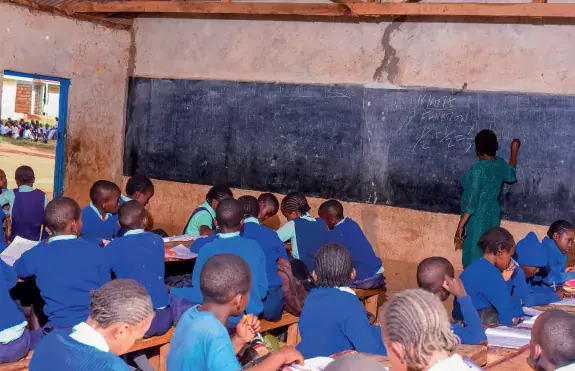
A recent regional study has found that underfunding and inadequate cross-border coordination are leaving millions of East African children exposed to trafficking, exploitation, and domestic abuse. Despite strong child protection laws in Kenya, Uganda, Tanzania, and Rwanda, safeguarding systems remain confined within administrative boundaries, leaving children vulnerable when they cross county or international borders. The study, titled "Beyond Borders: Rethinking Child Protection Systems for Children on the Move in Eastern Africa," highlights a significant gap between existing policies and their implementation.
The study's author, Festus Mukoya, emphasized that the future of child protection in Eastern Africa lies in strengthening connections between existing systems, actors, and communities. He noted that child protection systems must be capable of protecting children not only where they are today but also wherever they move tomorrow. The study found that poverty continues to push children into child labor, early marriage, and trafficking, while criminals increasingly use digital platforms to recruit victims.
The report also noted that children migrating for trade, education, or pastoralism, as well as those fleeing climate shocks and conflict, often fall through the cracks. Ten years after the East African Community adopted its 2016 Child Policy, the region still lacks a functioning cross-border referral system. This has resulted in significant challenges in protecting children from abuse and trafficking.
Financial constraints have been identified as a major obstacle to implementing child protection policies. Miriam Nalianya, Monitoring, Evaluation, and Reporting Officer at the Free Pentecostal Fellowship in Kenya (FPFK), attributed stalled progress to inadequate funding allocated to the operationalization of these policies. Despite existing frameworks, the implementation of policies is hindered by a lack of resources.
The FPFK has sought to bridge the gap through its Linda Mtoto initiative along the Kenya-Uganda border. The initiative involves training faith leaders, empowering single mothers with vocational skills, and establishing child-rights clubs in schools. Nalianya called for urgent investment in dedicated safe spaces at border points and unified regional referral guidelines to enhance child protection.
In rapidly growing cities, resource constraints are leaving frontline officers overwhelmed by cases of severe violence against children. Julista Nyaboke, a Sub-County Children's Officer in Nairobi's Roysambu Sub-County, highlighted the challenges faced in densely populated urban estates, including physical abuse and cases of parents burning children with heated spoons and knives. She urged parents and residents to report cases of abuse or missing children immediately through the toll-free Child Helpline 116.
To address the protection gap, the Joint Learning Project (JLP) report urged East African governments to increase domestic financing, formally integrate community volunteers and religious leaders into early-warning networks, and establish shared regional data systems to track and protect children across borders. The report emphasized that a strengthened child protection system is crucial to safeguarding the well-being of children in Eastern Africa.
Key points
- Weak cross-border coordination and inadequate resources undermine child protection in Eastern Africa.
- Poverty pushes children into child labor, early marriage, and trafficking.
- Strengthening connections between existing systems, actors, and communities is crucial to protecting children.