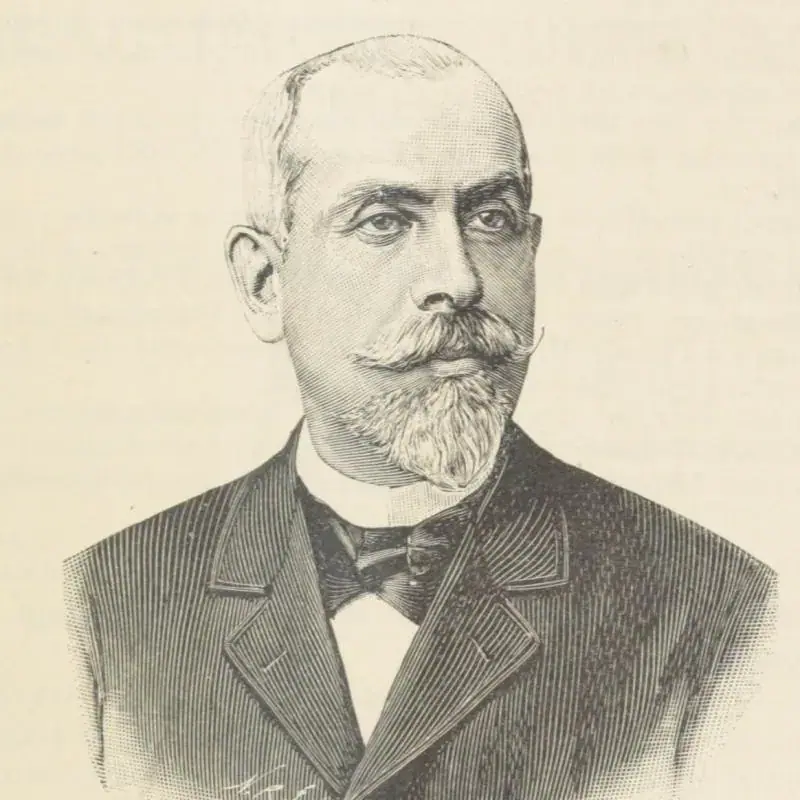
A recent investigation into old press articles has uncovered the life of Arsène Lopin, a Parisian councillor who inspired the famous character Arsène Lupin, created by Maurice Leblanc. Leblanc initially named his character Arsène Lopin, but later changed it to Arsène Lupin due to the similarity in names. This change did not diminish the intrigue surrounding the real Arsène Lopin.
Arsène Lopin was a conseiller municipal du quartier du Gros-Caillou, serving from 1886 to 1900, and was vice-président du Conseil municipal from 4 November 1889. His jovial character, amiability, and strong work ethic made him popular among his colleagues. According to a nécrologie published in La Liberté on 22 June 1926, Lopin passed away on 21 or 22 June 1926, at the age of 82, having been born on 28 April 1844.
Further research into old press articles revealed that Arsène Lopin was a collaborator of Georges Clémenceau and wrote for various radical journals, including La Nation and Le Radical. His affiliation with the parti radical et radical-socialiste was also noted. A nécrologie in L'Evénement highlighted his contributions to these publications, while one in Le Figaro mentioned his role as président du conseil d'arrondissement de Sceaux before working in Paris.
The origin of the name Arsène Lupin was revealed in an article published in Le Nouveau siècle on 26 June 1926. According to Paris-Soir, Maurice Leblanc was inspired by an electoral poster with Lopin's name, which he found picturesque and easy to remember. Leblanc modified the name slightly to create Arsène Lupin, a character who would go on to become a famous gentleman thief.
An article published in L'Action française on 22 November 1941 offered a different perspective on Arsène Lopin, describing him as a "monstre sorti de l'enfer" due to his affiliation with the radical-socialiste party and possible connections to freemasonry. The article's author recalled how Lopin was viewed as a symbol of the Republic, and his defeat was seen as a threat to the regime.
A search of Le Radical and La Nation, two journals to which Arsène Lopin contributed, yielded limited results. However, these articles provided valuable insights into Lopin's activities, including his candidacy in municipal elections and his role as vice-président du conseil municipal. His name appeared 399 times in La Nation between 1884 and 1890, but his contributions ceased after his defeat in the 1900 municipal elections.
The investigation into Arsène Lopin's life offers a fascinating glimpse into the inspiration behind one of literature's most famous characters. Maurice Leblanc's creation, Arsène Lupin, may have been fictional, but the real Arsène Lopin was a dedicated public servant and advocate for the radical-socialiste party. His legacy serves as a reminder that even the most seemingly fictional characters can be rooted in reality.
Key points
- Arsène Lopin was a conseiller municipal du quartier du Gros-Caillou who inspired the name of Maurice Leblanc's famous character Arsène Lupin.
- Lopin was a prominent figure in Parisian politics, serving as vice-président du Conseil municipal and conseiller municipal from 1886 to 1900.
- His life and legacy were marked by his affiliation with the parti radical et radical-socialiste and his contributions to various radical journals.