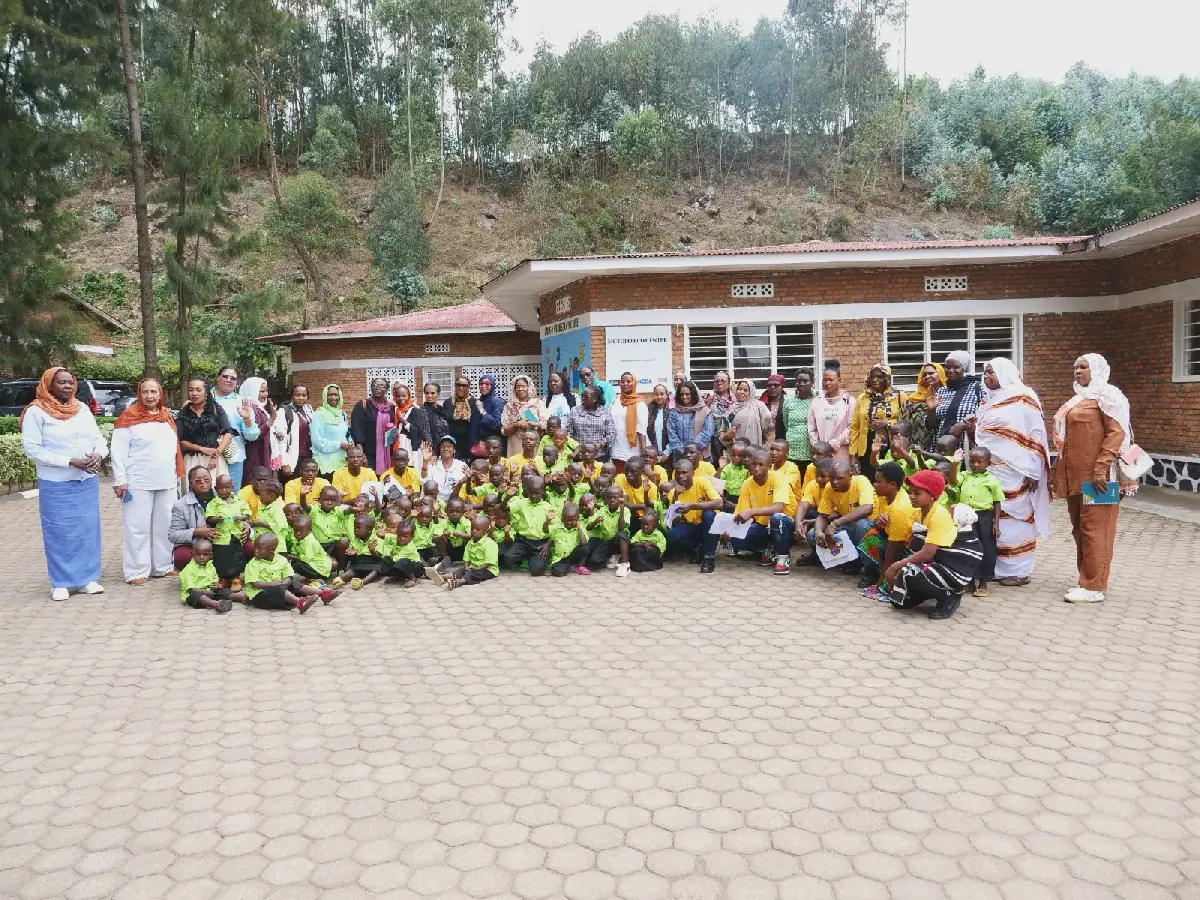
A delegation from UN Women, led by representatives from Sudan, has visited Rwanda to learn from its experience in reintegrating ex-combatants from the Forces Démocratiques de Libération du Rwanda (FDLR) and other armed groups. The visit, which took place on September 24, 2026, was organized to share best practices on demobilization, disarmament, and reintegration (DDR) of ex-combatants. The Rwandan government has been working on DDR programs for over 20 years.
The delegation visited the Mutobo Rehabilitation Center, which is managed by the Rwanda Demobilization, Disarmament, and Reintegration Commission (RDRC). The center provides a range of services, including medical care, education, and vocational training, to help ex-combatants readjust to civilian life. Chairperson of RDRC, Valerie Nyirahabineza, welcomed the delegation and highlighted the center's role in reintegrating ex-combatants into Rwandan society.
The FDLR, a rebel group that operates in the Democratic Republic of Congo (DRC), has been a major concern for Rwanda and the international community. The group has been accused of recruiting children and committing human rights abuses. RDRC officials briefed the UN Women delegation on the challenges posed by the FDLR, including its involvement in recruiting youth into armed groups and its links with other armed groups in the DRC.
The UN Women delegation expressed interest in learning from Rwanda's experience in reintegrating ex-combatants, particularly women and children. The delegation's visit comes at a time when Sudan is seeking to implement its own DDR programs for ex-combatants. One of the delegation members, D. Afaf Ahmed Yahya, noted that Sudan faces similar challenges in reintegrating youth who have been involved in armed groups.
The RDRC has been working to reintegrate ex-combatants into Rwandan society since 1997. The commission's programs focus on providing ex-combatants with education, vocational training, and economic support to help them rebuild their lives. Ex-combatants who are reintegrated into society receive a one-time payment of 60,000 Rwandan francs (approximately $60 USD) per day during their reintegration process, and 120,000 francs after two months.
The RDRC has reported that it has successfully reintegrated over 13,000 ex-combatants, including 13,167 adults and 698 children, since 2001. The commission's efforts have focused on providing ex-combatants with the skills and support they need to reintegrate into society. However, some ex-combatants, particularly women, have reported experiencing gender-based violence and other forms of exploitation.
The visit by the UN Women delegation highlights the importance of international cooperation and knowledge-sharing on DDR programs. The RDRC's experience in reintegrating ex-combatants offers valuable lessons for other countries, including Sudan, that are seeking to implement similar programs. The RDRC's approach emphasizes the importance of providing ex-combatants with a range of services, including education, vocational training, and economic support, to help them rebuild their lives.
Key points
- The RDRC has successfully reintegrated over 13,000 ex-combatants into Rwandan society since 2001.
Reporting sources
- UN Women yigiye ku Rwanda uko rusigasira abahoze muri FDLR · Imvaho Nshya