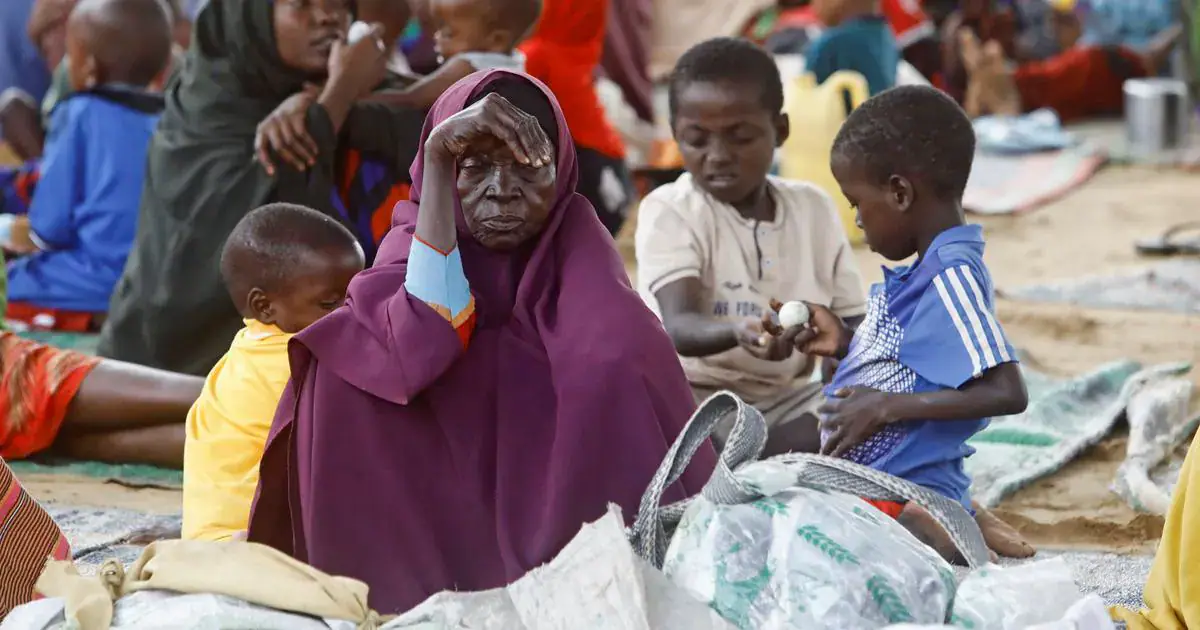
The United Nations has warned that hunger could worsen significantly in several African countries over the next six months. The UN's Food and Agriculture Organization (FAO) and the World Food Programme (WFP) have identified 16 global hunger hotspots where acute food insecurity is expected to deteriorate between December 2026 and May 2027. This warning comes as the global community faces increasing concerns about food security.
Sudan, Somalia, and northern Nigeria remain among the highest areas of concern. Five of the hotspots have been classified as facing the highest level of concern: Sudan, South Sudan, Somalia, northern Nigeria, and Yemen. The agencies cited armed conflict, displacement, high food prices, and extreme weather as making it increasingly difficult for millions of people to access food.
Sudan faces one of the most serious situations, with the UN agencies warning that famine remains a possibility in 13 areas of North Darfur and South Kordofan through January 2027. The country's ongoing war has displaced millions of people and disrupted farming, markets, and the delivery of humanitarian assistance. This has resulted in a dire food crisis, with many people struggling to meet their basic needs.
In Somalia, food insecurity remains serious, particularly among displaced people in Baidoa. Many households are struggling to meet their basic food needs. However, the latest assessment found that the previously identified risk of famine there was no longer expected through December 2026. The situation in Somalia remains fragile, with the risk of famine still present.
The UN agencies also warned that declining humanitarian funding is making it harder to support people facing severe hunger. The agencies expressed concern that the developing El Niño weather pattern could worsen the situation, increasing drought and extreme heat in Southern Africa while raising the risk of damaging floods in parts of eastern Africa.
Chad, northeastern Uganda, and the Southern Africa region are among the new additions to the list of hunger hotspots. The Southern Africa hotspot covers Eswatini, Malawi, Mozambique, Zambia, and Zimbabwe. The agencies warned that El Niño could bring hotter and drier weather to parts of Southern Africa, threatening crop production and future harvests.
The list of 16 hunger hotspots includes South Sudan, Somalia, Northern Nigeria, Yemen, Afghanistan, Democratic Republic of the Congo, Haiti, Palestine, Chad, Central American Dry Corridor, Madagascar, Mali, Myanmar, Southern Africa region, and Uganda. The UN agencies continue to monitor the situation and provide support to those affected by the food crisis.
Key points
- The UN's FAO and WFP have identified 16 global hunger hotspots where acute food insecurity is expected to deteriorate between December 2026 and May 2027.
- Sudan, Somalia, and northern Nigeria remain among the highest areas of concern, with the risk of famine still present in some regions.
- Declining humanitarian funding is making it harder to support people facing severe hunger, with the developing El Niño weather pattern threatening to worsen the situation.