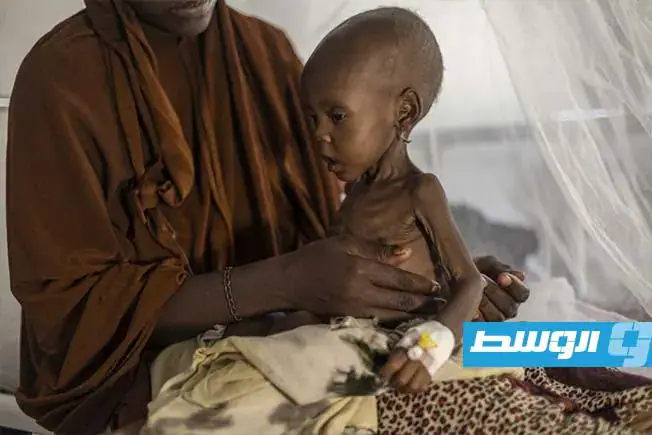
The United Nations has warned of an escalating global hunger crisis, with 16 regions, mostly in Africa, expected to face worsening hunger over the next six months. The crisis is attributed to ongoing conflicts and extreme weather conditions, including the El Niño phenomenon. According to a joint report by the Food and Agriculture Organization (FAO) and the World Food Programme, these regions, including Sudan, South Sudan, Somalia, and Yemen, are at high risk of severe hunger.
The report highlights that conflicts and violence are the primary causes of acute food insecurity worldwide, while extreme weather events, such as El Niño, exacerbate the situation. The UN agencies have identified Sudan, South Sudan, Somalia, northern Nigeria, and Yemen as areas of high concern. In these regions, the risk of famine remains high, particularly in parts of Sudan, including North Darfur, and South Sudan.
The humanitarian situation is further complicated by a significant decline in aid, with a 66% reduction in humanitarian funding between 2022 and 2025. This decrease has limited the ability to sustain gains and mitigate the worsening situation. The report emphasizes that while humanitarian aid has helped prevent famine in the past, the impact has been short-lived, and the risk of severe hunger has re-emerged.
The El Niño phenomenon is expected to play a significant role in deteriorating conditions in some regions. The report warns that 49 million people may face additional food insecurity by the end of 2027 due to El Niño. The phenomenon has already caused crop losses in Central America and East Africa and is expected to affect the upcoming agricultural season in Southern Africa.
The UN agencies stress the urgent need for targeted humanitarian interventions to prevent loss of life and livelihoods in these regions. In the most critical areas, such as Sudan and South Sudan, these interventions are crucial to preventing famine and saving lives. The report also highlights the importance of addressing the root causes of these crises, including conflicts and climate-related shocks.
The crisis is not limited to Africa, with regions such as Afghanistan, the Democratic Republic of Congo, and Haiti also facing significant challenges. In Gaza, the report warns that winter rains and floods may exacerbate the situation for displaced families, damaging inadequate shelters and disrupting essential services.
The UN agencies are calling for urgent funding to support their efforts, with a joint plan facing a $125 million funding gap. The situation requires immediate attention and action to prevent a further escalation of the global hunger crisis. Key areas of focus include providing emergency food assistance, improving access to clean water and sanitation, and supporting agricultural livelihoods.
Key points
- Conflicts and El Niño are driving a worsening global hunger crisis, affecting 16 regions, mostly in Africa.
- Humanitarian funding has declined by 66% between 2022 and 2025, limiting aid efforts.
- The El Niño phenomenon is expected to affect 49 million people, exacerbating food insecurity by the end of 2027.
Reporting sources
- Wasat TV · Wasat TV