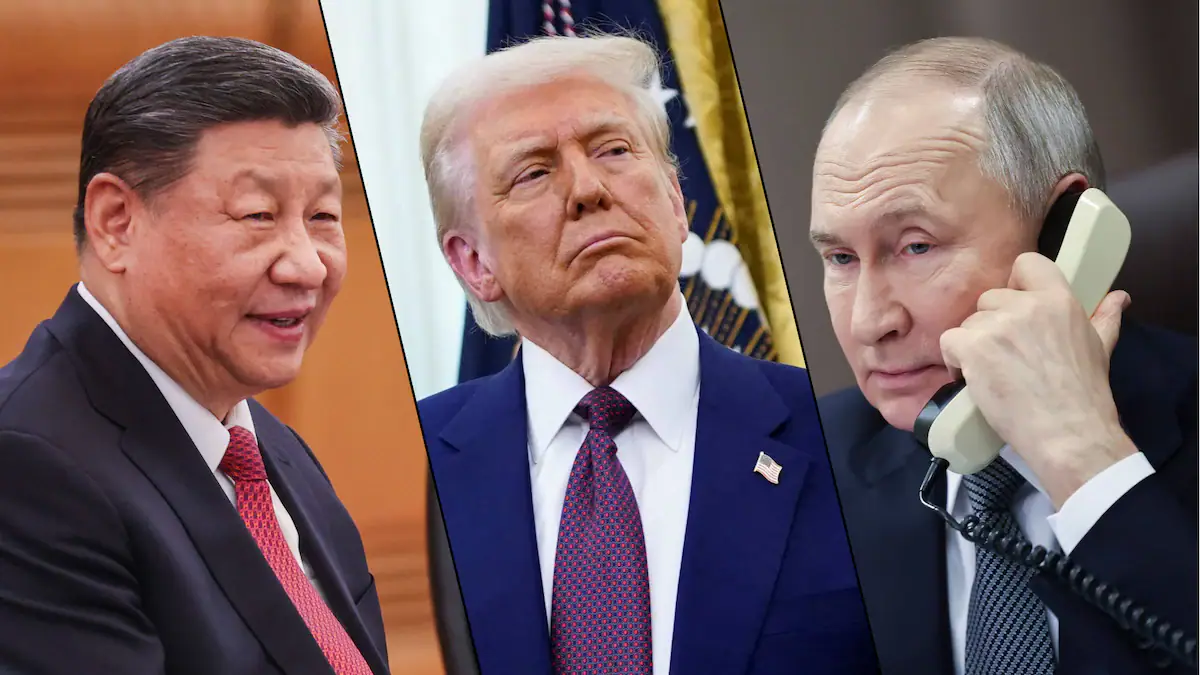
The first trilateral summit between the leaders of the United States, China, and Russia took place on November 19, 2026, in Shenzhen, China. During the meeting, they signed a four-point declaration that did not explicitly mention Africa. However, two key points discussed - fuel production and the International Criminal Court (ICC) - have significant implications for the African continent. The declaration aims to increase production and supply of refined petroleum products, which could benefit African nations that rely heavily on imports.
Africa is a significant player in the global fuel market, exporting two-thirds of the crude oil it produces, while importing around three-fifths of the refined fuels it consumes. The International Energy Agency reported that diesel prices have reached record highs, exceeding $200 per barrel. In response, countries like Kenya have increased their pump prices, with a 6% hike for gasoline and 4.5% for diesel in October. The US Treasury had temporarily eased sanctions on Russian diesel imports, allowing them to enter the global market.
Russia, a major diesel exporter, has been shipping its products mainly to Brazil, Turkey, and African countries since the European Union embargo on Russian petroleum products. Moscow plans to increase its monthly diesel exports to 3-3.5 million tons by the end of the year. However, the impact of this increase on African fuel prices remains to be seen. The summit's discussion on fuel production and supply chains has sparked interest in Africa, given the continent's reliance on imported fuels.
The summit also touched on the ICC, with the three leaders emphasizing the need for the court and similar bodies to respect state immunities. The ICC issued an arrest warrant for President Poutine in March 2023, which has created tension between Russia and ICC member states. African countries have expressed mixed views on the ICC, with some supporting its efforts to hold leaders accountable and others criticizing its perceived bias against African leaders.
The African Union has previously called on its member states not to cooperate with the ICC's arrest warrant for Sudanese President Omar al-Bashir. In contrast, US sanctions against the ICC have been met with criticism from some African countries. The Ugandan Foreign Minister, Adonia Ayebare, reacted to the US sanctions by stating that the ICC had "overstepped its mandate" by targeting African leaders.
On November 26, 2026, the Chairperson of the African Union Commission, Mahmoud Ali Youssouf, welcomed the Shenzhen summit and signed a cooperation agreement with China. He sees this development as a positive contribution to international dialogue. Meanwhile, Thembisa Fakude, director of Africa Asia Dialogues, highlighted the need for Africa to develop its data centers to fully leverage its partnerships with other nations.
As the global community looks ahead to the G20 summit in Miami on December 14-15, 2026, African leaders will likely continue to assess the implications of the Trump-Xi-Poutine summit. US President Trump had previously announced that South Africa would not be invited to the G20, citing its refusal to pass the G20 presidency to an American representative. The African continent will be watching closely as these global developments unfold.
Key points
- The Trump-Xi-Poutine summit discussed fuel production and the International Criminal Court, both of which have significant implications for Africa.
- African leaders have expressed mixed views on the ICC, with some supporting its efforts and others criticizing its perceived bias.
- The summit's discussion on fuel production and supply chains has sparked interest in Africa, given the continent's reliance on imported fuels.
Reporting sources
- Sommet Trump-Xi-Poutine : quelles conséquences pour l'Afrique ? · La Nouvelle Tribune