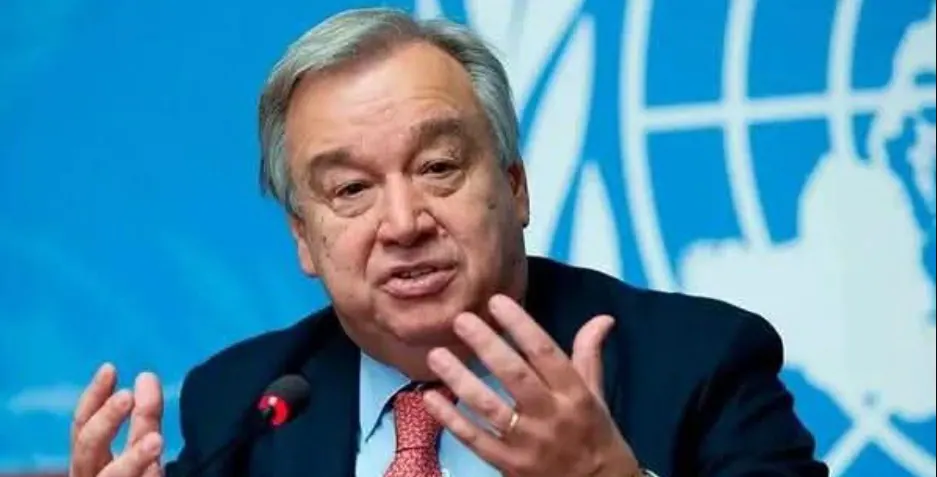
The United Nations Security Council is set to conduct its fifth straw poll in New York as it continues the search for a successor to Secretary-General António Guterres, whose term ends in less than three months. This round of voting, like the previous ones, will not be colour-coded, meaning it will not reveal whether any of the five permanent members - the United States, Russia, China, the United Kingdom, or France - would veto a leading candidate. A candidate can still be blocked by a single red ballot from one of the permanent members, even if they lead a non-colour-coded poll.
Former UN official Daniel Safran-Hon, who monitors the selection process, expects only marginal shifts in support, with no new entrants likely to alter the dynamics at this stage. In the fourth straw poll, Costa Rica's Rebeca Grynspan emerged as the front-runner, receiving ten "encourage" votes, three "discourage" votes, and two "no opinion" votes. However, she still falls short of a consensus among the Council members. The Greek presidency of the Security Council has indicated that a further vote is likely later in October.
The upcoming vote and any subsequent ones will be closely watched, as historical precedent shows that colour-coded votes have been held only twice before - in 2006 and 2016. Both times, they preceded the General Assembly's appointment of a new Secretary-General on October 13. A late-October colour-coded vote this year would compress the transition period, leaving less time for the incoming Secretary-General to assume duties and for the outgoing chief to hand over responsibilities.
Safran-Hon suggests that, assuming the upcoming poll does not dramatically reshape the field, the Council may move quickly toward a colour-coded round to determine whether any frontrunner faces a veto and if that obstacle can be overcome. This approach would allow the Council to assess the viability of the leading candidates and potentially pave the way for a new Secretary-General to take office on January 1.
Diplomats warn that a "dark-horse" candidate could still emerge if the permanent members remain deadlocked. This scenario has previously produced compromise selections, such as Kofi Annan in 1996, Ban Ki-moon in 2006, and Guterres himself in 2016. The selection process is notoriously unpredictable, and the emergence of a new candidate could significantly alter the dynamics of the race.
International Crisis Group's Richard Gowan notes that Guterres appears unlikely to seek a third term, and the United States is reportedly opposed to any extension. This raises questions about the continuity of leadership after January 1 and underscores the importance of a smooth transition. The 2026 selection carries historic weight, as the United Nations has never before been led by a woman.
Several women are among the candidates, but Grynspan remains the sole front-runner with a realistic chance of breaking the barrier. The next round of voting will provide further insight into the candidates' prospects and the potential for a woman to lead the United Nations for the first time. The outcome will be closely watched by diplomats, UN officials, and observers around the world.
Key points
- The UN Security Council is conducting a fifth straw poll to find a successor to Secretary-General António Guterres, with Costa Rica's Rebeca Grynspan currently leading the field.
- The selection process is expected to conclude with a colour-coded vote, which will reveal any vetoes cast against the leading candidate.
- The 2026 selection carries historic weight, as the United Nations has never before been led by a woman, and several candidates are vying to break this barrier.