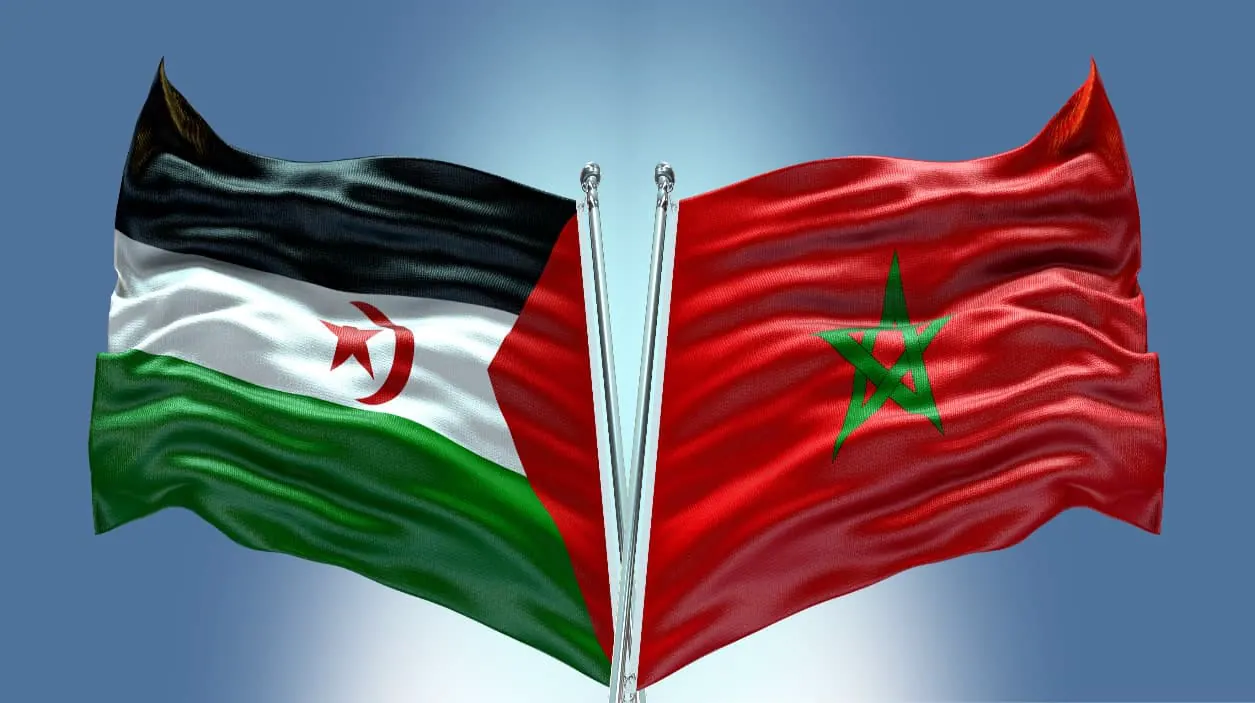
The UN Secretary-General's report on Western Sahara has been met with disappointment in Morocco, as it emphasizes the right to self-determination for the Sahrawi people. The report, submitted to the UN Security Council, contradicts Morocco's claims that the Council had abandoned the option of a referendum and imposed an "autonomy plan" as the sole solution to the conflict. Instead, the report urges both parties to the conflict, Morocco and the Polisario Front, to reach a political solution that guarantees the self-determination of the Sahrawi people.
The report, written by UN Secretary-General Antonio Guterres, reiterates that any solution to the conflict must be based on a genuine consultation process with the Sahrawi people, allowing them to freely accept or reject any proposal. This process must enable the Sahrawi people to exercise their inalienable right to self-determination. The report's conclusions align with a document presented by the Polisario Front on October 20, 2025, which proposed a solution allowing for the self-determination of the Sahrawi people and regional stability.
The UN Secretary-General's report also emphasizes the importance of a referendum in resolving the conflict. It notes that any proposal for a settlement must be subject to a genuine consultation process with the Sahrawi people, allowing them to accept or reject it. This stance is shared by the UN Secretary-General's Personal Envoy, Stefan di Mistura, who stressed that any solution must include a meaningful consultation process with the Sahrawi people, in line with the principle of self-determination.
Contrary to Moroccan claims, the October 2025 resolution does not impose a specific outcome on negotiations. According to di Mistura, the resolution provides a framework for negotiations that does not predetermine the outcome, and participation in negotiations does not necessarily imply acceptance of their conclusions. The report also addresses human rights issues, which Morocco has long resisted including in the mandate of the UN Mission for the Referendum in Western Sahara (MINURSO).
The UN Secretary-General's report expresses concern about the lack of independent and comprehensive monitoring of human rights in the occupied territories. The report notes that Morocco's repeated human rights violations, including torture, ill-treatment, and imprisonment of Sahrawi activists, have prevented the UN High Commissioner for Human Rights from visiting the region since 2015. The report also highlights the threat posed by mines scattered by the Moroccan army along the separation wall, with 24 out of 68 minefields remaining uncleared.
The report recommends renewing the mandate of MINURSO for an additional year, until October 31, 2027. This move is seen as a significant setback for Morocco, as the mission's primary objective is to organize a referendum. The renewal of MINURSO's mandate confirms that the UN does not envision a solution outside of consulting the Sahrawi people through a self-determination referendum.
The UN Secretary-General's report has been seen as a significant defeat for Morocco, as it reaffirms the Sahrawi people's right to self-determination and the importance of a referendum in resolving the conflict. The report's conclusions are in line with the Sahrawi people's aspirations and the UN's commitment to upholding their rights.
Key points
- The UN Secretary-General's report emphasizes the Sahrawi people's right to self-determination, contradicting Morocco's "autonomy plan".
- The report recommends renewing the mandate of MINURSO for an additional year, until October 31, 2027.
- The report addresses human rights issues in the occupied territories, highlighting Morocco's repeated human rights violations.