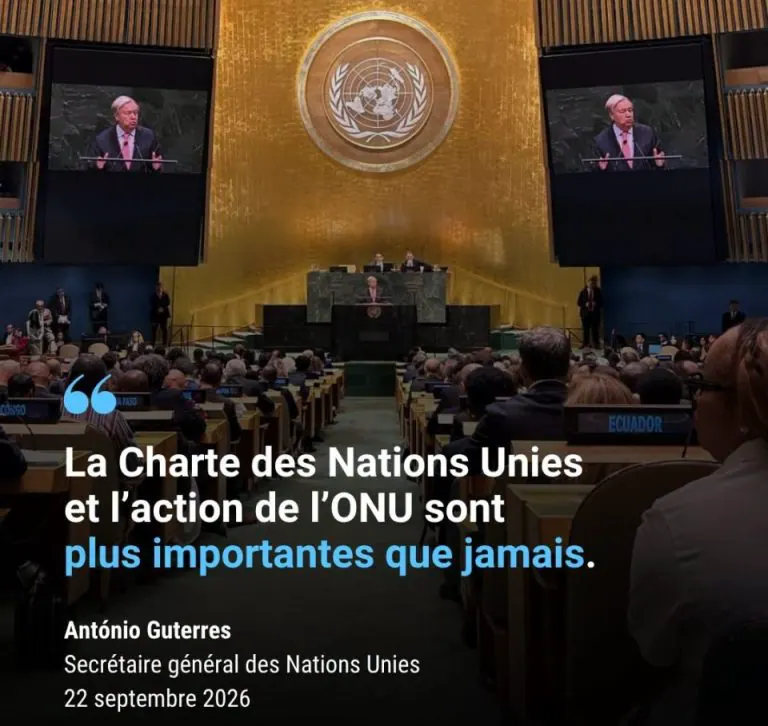
On September 22, 2026, UN Secretary-General António Guterres addressed the 81st session of the UN General Assembly, emphasizing the need for reform in the Security Council. He expressed concern over the persistent absence of African representatives among the council's permanent members. Guterres described the situation as "unjust and indefensible" in the 21st century. He noted that the council's composition has not adequately evolved to reflect contemporary geopolitical realities since its creation in 1945-1946.
Guterres recalled that during the Security Council's establishment, most of Africa was under colonial rule and did not participate in international decision-making. He advocated for a reform that would make the council "a reflection of the contemporary world," enabling it to respond effectively to current crises. This issue is a priority for the African Union in negotiations on Security Council reform. The African Union's position, based on the Ezulwini Consensus and the Sirte Declaration, demands at least two permanent seats for Africa.
The African Union's position also calls for five non-permanent seats, with the same prerogatives as current permanent members, including the right to veto if maintained. In May 2026, Mahmoud Ali Youssouf, President of the African Union Commission, reaffirmed this stance, urging the international community to translate its support for reform into concrete progress. Discussions at the General Assembly indicate that several aspects of the reform remain in negotiation.
A document from the co-facilitators of the intergovernmental negotiations highlights divergences on the distribution of additional seats among regions and the modalities of selection and representation of new members. The current Security Council consists of 15 members, including five permanent members - China, France, Russia, the United Kingdom, and the United States - and ten non-permanent members elected for two-year terms.
Africa currently holds three non-permanent seats on the council but no permanent seats. The presidency of the council rotates among its members for a one-month term; in September 2026, France is exercising the presidency. The reform of the Security Council is subject to intergovernmental negotiations within the UN General Assembly.
Guterres' call for reform is not new, but his emphasis on the issue highlights the ongoing debate about the Security Council's legitimacy and effectiveness. The council's inability to reflect the diversity of its member states has been a longstanding concern. The inclusion of African permanent members would be a significant step towards making the council more representative.
The outcome of the negotiations remains uncertain, with several key issues still to be resolved. The African Union's demand for permanent seats is clear, but the international community's willingness to accommodate this request is still to be seen. The UN Secretary-General's intervention is likely to reignite the debate, potentially paving the way for meaningful reform.
Key points
- The UN Secretary-General is calling for reform of the Security Council to include African permanent members.
- The African Union demands at least two permanent seats and five non-permanent seats on the Security Council.
- The reform of the Security Council is subject to intergovernmental negotiations within the UN General Assembly.