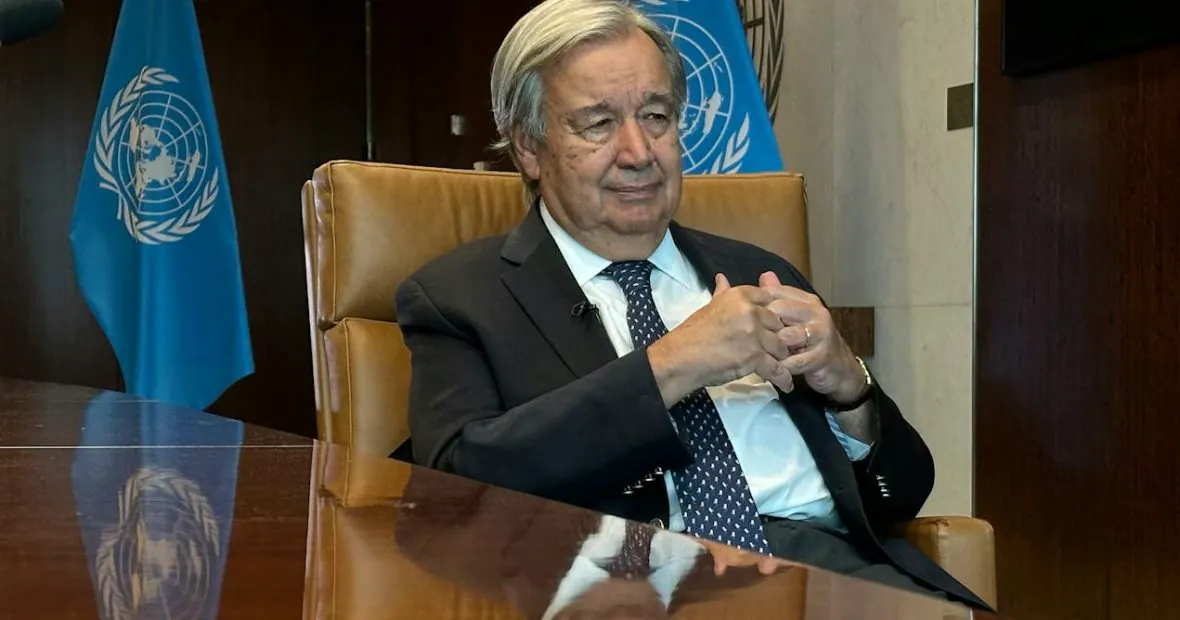
After a decade as UN Secretary-General, António Guterres is preparing to step down, reflecting on his time in office as marked by despicable cruelty in wars, targeting of civilians, and trampled human rights. In his farewell address to the UN General Assembly, Guterres highlighted the decade-long challenges, including ongoing wars, humanitarian crises, and increasing global tensions. His tenure has been defined by efforts to address these complex issues, but critics argue he could have done more to protect vulnerable populations.
Guterres faced unprecedented challenges during his term, including 65 active armed conflicts worldwide, the most since 1946, and rising tensions between permanent members of the UN Security Council. The world is also grappling with accelerating climate change and the potential threat of AI. While no UN Secretary-General could solve all these crises, historical comparisons are not in Guterres' favour. Exceptional leaders like Dag Hammarskjöld, Kofi Annan, and Ban Ki-moon implemented significant reforms and initiatives during their tenures.
Guterres' legacy includes brokering the 2022 Black Sea Grain Initiative between Ukraine and Russia, promoting more women to senior UN roles, and pursuing climate diplomacy. However, his tenure has also been marked by significant challenges, including crippling budget cuts due to US dues and a reform process that appears focused on bureaucratic downsizing rather than refocusing the UN's moral vision. Hundreds of UN staff have lost their jobs, and millions of people face humanitarian funding shortfalls.
One of the most significant criticisms of Guterres is his inability to help end ongoing conflicts in Ukraine, Myanmar, Sudan, and Gaza. Critics argue that he should have done more, including travelling to crisis points to send a powerful political signal. Guterres' rise to the top UN job was built on his reputation as UN High Commissioner for Refugees, where he underwent structural change in response to humanitarian emergencies.
During Guterres' tenure as Secretary-General, the number of people displaced by persecution, conflict, and atrocities almost doubled, from 65.6 million to 118 million. This includes 45 million children currently living as refugees or sheltering in tents beside the rubble of their homes. While Guterres was not responsible for their misery, he was noticeably low-key compared to some predecessors in pushing for diplomatic solutions to crises.
Guterres served as Prime Minister of Portugal from 1995-2002 and then as UN High Commissioner for Refugees from 2005-2015. His appointment as Secretary-General in 2016 was built on his reputation as a moderniser and advocate for vulnerable populations. However, his tenure has been marked by growing friction between the UN Security Council's veto-wielding permanent members, which has exacerbated the situation.
As Guterres leaves office on December 31, he is leaving behind a UN that is more fragile than at any time since the fall of the Berlin Wall. The next UN Secretary-General will have an enormous challenge in bridging the deadly gap between promise and performance. The verdict of history will be harsh regarding Guterres' failure to protect civilians and halt atrocities that shock the conscience of humanity.
Key points
- Guterres' legacy is marked by mixed results, including efforts to address global challenges and criticisms of inaction on key conflicts.
- The next UN Secretary-General will face significant challenges in rebuilding the organisation and addressing global crises.
- Guterres' tenure has been defined by efforts to promote women to senior UN roles and pursue climate diplomacy, but also by criticisms of his handling of key conflicts.