The debate over United Nations reform has typically centered on efficiency, focusing on reducing bureaucracy, eliminating duplication, containing costs, and improving delivery. However, this approach overlooks a deeper geopolitical anxiety. Western governments are increasingly concerned that their significant financial contributions no longer guarantee the authority or alignment they once commanded. This shift in influence is a result of rising powers assuming a greater share of the UN's costs.
The UN has undergone significant changes since its founding in 1945. Initially, the organization began with 51 members, while much of Africa and Asia remained under colonial rule. The decolonization process transformed the General Assembly, with membership rising from 60 in 1950 to 127 in 1970. Despite this surge, Western capitals retained considerable sway over the Bretton Woods institutions, development finance, trade rules, and the machinery through which newly independent states entered the international system.
The Cold War era sharpened the contest for influence, with Western and Soviet blocs courting votes, legitimacy, and partnerships. Funding UN agencies, development programs, and peacekeeping missions became another means of extending influence and promoting competing models of development. The balance of power grew more fluid after the Cold War, with Western power initially appearing unrivaled. However, China's subsequent rise shifted the economic and diplomatic center of gravity, particularly in Africa and Asia.
China's growing economic and diplomatic influence is evident in its trade relationships with Africa. China-Africa trade reached a record $282.1 billion in 2023, with China being the continent's largest trading partner for 15 consecutive years by 2024. Governments once heavily dependent on Western markets, lenders, and donors can now negotiate with a broader range of partners. World Bank analysis traces the links among Chinese trade, investment, finance, and large-scale infrastructure projects across Africa.
China's increasing weight within the UN is also notable. It is now the second-largest assessed contributor to both the regular budget and peacekeeping. Under the 2025-27 regular-budget scale, the United States is assessed at 22% and China at 20.004%. For the $5.6 billion peacekeeping budget covering July 2024 to June 2025, the respective rates were 26.95% and 18.69%. Chinese official reporting describes the country as the largest contributor of uniformed personnel among the Security Council's five permanent members.
The redistribution of influence is changing the politics of reform and the assumptions that underpin it. Western countries still finance a substantial share of the UN system, but funding no longer guarantees the same diplomatic alignment. China draws influence from trade, infrastructure, finance, market access, and a growing multilateral presence. Governments across the Global South can diversify their partnerships and pursue national priorities with greater room for maneuver.
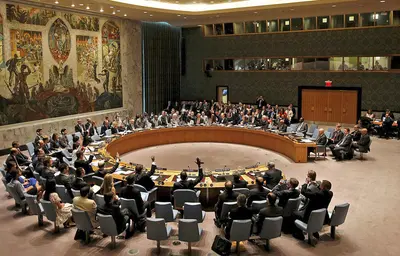
Calls for security council reform, stronger African representation, fairer development finance, climate justice, and a larger voice for emerging economies expose the same problem: the international order has changed, but institutions created to govern it have not kept pace. The security council still reflects the power distribution of 1945 more closely than that of the 21st century. Africa has 54 UN member states but no permanent seat; India and Latin America also lack permanent representation.
Key points
- The international order has changed, but institutions created to govern it have not kept pace.
- Western countries' influence within the UN is diminishing as rising powers assume a greater share of the organization's costs.
- UN reform must address legitimacy and representation, not just budget discipline and administrative consolidation.