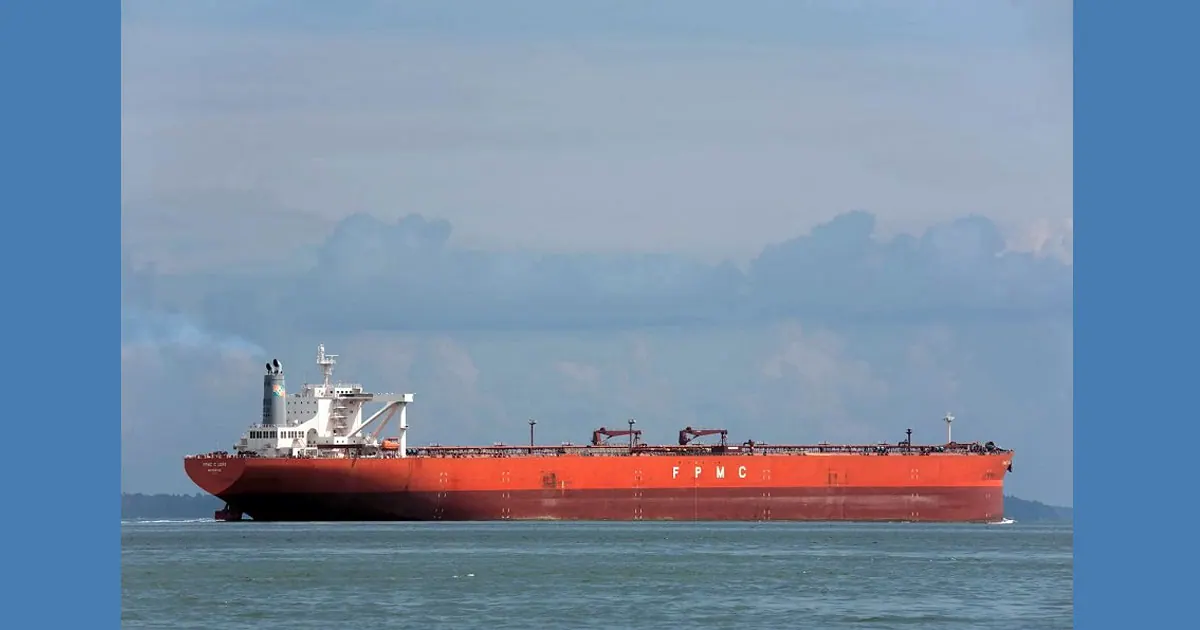
The Strait of Hormuz, a vital waterway, has been under Iranian control since the start of the war with the US on February 28. This gives Tehran the ability to restrict oil supplies and choke the global economy. However, several Gulf states have launched a secret operation to undermine Iran's control, using "clandestine fleets" to evade Iranian oversight. These countries are employing tactics previously used by Iran to circumvent sanctions.
According to an investigation by Benedict Smith, published in The Telegraph, a tanker, the Singapore Prosperity, carrying around two million barrels of crude oil, disappeared from tracking systems for two days in mid-August while traversing the Gulf. It reappeared near Fujairah, on the other side of the strait, after reactivating its transponder. This incident highlights the cat-and-mouse game being played in the region.
The clandestine operation involves smaller ships, often used as shuttles, taking on the most perilous part of the journey. These vessels disable their automatic identification systems (AIS) to avoid detection while crossing the narrow strait, which is only 34 kilometers wide at its narrowest point. The ships often travel at night, but some have begun to abandon this tactic as the number of crossings increases.
After navigating the treacherous waters, the smaller ships transfer their cargo to larger vessels, which complete the journey. This tactic is ironically similar to the one used by Iran to evade sanctions and transport fuel to market. Rachel Ziemba, a researcher at the Center for a New American Security, notes that some of these tactics are now being employed by the United Arab Emirates and other Gulf states.
Iran has not tolerated this challenge to its authority, and in August, the UAE reported that 15 of its ships had been attacked by missiles and drones, resulting in 20 injuries and one fatality. The US military has provided support, deploying fighter jets to protect tankers from Iranian missiles and drones. However, this protection is not foolproof, and the risk remains high.
Despite the risks, Gulf states are willing to take on this challenge, as the rewards are substantial. To offset high insurance costs, countries like Iraq and Qatar are offering crude oil at significantly discounted prices. Rory Johnston, founder of Commodity Context, estimates that Gulf states are willing to take on the risk, as the potential profits outweigh the costs.
According to data from Kpler, between 10 and 12 million barrels of oil transit the Strait of Hormuz daily, roughly half the volume that passed through before the war. However, these numbers fluctuate greatly from day to day. The UAE has intensified its operations, with Abu Dhabi exporting around two million barrels per day via its national company Adnoc. Analysts view these clandestine operations as a temporary adaptation to the crisis rather than a long-term solution.
Key points
- Gulf states are using clandestine fleets to counter Iran's control of the Strait of Hormuz.
- The operation involves smaller ships transferring cargo to larger vessels to evade Iranian oversight.
- The tactic is similar to the one used by Iran to evade sanctions and transport fuel to market.