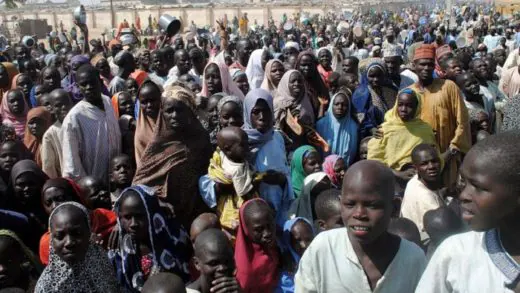
The United Nations has expressed concern over the escalating displacement of people across the Central Sahel region, with approximately four million individuals forcibly displaced across Burkina Faso, Mali, and Niger. This development was disclosed by the UN High Commission for Refugees (UNHCR) during a press briefing at the Palais des Nations in Geneva. The UNHCR Regional Director for West and Central Africa, Abdouraouf Gnon-Konde, attributed the displacement to escalating violence and cross-border insecurity, which are placing increasing pressure on vulnerable communities.
According to Gnon-Konde, security incidents across the region have almost doubled since 2020, weakening state institutions and limiting humanitarian access. Forced displacement across the three countries has also nearly doubled during the same period. The UN official warned that deteriorating security is placing growing pressure on essential services such as education, healthcare, water supplies, and livelihoods. This situation has significant implications for the stability of the wider West African region, including cross-border security and migration pressures affecting Nigeria.
The UNHCR Regional Director expressed particular concern about the future of children and young people affected by prolonged displacement. He noted that approximately 60 to 65 per cent of the region's population is younger than 25. However, only about one-third of refugee children have access to primary and secondary education. Gnon-Konde warned that failure to invest in education, employment, and economic opportunities could deepen existing instability, emphasizing the need for stronger international engagement and humanitarian financing.
Gnon-Konde recently visited several locations in Mali and Burkina Faso, where he witnessed firsthand the challenges faced by displaced persons and host communities. He described conditions in Koro, near the Mali-Burkina Faso border, where approximately 85,000 displaced people have arrived in an area hosting about 100,000 residents. The influx is overwhelming local services and creating additional challenges for host communities, highlighting the need for sustainable solutions to address the crisis.
The UN official emphasized that humanitarian assistance alone cannot resolve the region's underlying security and development challenges. He called for investments in sustainable livelihoods, education, and employment opportunities to address the root causes of displacement. Gnon-Konde's remarks underscore the need for a comprehensive approach to address the complex issues facing the Central Sahel region, where instability and displacement have become increasingly prevalent.
The crisis in the Central Sahel region has far-reaching implications for regional stability and global security. The UN's warning highlights the need for international cooperation and collective action to address the challenges facing the region. The situation requires a sustained commitment to humanitarian assistance, development, and peacebuilding efforts to mitigate the impact of displacement and promote stability in the region.
The UNHCR's concerns about the displacement crisis in the Central Sahel region are shared by other international organizations and stakeholders. The situation requires a coordinated response to address the humanitarian, development, and security challenges facing the region. Key initiatives, such as the UNHCR's efforts to provide protection and assistance to displaced persons, are crucial in mitigating the impact of the crisis.
Key points
- The UN has warned that approximately four million people have been forcibly displaced across Burkina Faso, Mali, and Niger due to escalating violence and cross-border insecurity.
- The UNHCR Regional Director for West and Central Africa, Abdouraouf Gnon-Konde, has called for stronger international engagement, humanitarian financing, and investments in sustainable livelihoods to address the crisis.
- The crisis in the Central Sahel region has significant implications for regional stability, global security, and the well-being of displaced persons and host communities.