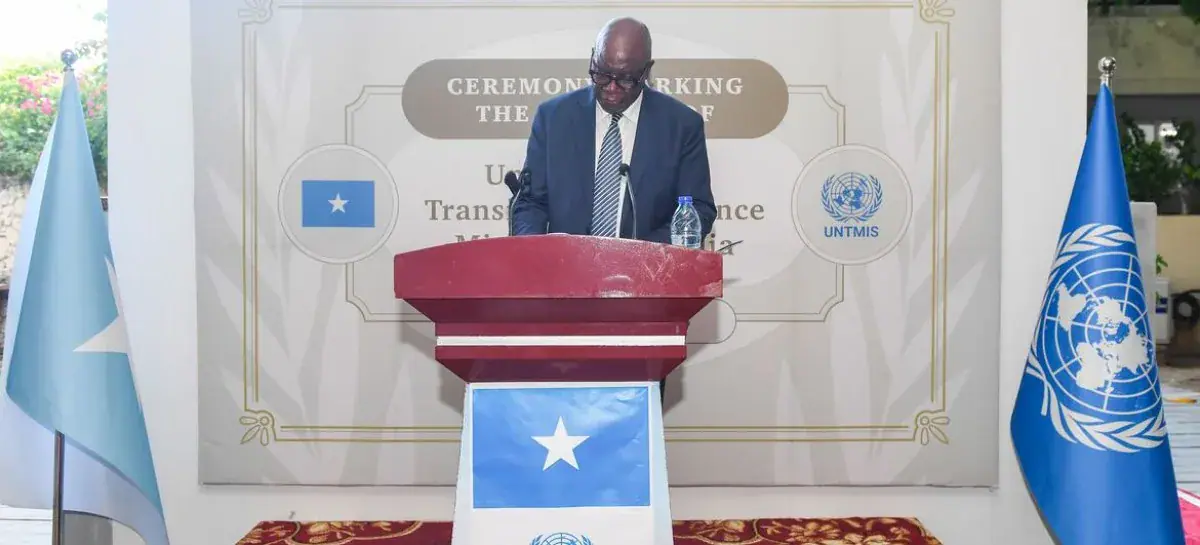
The United Nations Transitional Assistance Mission in Somalia (UNTMIS) formally concluded its work on October 31, 2026, after decades of supporting the country's peacebuilding and state-building efforts. The mission's closure was announced by UN Deputy Special Representative James Swan, who acknowledged the considerable progress made in Somalia while noting that significant challenges remain. The UN's political engagement in Somalia began in the early 1990s, when the country was plunged into conflict and instability.
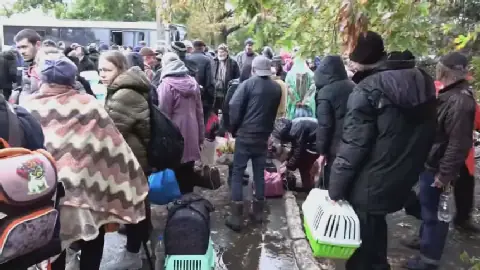
Somalia has undergone profound change since the early 1990s, including attempts to restore governance, rebuild institutions, and promote national reconciliation. The crisis triggered a major movement of refugees and internally displaced people, with insecurity, disputed electoral processes, and constitutional reform efforts adding to the difficulties. Successive UN political missions have supported Somalia through key stages of its recovery, including state formation, political inclusion, and human rights frameworks.
The closure of UNTMIS does not mark the end of the UN's presence in Somalia, as about 25 UN entities continue to operate across the country, providing humanitarian and development assistance. These agencies are working with Somali institutions to support the country's recovery, including humanitarian work in areas such as healthcare and education. For example, the UN migration agency, IOM, recently helped rehabilitate a vegetable market in the town of Balcad.
Despite progress in state-building, Somalia continues to face a complex humanitarian crisis, with an estimated 4.8 million people requiring humanitarian assistance this year. The UN's humanitarian affairs office, OCHA, says conflict and climate-related shocks continue to reinforce each other, with families displaced by drought or violence facing further displacement due to flooding or renewed fighting. Aid organisations have appealed for $852m to provide assistance to 2.4 million people.
The UN has also called for continued international support to counter the threat posed by the militant group al-Shabab and to help Somalia move towards a gradual and sustainable security transition. Poverty and economic pressures remain a major challenge for Somalia's leaders, with the economy remaining fragile and heavily dependent on subsistence farming, livestock, pastoralism, and money sent home by Somalis living abroad.
The country also relies heavily on imports, with more than 90% of essential goods coming from overseas. The combination of poverty, insecurity, climate shocks, and limited economic opportunities presents a continuing challenge to the country's long-term recovery. However, UN Deputy Special Representative Adam Abdelmoula Zenenga noted that Somalia today possesses national and federal institutions that did not exist when the UN's political engagement began.
The closure of UNTMIS marks a change in the nature of the UN's engagement with Somalia rather than a complete withdrawal. Humanitarian and development agencies will continue to operate in the country, supporting government institutions and communities. "Today is not an end to the partnership between the United Nations and Somalia," Mr. Zenenga said. "It marks the conclusion of one chapter and the beginning of another."
Key points
- The UN's political mission in Somalia has closed after decades of support, marking a new chapter in the country's recovery.
- Despite progress in state-building, Somalia continues to face a complex humanitarian crisis, with 4.8 million people requiring assistance.
- The UN will continue to operate in Somalia through humanitarian and development agencies, supporting government institutions and communities.