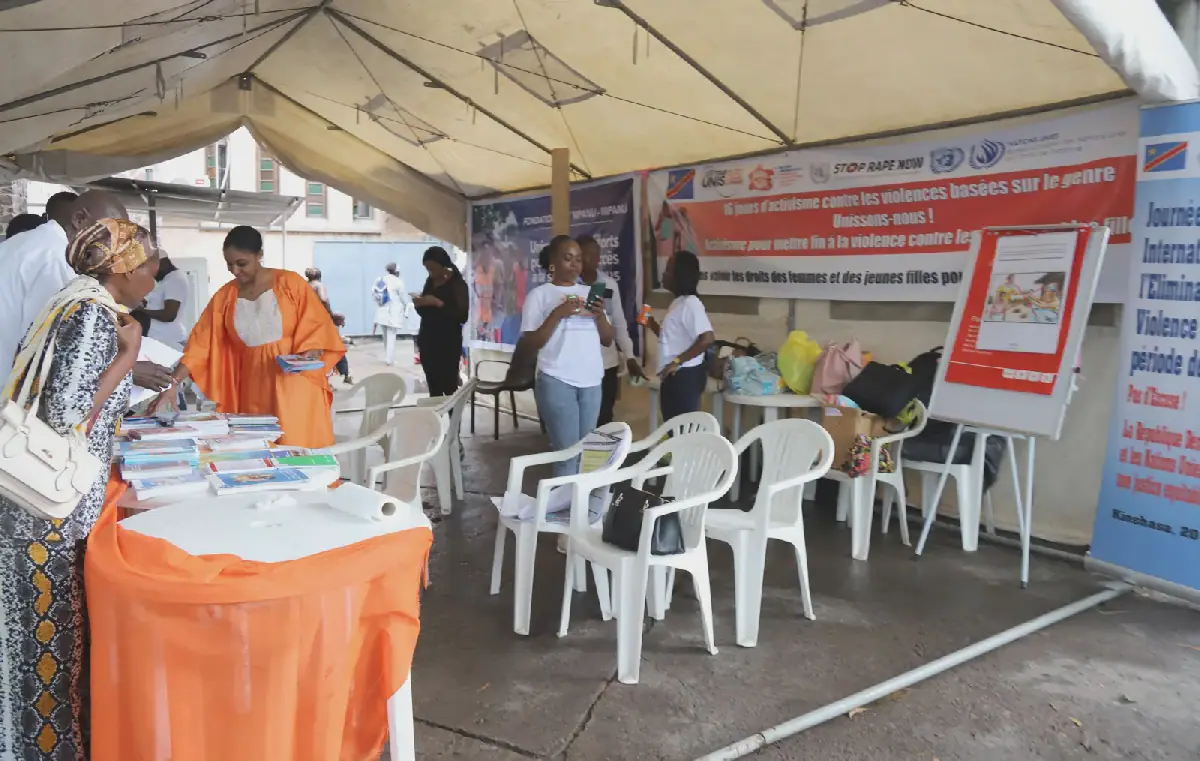
The International Day for the Elimination of Violence Against Women, observed annually on November 25, marks the beginning of 16 days of activism against gender-based violence. On this occasion, Alain Akpadji, the resident coordinator and interim humanitarian coordinator of the United Nations system in the Democratic Republic of the Congo, emphasized that violence against women and girls is a serious human rights violation and a major obstacle to gender equality and sustainable development.
Akpadji highlighted that these forms of violence continue to destroy lives, destabilize families, and deprive millions of women and girls of their dignity, freedom, and future prospects. The global campaign this year focuses on ensuring justice, protecting survivors, and ending impunity in online and offline spaces. This theme resonates particularly in the DR Congo, where gender-based violence remains a significant concern, especially in conflict-affected and humanitarian crisis zones.
According to the United Nations, at least one in three women worldwide suffer physical or sexual violence in their lifetime. In the DR Congo, the situation is especially worrisome, with over 460,000 reported cases of gender-based violence between 2021 and 2024. These incidents predominantly affect women and girls living in insecure areas, facing forced displacement and humanitarian crises.
On this day, Akpadji paid tribute to survivors of gender-based violence, commending their courage, resilience, and strength. He stressed that behind the statistics are shattered lives, and women and girls awaiting support, protection, and full restoration of their rights. The UN official called for collective responsibility, urging action to address this critical issue.
The fight against violence against women and girls requires sustained mobilization from governments, communities, civil society organizations, and international partners to ensure justice, victim protection, and prevention of further violence. Akpadji's message underscores the need for a concerted effort to combat this pervasive problem and restore dignity to survivors.
The 16-day activism period serves as a critical reminder of the plight of women and girls in the DR Congo and worldwide. It highlights the importance of addressing the root causes of gender-based violence and working towards a society where women and girls can live free from violence and fear. The UN's efforts in this regard aim to support and protect survivors.
As the international community observes this day, it is essential to recognize the significance of this issue and the need for collective action. The UN's commitment to eliminating violence against women and girls is unwavering, and efforts will continue to ensure that perpetrators are held accountable and that survivors receive the support they need to rebuild their lives.