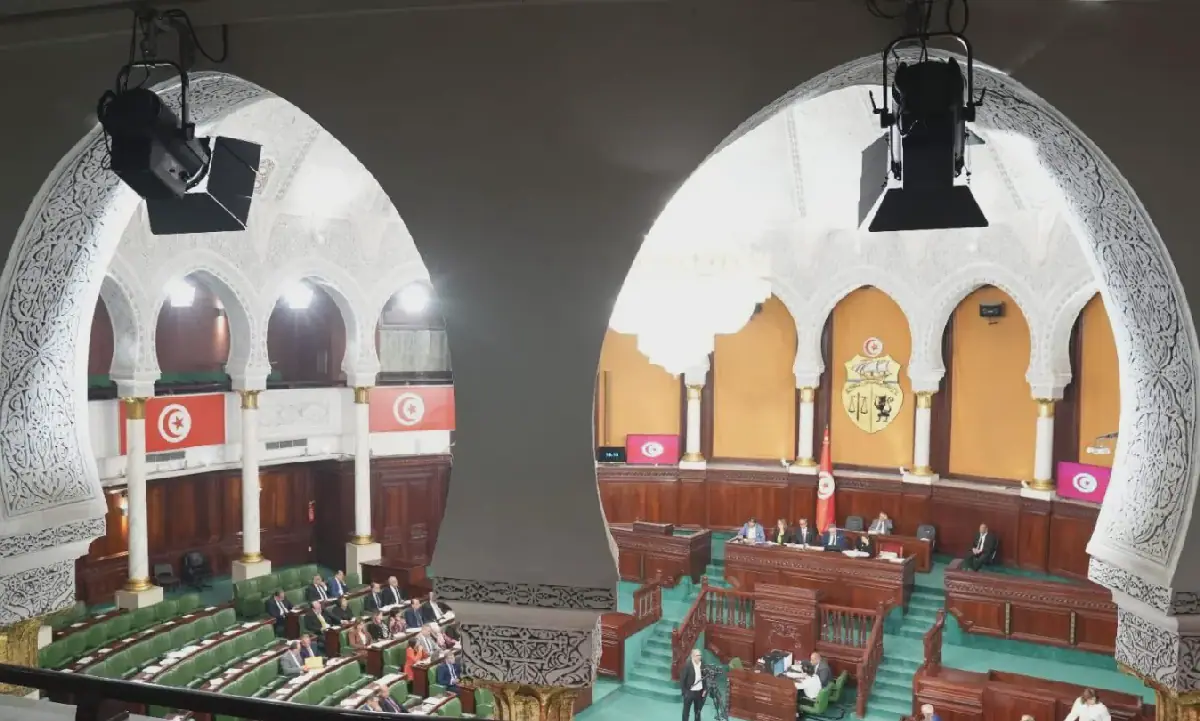
The Tunisian Parliament recently discussed its 2027 budget, with a focus on investment projects and infrastructure updates. According to Jalal Khadhmi, Deputy Speaker of the Parliament, the overall budget for the parliamentary institution has remained stable, despite a decrease in investment allocations. This decrease is attributed to the various stages of project implementation rather than a decline in the institution's investment approach.
The proposed 2027 budget for the Parliament is approximately 48 million and 751 thousand dinars, compared to 48 million and 876 thousand dinars in 2026. The budget is allocated between 34 million and 393 thousand dinars for rental expenses, which represents a 9.82% increase compared to 2026, and 6 million and 57 thousand dinars for operating expenses, which remains the same as in 2026.
Khadhmi also addressed the annual allowance for Parliament staff, stating that a legal framework is being proposed to include it in the 2027 finance bill, enabling staff to receive their material rights. He emphasized that upgrading the overall performance of the parliamentary institution requires modern equipment, given the outdated communication, voting, and display systems. A comprehensive project to update these systems is set to be launched.
Regarding the scheduling of general sessions, Khadhmi explained that it is coordinated with the executive branch and the Parliament's bureau, which oversees the organization and efficiency of these sessions to ensure respect for legal deadlines. Meanwhile, Deputy Speaker Sania Ben Mabrouk discussed the idea of launching a parliamentary channel, which would require significant financial and logistical resources.
Ben Mabrouk stated that the Parliament's communication and media department has adopted a practical approach to covering parliamentary activities and disseminating information to citizens using available resources. She also explained that participation in foreign missions is determined by the Parliament's bureau, based on specific criteria and in accordance with the internal regulations.
The allocation of parliamentary missions abroad is based on Article 138 of the internal regulations, and the frequency of assigning specific deputies to foreign missions is due to their permanent roles in certain regional or international structures. The Parliament's focus on updating its infrastructure and optimizing its resources reflects its commitment to improving its performance.
The discussion of the 2027 budget highlights the Parliament's efforts to balance its expenses and prioritize its investments in infrastructure and human resources. The proposed budget and ongoing projects aim to enhance the institution's efficiency and effectiveness in representing the Tunisian people.
Key points
- The Tunisian Parliament's 2027 budget has been discussed with a focus on investment projects and infrastructure updates.
- A comprehensive project to update the Parliament's communication, voting, and display systems is set to be launched.
- The Parliament aims to optimize its resources and prioritize investments in infrastructure and human resources.