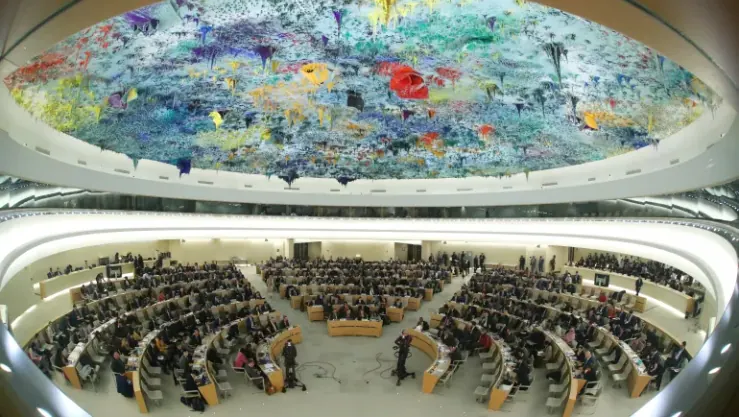
The UN Human Rights Council, during its 63rd session in Geneva, unanimously adopted a resolution titled "The impact of anti-personnel mines on the full enjoyment of all human rights: enhancing assistance to victims." The resolution, introduced by Algeria, along with Peru, South Africa, Vanuatu, the United Kingdom, Mozambique, and Croatia, marks a significant step in addressing the plight of landmine victims. This initiative underscores the international community's commitment to enhancing support for those affected by landmines.
The resolution builds upon a previous decision, 58/22, initiated by Algeria during the 58th session of the Council. It represents a progression in the efforts launched within the UN body, shifting focus towards strengthening assistance to landmine victims based on a human rights approach. The Algerian initiative received widespread welcome and acclaim from participating country delegations and civil society organizations. This acclaim is attributed to Algeria's historical experience with landmines left over from the colonial era and its successful national efforts in demining.
By the time of its adoption, the resolution had garnered support from 70 countries, making it one of the most endorsed decisions by the Council. This broad international backing reflects a consensus on the humanitarian and rights-based dimensions of the issue and confidence in Algeria's initiative and its constructive and consensual approach during negotiations. The resolution emphasizes the rights and needs of victims, their families, and local communities, stressing the importance of victim-centered support, including social and economic reintegration.
The resolution expresses concern over the severe impact of anti-personnel mines on fundamental rights, including the right to life, freedom of movement, health, education, work, adequate food, and development. It encourages the enhancement of data collection systems and the integration of psychological and social support into victim assistance programs. Additionally, it advocates for ensuring access to health institutions and public facilities for persons with disabilities.
A key aspect of the resolution is its call for states to fulfill their obligations under international human rights law and humanitarian law. It invites states to seriously consider joining the Convention on the Prohibition of Anti-Personnel Mines. The resolution also promotes international cooperation to accelerate demining efforts, provide comprehensive and non-selective assistance to victims, and continue technical assistance and capacity-building for affected states.
To follow up on the implementation of the resolution, it proposes a panel discussion during the 66th session of the Human Rights Council. This discussion will focus on the importance of enhancing victim assistance. The resolution also calls on special procedure mandate holders to give due attention to this issue within their mandates. The unanimous adoption of this resolution highlights Algeria's role in advocating for humanitarian issues related to human rights within UN forums.
The adoption of this resolution demonstrates Algeria's ongoing commitment to the principles of multilateralism and international cooperation, especially with the 30th anniversary of the Convention on the Prohibition of Anti-Personnel Mines approaching in 2027. The resolution is a testament to Algeria's leadership in human rights advocacy and its dedication to enhancing the lives of landmine victims globally.
Key points
- The UN Human Rights Council adopts an Algerian-led resolution to enhance assistance to victims of anti-personnel mines.
- The resolution emphasizes a human rights-based approach to supporting landmine victims and their communities.
- Algeria's initiative enjoys broad international support, reflecting a consensus on addressing the humanitarian impact of landmines.