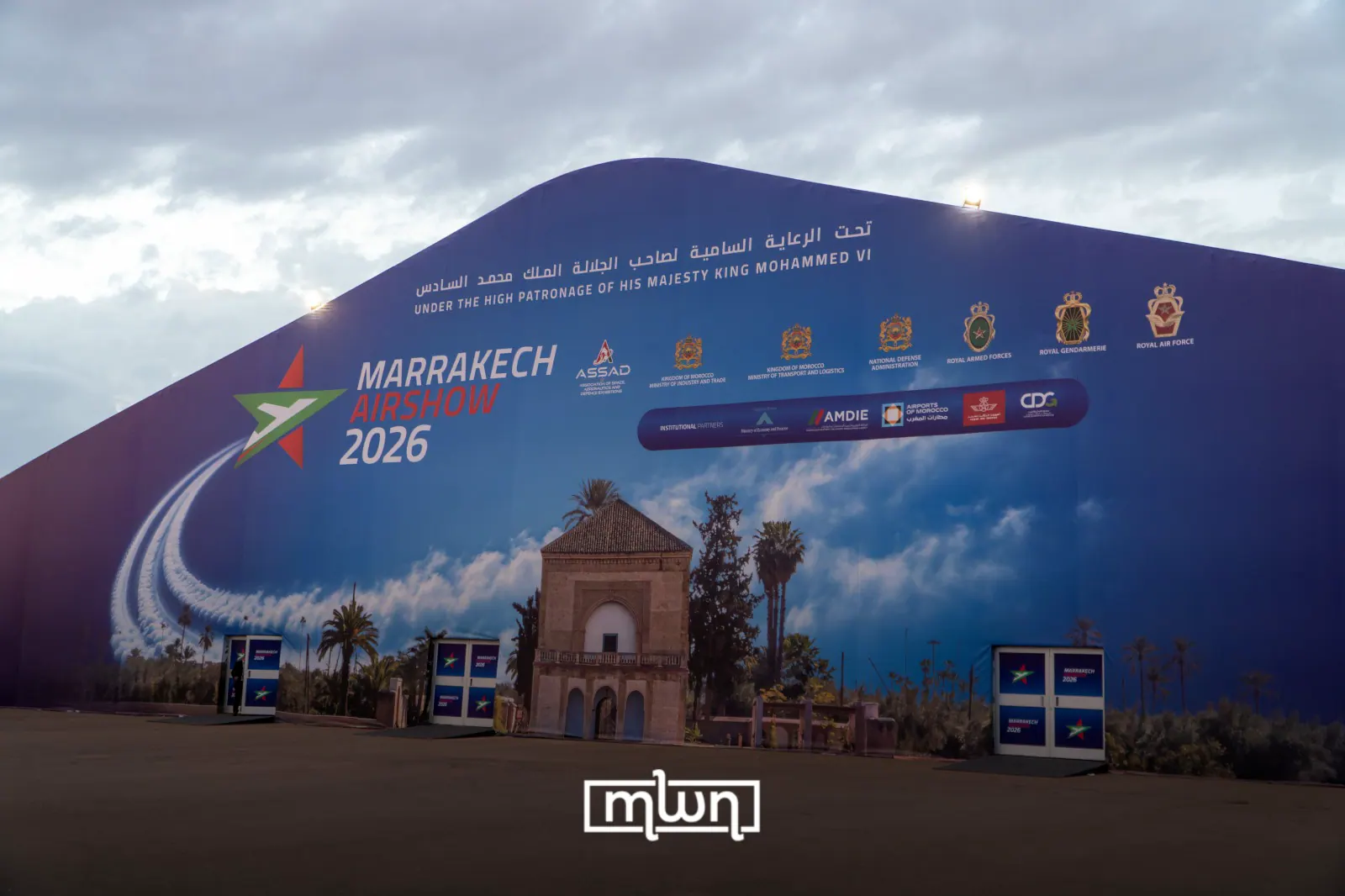
The eighth edition of the Marrakech Airshow opened at Marrakech's military air base, bringing together nearly 200 exhibitors from 27 countries. Minister delegate in charge of the National Defense Administration, Abdeltif Loudyi, outlined a strategy centered on local production, technological expertise, and greater defense sovereignty. This approach aims to move Morocco "from a model of importing defense capabilities to building national capacity and defense sovereignty."
Loudyi's remarks highlighted the transformation of Morocco's aerospace sector, which has undergone "a qualitative leap" under King Mohammed VI's strategic direction. The industry has moved from "simple assembly to manufacturing and advanced engineering." Morocco's ambition is to establish itself as a global hub for aircraft manufacturing and maintenance, attracting major companies such as Boeing, Airbus, and Pratt & Whitney.
A legal framework, including Law 10.20 promulgated in 2020, and its 2021 implementing decree, has created the foundation for investment in Morocco's defense industry. Dedicated industrial zones with logistics and services adapted to military manufacturing have also been established. Incentives and support for investors have helped attract projects with different international partners.
The framework also includes a decree issued in June 2024, which established two defense industrial acceleration zones. These zones authorize activities such as the manufacture of defense equipment, weapons systems, and ammunition, alongside related services. Morocco's security and economic stability, as well as its strategic position connecting Arab and African countries with Europe, make it an attractive destination for defense industries.
Loudyi emphasized the importance of attracting foreign investment and localizing military technologies while mobilizing Moroccan public and private actors to establish partnerships with overseas investors. The projects already launched aim to supply military equipment and services for domestic needs or export. This effort aligns with King Mohammed VI's July 29 Throne Day address, which highlighted the need for a defense and cybersecurity industrial and technological base.
Morocco's search for autonomy in defense is unfolding alongside substantial arms imports. According to the Stockholm International Peace Research Institute (SIPRI), Morocco was Africa's largest importer of major arms in 2021-2025. The United States, Israel, and France were the top suppliers. Developing domestic capabilities and diversifying partnerships are complementary tasks for Morocco.
By spreading procurement across multiple partners while building domestic production, maintenance, and technological capacity, Morocco reduces external leverage over its security choices and preserves greater freedom of action in moments of crisis. An example of this approach is the partnership with India's Tata Advanced Systems, which inaugurated a factory in Berrechid on September 23, 2025, producing WhAP 8×8 armored vehicles.
Key points
- Morocco aims to establish itself as a global hub for aircraft manufacturing and maintenance.
- The country is seeking to develop its defense industry through partnerships with international manufacturers.
- Morocco's strategy focuses on local production, technological expertise, and greater defense sovereignty.