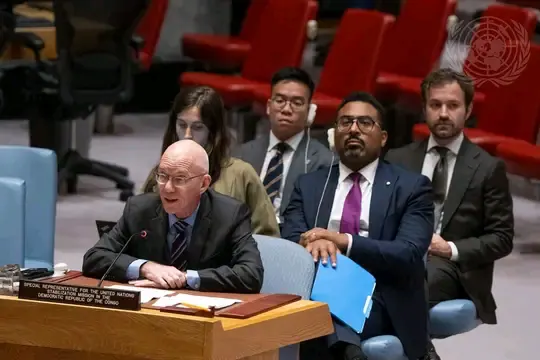
The United Nations Mission in the Democratic Republic of Congo (MONUSCO) Chief, James Swan, addressed the UN Security Council on September 29, highlighting the deteriorating security and humanitarian situation in eastern DRC. Swan reported ongoing clashes in the region, despite mediation efforts. He emphasized that the developments in eastern DRC underscore the magnitude of existing challenges. The situation remains volatile, with multiple armed groups involved.
Clashes between the Democratic Republic of Congo's armed forces (FARDC), supported by allies, and the Alliance Fleuve Congo (AFC) and Mouvement du 23 mars (M23), backed by Rwanda, have continued in North Kivu. These groups have been accused of unjust aggression against the DRC, violating international law. In South Kivu, particularly around Minembwe, FARDC and Wazalendo groups have confronted AFC/M23, supported by Twirwaneho and other armed groups. The use of heavy weapons has led to population displacement and disruptions in essential services and humanitarian aid.
The situation in Ituri remains fragile, especially near displacement sites, economic corridors, and agricultural areas. The Allied Democratic Forces (ADF), affiliated with the Islamic State, have intensified activities along the border with North Kivu, targeting mining sites. The ADF continues to carry out deadly attacks on civilians and engage in kidnappings beyond the area of responsibility assigned to MONUSCO. This escalation has exacerbated humanitarian concerns.
According to Swan, the increasing use of heavy weapons in several localities has caused significant population displacement and hindered the delivery of essential services and humanitarian aid. The humanitarian situation is dire, with many civilians affected by the ongoing violence. The international community is urged to take note of the escalating crisis and provide necessary support to alleviate human suffering.
The Security Council was informed that the violence has resulted in a significant increase in humanitarian needs. The UN and other humanitarian organizations are working to provide assistance to affected populations. However, their efforts are often hampered by insecurity and logistical challenges. The DRC government, with international support, is seeking to address the root causes of the conflict and stabilize the region.
James Swan's briefing to the Security Council underscored the need for a comprehensive approach to address the complex security and humanitarian challenges in eastern DRC. He emphasized that a lasting solution requires sustained diplomatic efforts, support for humanitarian activities, and a commitment to addressing the underlying causes of the conflict. The international community is called upon to provide sustained support to the DRC.
The crisis in eastern DRC has regional implications, and the international community is urged to remain engaged in finding a peaceful resolution. The UN Mission in the DRC continues to work towards stabilizing the region and protecting civilians. Ongoing diplomatic efforts aim to bring warring parties to the negotiating table and find a sustainable solution to the conflict.
Key points
- The UN Mission chief, James Swan, alerts the Security Council to the escalating security and humanitarian crisis in eastern DRC.
- Ongoing clashes between armed groups have resulted in significant population displacement and disruptions in essential services and humanitarian aid.
- The international community is urged to provide sustained support to address the complex security and humanitarian challenges in eastern DRC.