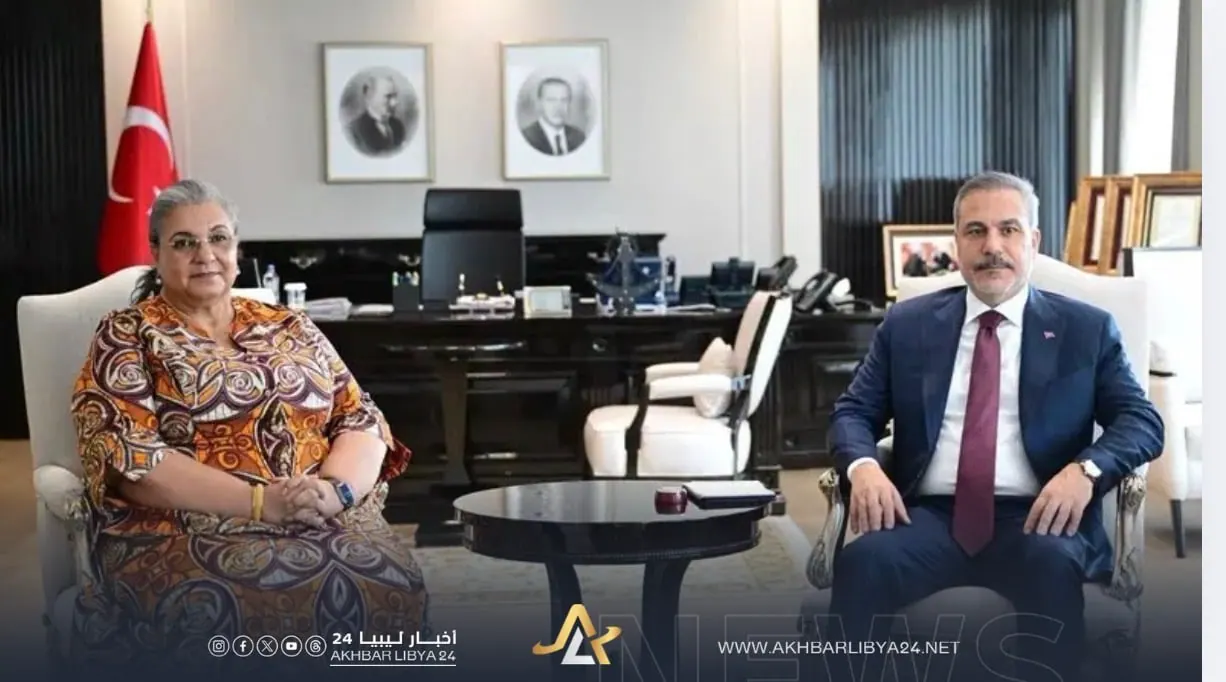
UN Special Envoy to Libya, Hana Titi, conducted talks in Ankara with Turkish Foreign Minister Hakan Fidan and other senior officials on October 7. The discussions centered on the latest political and security developments in Libya, with a focus on advancing the political process and setting conditions for national elections. This move is part of the UN's efforts to build on previous agreements and push Libyan parties and institutions towards implementing necessary steps for elections.
The talks between Titi and the Turkish officials emphasized the importance of accelerating the political process and achieving national elections as soon as possible. The UN mission has been working on addressing issues related to the electoral process, governance, economy, security, and institutional unity. These efforts aim to overcome the political and institutional divisions that have hindered progress towards national elections. The discussions also followed a recent meeting in Tunis, where participants stressed the need to protect judicial independence and ensure the integrity of the electoral process.
During her meeting with Fidan, Titi provided an update on the outcomes of the mini-meeting in Tunis and efforts to transition from understanding to implementation, particularly through Libya's House of Representatives and the High Council of State. She expressed the UN mission's commitment to working with both councils to secure necessary approvals, legislation, and procedures to implement agreements. This comes after the House of Representatives announced its support for the mini-meeting agreement in September, seen as a crucial step towards elections.
The Ankara talks also covered economic and financial aspects, including the need for unified public spending and careful management of state resources. The discussions highlighted that spending should align with the provisions of the Unified Development Program and its annexes. This focus on economic issues reflects the UN's increasing emphasis on unifying economic institutions and enhancing public resource management, recognizing that addressing institutional divisions extends beyond politics to financial management and state institutions.
Minister Fidan reaffirmed Turkey's full support for Titi and the UN Mission in Libya, expressing agreement with her assessment of current political developments. He underscored the continuation of close coordination with the UN mission to help create conditions for elections. Turkey's stance is an extension of its previous affirmations of support for the UN-led political process, emphasizing the importance of Libyan-led political process and stability.
The visit by Titi to Ankara gains significance as the UN mission intensifies its engagements with regional and international parties, alongside its contacts with Libyan institutions and actors. The mission aims to maintain momentum from recent months, particularly after the August 30 agreement, and push Libyan institutions to complete required steps for its implementation. Key issues affecting the electoral process include the constitutional and legal framework, institutional divisions, and political and judicial disputes.
The UN's efforts in Libya are critical at this juncture, with the goal of paving the way for national elections and advancing the political process. The talks in Ankara reflect a broader strategy to engage with various stakeholders and address the complex challenges facing Libya's transition. The situation remains sensitive, with the UN mission working to overcome obstacles and ensure progress towards a more stable and democratic Libya.
Key points
- The UN mission is focusing on advancing Libya's political process through dialogue with international and regional stakeholders.
- Turkey has expressed full support for the UN mission and its efforts to achieve national elections in Libya.
- The UN is working to address key issues such as unified institutions, financial management, and the electoral process to pave the way for national elections.