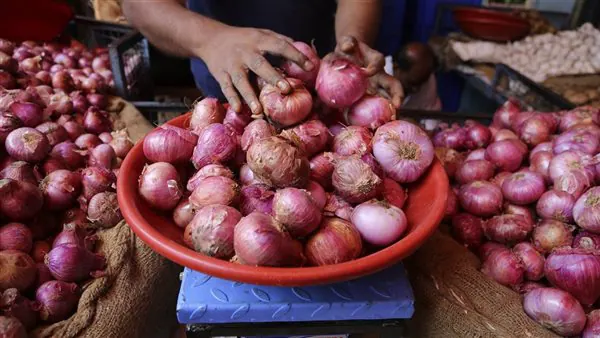
Egypt has consistently ranked among the top 5 global producers and exporters of onions, according to Dr. Abdel Majid Mabrook, head of the onion research department at the Agricultural Research Center. The country's production capacity and ability to meet domestic demand while having a surplus for export have contributed to its prominent position. Mabrook noted that Egypt usually occupies the fourth or fifth spot globally in onion production and export.
The country's domestic consumption of onions stands at around 2 million tons, while production reaches 4 million tons, resulting in a surplus that can be directed towards exports and supporting the operations of processing and manufacturing plants. Onion exports are a vital source of foreign currency, particularly with external markets relying on Egyptian products and importing significant quantities.
The demand for Egyptian onions increases when there is a shortage in the global supply, prompting importing countries to boost their purchases from Egypt. This heightened external demand leads to an increase in export quantities, which may impact the local market's supply and, subsequently, prices. Mabrook emphasized that the current issue is not unique to Egypt, as other countries competing in onion production and export face similar challenges due to changes in markets and supply chains.
High onion prices encourage farmers to expand their cultivated areas in the next season to capitalize on the increased returns, ultimately leading to higher production and supply. This production cycle is a key factor that can contribute to a decline in prices once new crops enter the market. As a result, the dynamics of onion production and export play a crucial role in shaping the market.
Regarding the possibility of the government imposing a ban on onion exports, Mabrook expressed skepticism about such a decision being made. He stressed that using the term "ban on onion exports" is not accurate and that Egypt has made significant efforts to open external markets to its exports. Halting exports could lead to those markets seeking alternative sources, potentially disrupting the entire production and supply chain.
Currently, onion prices stand at around 30 Egyptian pounds and are expected to remain stable until December. However, with the introduction of new crops from the Upper Egypt region into the market by the end of December or early January, the supply is expected to increase, and prices are likely to decrease. The arrival of the new crop is a critical factor in regulating the supply and restoring balance between available quantities and demand.
The Egyptian onion sector's performance has significant implications for the country's agricultural economy and foreign trade. With its prominent position in global onion production and export, Egypt is poised to continue playing a vital role in meeting international demand for onions. Key factors, such as production levels, domestic consumption, and global market trends, will influence the sector's future prospects.
Key points
- Egypt ranks among the top 5 global onion producers and exporters.
- The country's onion production stands at 4 million tons, with 2 million tons consumed domestically.
- Onion prices are expected to remain stable at around 30 Egyptian pounds until December.