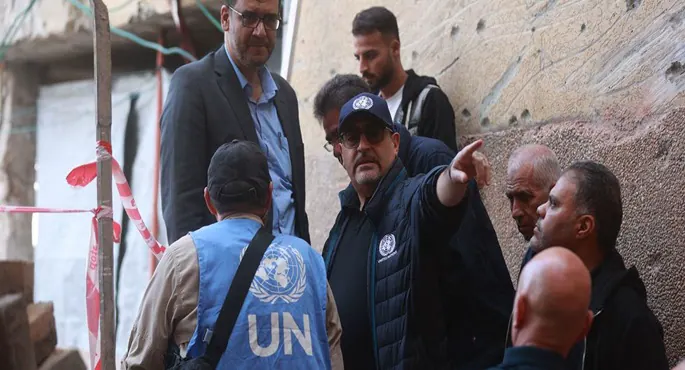
The humanitarian situation in Gaza remains a pressing concern, with the UN Coordinator for the Middle East Peace Process, Ramzi Akbrov, highlighting the complexities of the crisis. Despite progress in food aid, critical issues such as water, sanitation, and shelter continue to affect the population. The reliance on assistance and cash transfers is high, with the labor market yet to recover. Akbrov emphasized the UN's ongoing efforts in areas like water, sanitation, health, and education.
Akbrov noted that over 300,000 children in Gaza are receiving education in temporary spaces, while only a limited percentage of land is available for agricultural activities. The UN Relief and Works Agency for Palestine Refugees in the Near East (UNRWA) continues to operate in Gaza, despite facing restrictions. The Karm Abu Salim crossing is currently the only open crossing for UN personnel, but restrictions on dual-use materials hinder early recovery efforts and the importation of essential supplies.
Residents of Gaza have expressed their desire to not spend another winter in tents, but rather return to schools, work, and contribute to rebuilding their community. They also seek the restoration of basic services such as water, sanitation, and electricity. Akbrov mentioned that over 8,000 people are still missing under the rubble. In the West Bank, the situation is described as "extremely tense," with ongoing settlement activities, violence, movement restrictions, and economic pressures.
The UN is providing support to affected families and communities in the West Bank through grants, cash assistance, and legal aid. Akbrov stressed that a two-state solution is essential and that the international community must address the issue comprehensively. He emphasized the need to rebuild trust, stop incitement to violence, and support Palestinian institution unity. The global coalition for a two-state solution reaffirmed the international community's commitment to this goal.
Akbrov outlined several key requirements for moving forward, including stopping incitement to violence, resuming negotiations, and addressing the issue directly. He also emphasized the importance of supporting Palestinian elections, which would be a crucial factor in advancing the political horizon. The UN Coordinator highlighted that a single, unified Palestinian government and a comprehensive recovery plan are essential.
The situation in Gaza and the West Bank requires sustained international attention and support. Akbrov's remarks underscore the complexities of the humanitarian crisis and the need for a comprehensive political solution. The international community must work together to address these challenges and support the Palestinian people.
The UN's efforts in Gaza and the West Bank aim to alleviate the humanitarian crisis and support a peaceful resolution. Akbrov's statement serves as a reminder of the urgent need for a lasting solution to the Israeli-Palestinian conflict.
Key points
- The humanitarian situation in Gaza remains a pressing concern, with critical issues persisting in water, sanitation, and shelter.
- A two-state solution is essential, and the international community must address the issue comprehensively.
- Supporting Palestinian elections is crucial for advancing the political horizon.