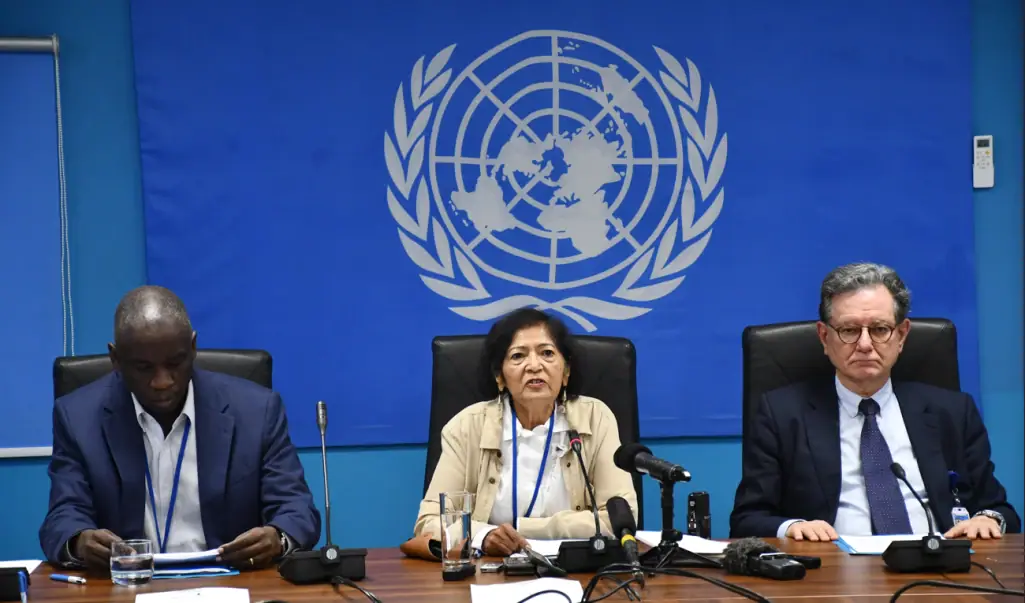
The UN Commission on Human Rights in South Sudan has expressed concerns over President Salva Kiir's plans for elections, warning that they may undermine the 2018 peace agreement and fuel renewed conflict. Chair of the Commission, Yasmin Sooka, described the changes as a "constitutional coup" through legislative reforms. The Commission called on member states and regional partners to take urgent action to prevent renewed conflict and restore inclusive governance.
On September 22, President Kiir made significant changes, dissolving the transitional government, national parliament, and state legislatures, and removing First Vice President Riek Machar and other vice presidents. He appointed a caretaker administration, delinking the electoral process from key transitional requirements, including the drafting of a permanent constitution and a national population census. Machar remains detained and on trial, while his Sudan People's Liberation Movement-in-Opposition (SPLM-IO) and other opposition actors are excluded from the electoral process.
The Commission emphasized that elections cannot replace the inclusive political settlement needed to secure lasting peace. Sooka urged member states to look beyond the planned election date of December 22, stressing that South Sudan will still need an inclusive political settlement, protection for civilians, and institutions capable of preventing further violence. The Commission also raised concerns over fighting in Upper Nile and Jonglei states, including aerial bombardments, ground offensives, and conflict-related sexual violence.
Commissioner Barney Afako highlighted that South Sudan's priority should be a credible political process that addresses grievances and manages political differences peacefully. He warned that the current trajectory promotes exclusion and risks further instability, calling for dialogue, a ceasefire, and implementation of the peace agreement. The Commission also expressed alarm over the recruitment of children by armed groups and the continued insecurity and displacement of civilians.
The Commission's concerns were echoed by Commissioner Carlos Castresana Fernández, who stated that serious violations continue without effective accountability, while those implicated in abuses remain in senior military and political positions. He called for the establishment of the Hybrid Court for South Sudan and concrete steps to hold those responsible for serious crimes accountable. Fernández also highlighted the issue of corruption and the diversion of public resources.
The Commission urged the African Union, the Intergovernmental Authority on Development, and the United Nations to activate a joint task force to support the restoration of inclusive governance under the peace agreement. They also called for an immediate end to hostilities, protection of civilians, and safe, unimpeded humanitarian access. Member states were urged to ensure that the UN Mission in South Sudan has the resources and freedom of movement needed to protect civilians.
The Commission's three members are in New York from October 26 to 30 to meet member states, regional partners, civil society, and other stakeholders on efforts to prevent further deterioration in South Sudan. The Commission is an independent body established by the UN Human Rights Council in March 2016 and renewed annually. Sooka emphasized that South Sudan's people cannot afford another cycle of warnings followed by inaction, urging member states and regional partners to act together with urgency and determination.
Key points
- The UN Commission on Human Rights in South Sudan warns that President Salva Kiir's election plans risk undermining the 2018 peace agreement.
- The Commission calls for an inclusive political settlement, protection for civilians, and institutions capable of preventing further violence.
- The Commission urges member states and regional partners to take urgent action to prevent renewed conflict and restore inclusive governance.