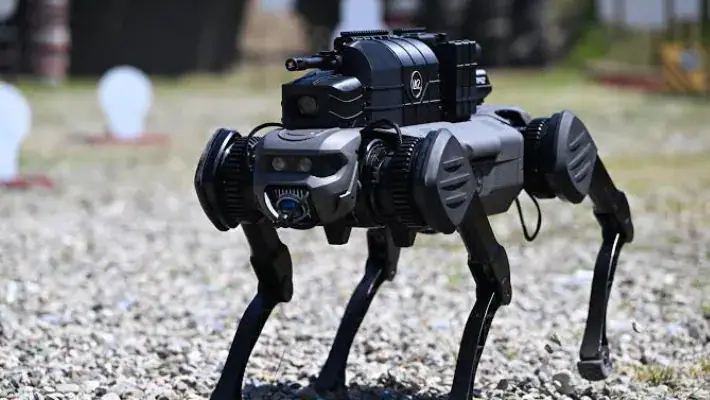
UN Secretary-General Antonio Guterres has urged member states to negotiate a legally binding instrument on lethal autonomous weapons systems, also known as "killer robots." He made the call in Geneva, addressing delegates from over 120 member states. Guterres emphasized the need for clear prohibitions and restrictions on the technology. This move aims to prevent the use and spread of these weapons, which pose significant humanitarian, legal, ethical, and security challenges.
The seventh Review Conference of the Convention on Certain Conventional Weapons is currently underway. Guterres highlighted that the nature of warfare is changing, with new technologies presenting unprecedented challenges. He stressed that civilians must be shielded from the devastating effects of armed conflict and unnecessary suffering. The UN chief's call for action follows a similar appeal from UN Human Rights Chief Volker Türk, who emphasized the urgent need for a treaty to regulate lethal autonomous weapons.
Volker Türk, the High Commissioner for Human Rights, expressed concerns about the rapid development of autonomous weapons and their potential accessibility. He stated that machines should never have the power to decide whether a human lives or dies. Türk called for prohibitions on autonomous weapons that target people and for a ban on weapons whose functions and effects humans cannot fully understand or control. He emphasized that human judgment and responsibility must remain central to decisions involving the use of force.
The Convention on Certain Conventional Weapons has been instrumental in reducing human suffering caused by landmines, improvised explosive devices, and other weapons. With 128 "high contracting parties," the convention is a key pillar of international disarmament discussions. However, there is currently no agreement on the nature of a possible new instrument for lethal autonomous weapons systems, including whether it should be legally binding or not.
The UN Office for Disarmament Affairs (UNODA) is organizing discussions at the conference. The talks are expected to consider the humanitarian impact of landmines and emerging methods of warfare not covered by other international instruments. A key challenge is reaching a consensus on the regulation of lethal autonomous weapons systems. UN General Assembly Resolution 78/241, adopted in December 2023, confirmed that lethal autonomous weapons systems must respect the laws of war, with 152 countries supporting the resolution.
The development of lethal autonomous weapons systems raises significant concerns about their potential misuse. Guterres and Türk have emphasized the need for urgent action to regulate these weapons. The international community must balance the potential benefits of autonomous technologies with the need to prevent harm to civilians and ensure accountability. The conference will continue to discuss the implications of lethal autonomous weapons systems and potential solutions.
The call for a legally binding instrument on lethal autonomous weapons systems reflects growing international concern about the risks posed by these technologies. As the development and deployment of autonomous weapons continue to advance, the need for clear regulations and safeguards becomes increasingly pressing. The outcome of the Review Conference and future discussions will be crucial in shaping the international response to the challenges posed by lethal autonomous weapons systems.
Key points
- UN Secretary-General Antonio Guterres urges member states to negotiate a legally binding instrument on lethal autonomous weapons systems.
- UN Human Rights Chief Volker Türk emphasizes the need for prohibitions on autonomous weapons that target people.
- The international community must balance the potential benefits of autonomous technologies with the need to prevent harm to civilians and ensure accountability.
Reporting sources
- UN chief calls for legally binding instrument for ‘killer robots’ · Peoples Gazette