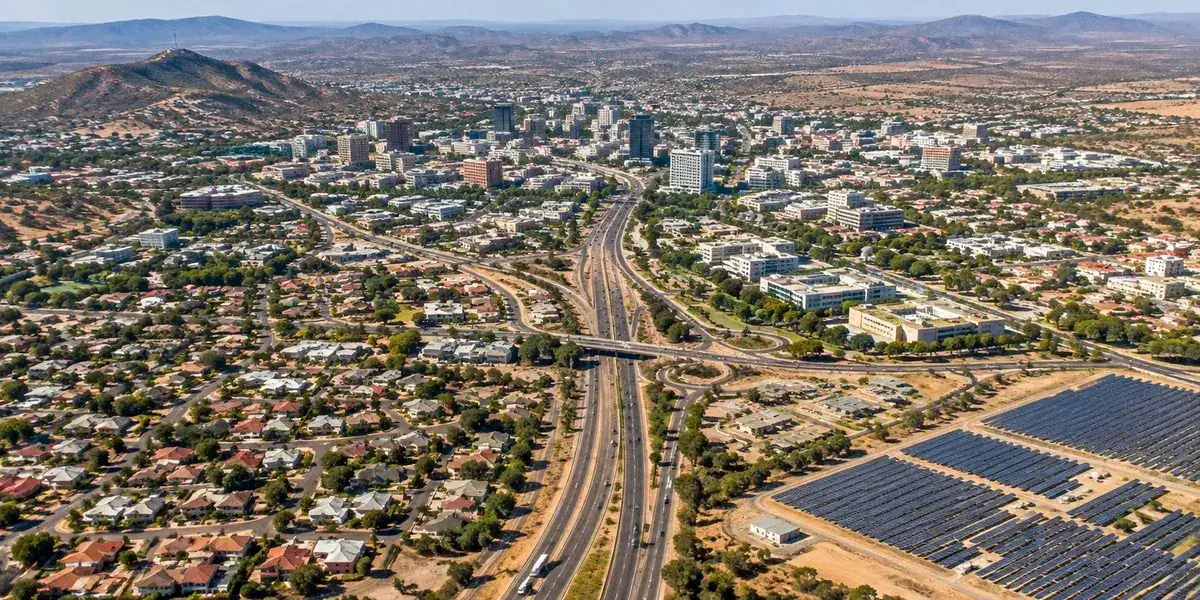
Namibia's investment opportunities in housing, energy, and logistics have gained significant backing from the Government Institutions Pension Fund (GIPF), which has approximately US$282M, or N$5.1bn, available for local projects. This fund is part of the GIPF's unlisted investment portfolio, which has committed N$28.2bn in total, with N$23.1bn already deployed. The remaining balance is institutional capital waiting for viable opportunities, not a government grant, and will require commercial discipline to move forward.
The GIPF Board of Trustees chairperson, Penda Ithindi, disclosed the figures at the 2026 Pension and Investment Symposium, highlighting the need for bankable projects to absorb the available capital. Ithindi emphasized that developmental urgency cannot substitute for sound project structuring, and pension funds must protect beneficiaries, meet return targets, and assess risks before signing commitments. This cautious approach is necessary to ensure the fund's investments are secure and beneficial to its beneficiaries.
Namibia's retirement funds held a total of N$301.7bn in investment assets at the end of December 2025, according to The Namibian. While this figure is not equivalent to capital available for new local projects, it indicates that domestic funding capacity extends well beyond GIPF alone. The country's unemployment, housing shortages, and infrastructure deficits create strong demand for investment, but demand alone does not make a project bankable. Sponsors must provide credible revenue models, clear risk allocation, and permits before institutional funds commit.
The available GIPF balance of US$282M is large enough to anchor several significant projects, but the bottleneck is not capital – it is preparation. As one analyst noted, Namibia's investment opportunity is now a project-preparation challenge. The sectors that can attract the money are those with predictable cash flows, such as affordable housing, renewable power, and transmission. These sectors offer the strongest near-term prospects, and energy storage adds further scope.
Water infrastructure, including desalination and water-recycling projects, also warrants attention, provided tariff structures and offtake contracts hold up under scrutiny. Investor focus will fall on the credit quality of buyers. Agricultural infrastructure beyond primary production, including cold storage, food processing, and logistics, could support local value addition. Growing private-sector interest in Namibia's resource security signals that sponsors are increasingly active across these areas.
Namibia's international relations and trade ministry reported in September 2026 that it had facilitated 28 projects, attracting N$66.85bn in investment and associated with 9,343 permanent jobs. The sectors covered include agriculture, mining, renewable energy, tourism, real estate, and digital services. These figures describe facilitated investment, not completed deployment, and indicate growing structured demand across multiple sectors.
To move forward, Namibia must build a pipeline of bankable projects that can absorb the available capital. The country's investment opportunity is now a project-preparation challenge, and sponsors must provide credible revenue models, clear risk allocation, and permits before institutional funds commit. With the right projects in place, Namibia can tap into the available capital and drive growth in key sectors.
Key points
- The Government Institutions Pension Fund has US$282M available for local projects, but the country needs bankable projects to absorb the capital.
- Namibia's retirement funds held a total of N$301.7bn in investment assets at the end of December 2025.
- The sectors that can attract investment are those with predictable cash flows, such as affordable housing, renewable power, and transmission.
Reporting sources
- Namibia investment opportunities backed by US$282M GIPF fund · FurtherAfrica