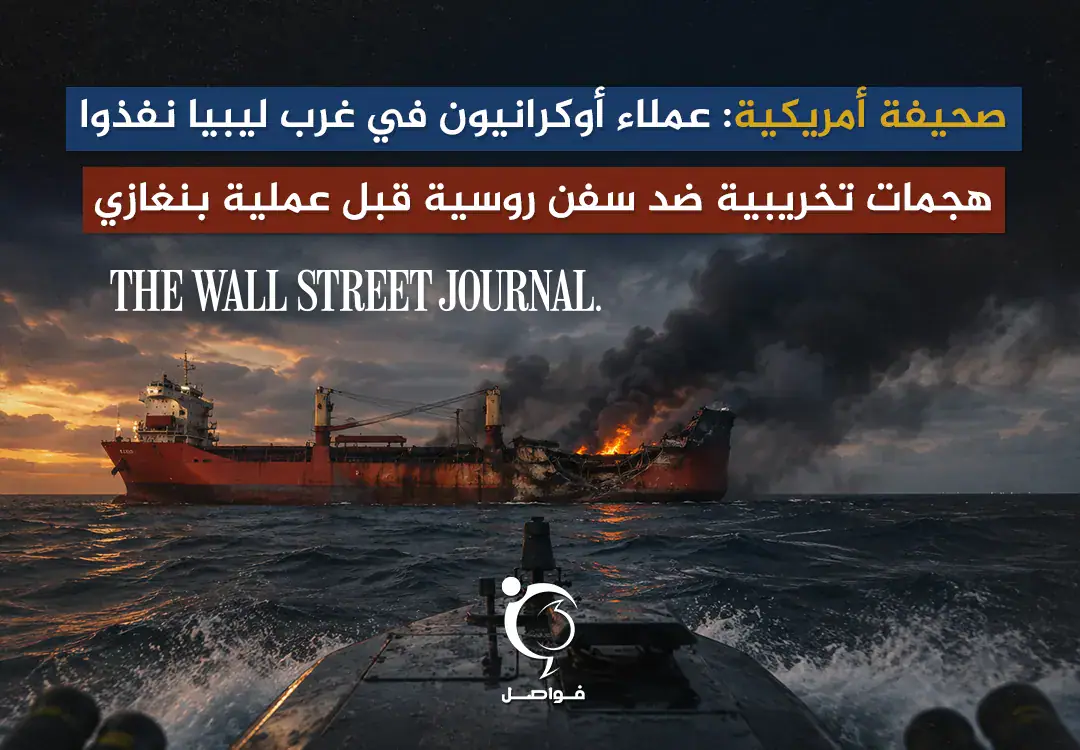
A team of Ukrainian special forces stationed in Libya had been monitoring Russian naval and commercial vessels for months, gathering intelligence for a daring operation outside of Ukraine and Russia. According to people familiar with the operation and reporting in the Wall Street Journal, the Ukrainians launched seven sea drones carrying explosives from a ship in the Mediterranean Sea off the coast of North Africa just before dawn on Sunday.
The drones were met with fire from Russian helicopters and machine guns mounted on speedboats, but managed to hit a Russian frigate and a nearby cargo ship. Most of the attack targeted the frigate, while at least one drone hit the cargo ship. The explosions caused the frigate, named "Merkuri", to sink, while the cargo ship "Angara" caught fire.
The operation highlighted Ukraine's ability to target the Russian Navy and its network of arms shipments to areas where Russian forces and their allies are active. It also showed Kyiv's willingness to expand its military operations beyond traditional battlefields. According to Jalal Harshawi, a security analyst specializing in Libya at the Royal United Services Institute in London, "Ukrainians have always been known to push boundaries".
This was not the first operation of its kind. Ukrainian agents stationed in western Libya carried out sabotage attacks on at least three Russian-linked ships sailing in the Mediterranean Sea last year, according to people familiar with the matter. However, Kyiv did not claim responsibility for those attacks.
The intelligence gathered by Ukraine in preparation for the latest attack also contributed to identifying targets for previous operations. The strike comes as Moscow is seeking to reorganize its military presence in the region after the fall of Bashar al-Assad's regime in Syria, where it had a naval base. Russia is now looking for alternative locations in warm-water ports to secure routes for transporting troops, mercenaries, and arms to Africa.
Satellite images taken by the commercial company "Fantour" showed two Russian cargo ships, "Anastasia" and "Yuri Arshenevsky", arriving at a port in Tobruk, eastern Libya, in September. The images also appeared to show military vehicles being unloaded from the ships. Russian warships often escort cargo ships carrying military equipment, as was the case here.
According to Harshawi, Russia had been increasing its military equipment shipments to Libya, adding that it "was not afraid to deliver thousands of tons of equipment escorted by Russian Navy ships". However, what caught the Ukrainians' attention was not just the equipment shipments, but also the symbolic and strategic significance of Russia's naval presence.
Key points
- Ukraine carried out a daring operation using sea drones to sink a Russian frigate and damage a cargo ship off the coast of Libya.
- The operation highlighted Ukraine's ability to target the Russian Navy and its network of arms shipments.
- Russia is reorganizing its military presence in the region, seeking alternative locations in warm-water ports to secure routes for transporting troops and arms to Africa.