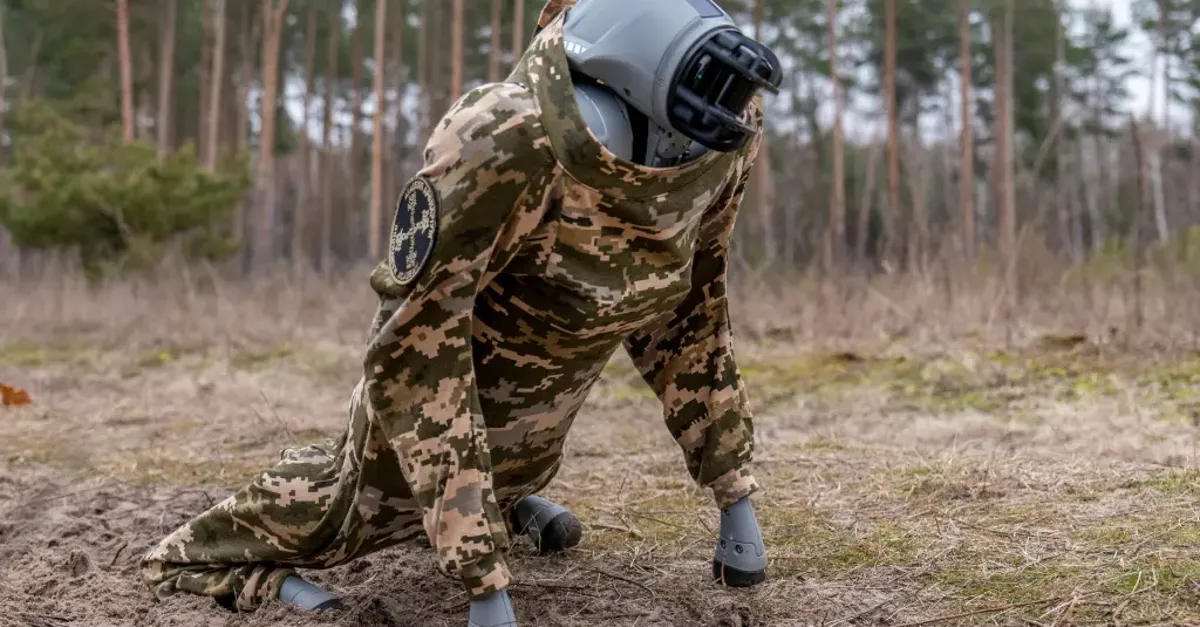
The rapidly evolving military technology landscape has propelled the Ukraine-Russia conflict into a new era, with Ukraine's former Defense Minister, Mykhailo Fedorov, advocating for the deployment of artificial intelligence-powered robots on the battlefield. Fedorov, who played a crucial role in developing Ukraine's drone program, believes that the country cannot afford to wait for the ethical concerns surrounding autonomous weapons to be resolved, given the ongoing war with Russia and the need to compensate for the shortage of soldiers.
Fedorov envisions a future where robots take center stage in warfare, enabling nations to make decisions and execute tasks on the battlefield with minimal human intervention. He warns that Russia and its allies may soon develop systems that can operate independently, without communication links, and that Ukraine must keep pace with its adversaries in developing combat robots. The former minister emphasizes that the nation that first deploys autonomous robots will set the stage for a new era of warfare, and that Ukraine must be at the forefront of this technological revolution.
Ukraine has already begun to utilize unmanned ground vehicles, which perform logistical tasks, evacuate wounded soldiers, and execute combat missions. While these systems have not yet been widely deployed, Fedorov is pushing to create what he describes as an "army of robots," which could reduce human casualties and help Ukraine counter Russia's numerical superiority. The country's military is exploring various technologies, including humanoid robots, to enhance its capabilities on the battlefield.
Fedorov has transitioned from government to the private sector, investing in defense technology and establishing a new company with Alex Karp, CEO of Palantir, as a key investor. The company aims to secure funding from the United States and the Middle East to develop advanced military technologies. Fedorov believes that Ukraine must adapt to the changing nature of warfare and shift from being solely a consumer of technology to an investor in military tech companies.
However, Fedorov's association with Palantir has sparked controversy, with critics citing concerns over corruption and the revolving door between government and private industry. Some argue that the focus on humanoid robots may divert attention from Ukraine's more pressing military needs, such as air defense systems. Fedorov counters that his project will also focus on developing intercept systems to counter Russian aerial attacks.
The debate surrounding Fedorov's vision for Ukraine's military future has sparked a broader discussion on the ethics and implications of autonomous warfare. Some experts warn that the development of AI-powered robots could lead to unintended consequences, while others see it as a necessary step to ensure Ukraine's survival. As the conflict with Russia continues, Ukraine's military is likely to become increasingly reliant on technology to counter its adversary's numerical superiority.
The use of autonomous systems in warfare raises questions about the future of combat and the role of human soldiers on the battlefield. As nations invest in AI-powered robots, the international community will need to grapple with the ethics and regulations surrounding their development and deployment. For now, Ukraine is pressing ahead with its plans to integrate robots into its military strategy, in a bid to stay ahead of its adversaries and ensure its survival in the face of ongoing conflict.
Key points
- Ukraine's ex-defense minister pushes for AI-powered robots in battle
- Development of autonomous systems raises questions about future of combat
- Ukraine seeks to counter Russia's numerical superiority with technology