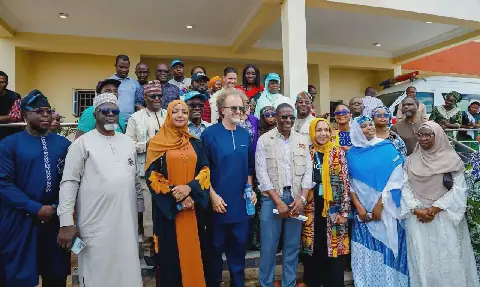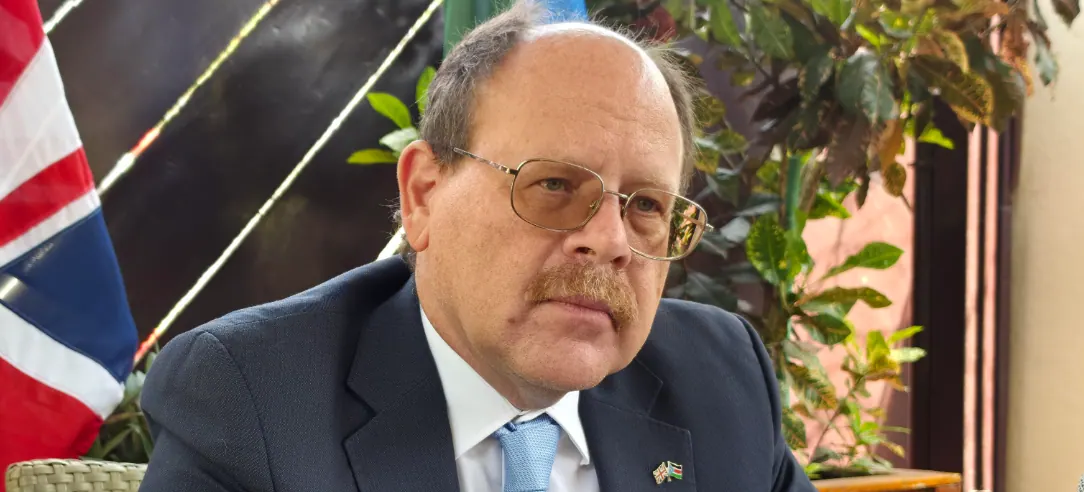
Outgoing UK Ambassador to South Sudan David Ashley has issued a stern warning to the South Sudanese government, stating that the British government will track down and sanction those responsible for stealing public funds. Speaking at the University of Juba, Ashley criticized the country's fiscal mismanagement, revealing that less than 2% of the 2024-2025 national budget was allocated to health and education combined.
Ashley emphasized that South Sudan receives significant revenue, including an estimated $60 million monthly in oil revenue and at least $20 million in non-oil revenue. However, he questioned where the money was being allocated, citing official budget execution reports and a UN Human Rights Commission investigation. The ambassador highlighted stark spending disparities, noting that the Ministry of Presidential Affairs previously received over 19 times the funding allocated to the Ministry of Health.
A striking instance of misaligned financial priorities was shared by Ashley, who revealed that the government had promised to buy 900 vehicles for MPs and employees of the Transitional National Legislative Assembly, while the country's long-overdue $10 million commitment to the World Bank-led Health Systems Transformation Project remained unfulfilled. The UK alone contributed $26 million to the fund last year.
Ashley urged the government to prioritize prompt payment of civil servants' salaries and significantly raise budget allocations for social services. He emphasized that the British government would continue to press for South Sudan's resources to be used to support the essential needs of its population. The ambassador reaffirmed Britain's commitment to holding corrupt actors accountable globally through asset tracking and targeted sanctions.
The diplomat's comments come at a time when South Sudan is facing significant development challenges. The country's reliance on international aid is decreasing, and Ashley stressed that a fundamental governance shift is necessary to ensure sustainable development. He concluded that better use of public resources, combined with peace, was the only way for South Sudan to move beyond perpetual crisis.
Ashley's statement has significant implications for the South Sudanese government, which has been accused of corruption and mismanagement. The country's leaders have been criticized for their handling of public funds, and the ambassador's warning of sanctions is likely to increase pressure on the government to reform. The UK's commitment to tracking down stolen public funds and sanctioning those responsible is a clear indication of its determination to hold the government accountable.
The situation in South Sudan remains critical, with the country's economy and development prospects heavily influenced by the government's handling of public funds. The international community, including the UK, will be watching closely to see if the government takes concrete steps to address corruption and mismanagement.
Key points
- The UK will track down stolen public funds and sanction those responsible.
- South Sudan's government receives significant revenue but has misallocated funds.
- The country's development prospects are heavily influenced by its handling of public funds.