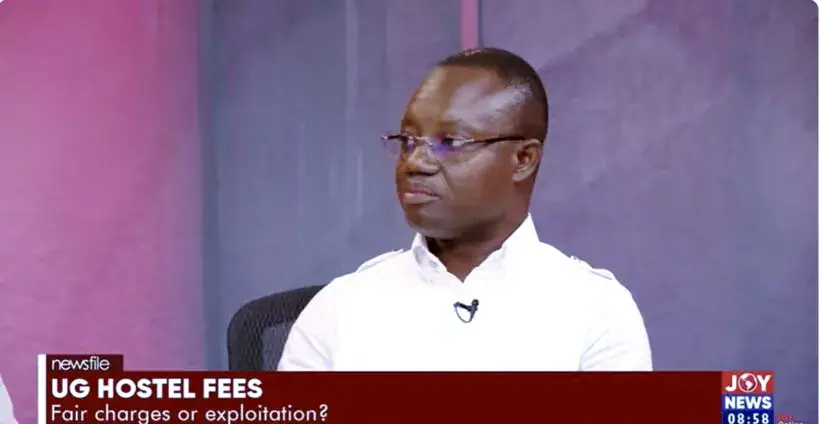
The University of Ghana has stated that accommodation fees charged by the University of Ghana Enterprises Limited (UGEL) remain among the lowest compared to privately operated hostels. This comes after concerns were raised over the recent increase in hostel charges. According to Prof. Gordon Abekah-Nkrumah, Director of Institutional Advancement at the University of Ghana, the charges reflect the cost of maintaining the facilities and providing additional services to students.
Prof. Abekah-Nkrumah explained that the GH¢8,050 fee covers accommodation for two semesters, representing 32 weeks, and translates into approximately GH¢35.40 per day. He emphasized that the amount covers more than just the use of a room, as UGEL also provides electricity, running water, drinking water, sanitation, and other essential services. This package, he noted, includes a capped electricity arrangement, unlike some privately operated hostels where students pay separately for electricity after exhausting a limited allocation.
UGEL also bears the cost of running water, supplies drinking water, and provides students with a pack of tissue every semester. Additionally, the company is responsible for sanitation, maintenance of the hostel compounds, and the provision of pastoral services, including the payment of tutors who support students in the residential facilities. These services, alongside administrative and operational expenses, must be considered when assessing whether the accommodation charges are expensive, Prof. Abekah-Nkrumah argued.
The Director of Institutional Advancement at the University of Ghana rejected suggestions that the 15% adjustment from the initially proposed 26% increase resulted from the intervention of the Rent Commissioner, Frederick Opoku. Instead, he stated that the reduction was the outcome of negotiations between the university and the Residency Board, which includes student representatives. This followed the university's internal consultation process, he added.
UGEL was established as a wholly owned subsidiary of the University of Ghana following challenges in financing the construction and management of additional student accommodation. The university had resorted to commercial borrowing from six banks to address a severe accommodation shortage, which at the time forced several students to share rooms designed for fewer occupants. Failure to meet the loan repayment obligations could expose the hostel facilities, which serve as collateral for the loans, to takeover by the banks, Prof. Abekah-Nkrumah warned.
The university is also conscious of students who cannot afford the charges and has made financial assistance available through its Student Financial Aid Office, including support for accommodation. This comes amid ongoing concerns over the affordability of university accommodation and the recent disagreement between UGEL and the Rent Commissioner over hostel charges.
Key points to note include UGEL's provision of comprehensive services, including electricity, water, and sanitation, within the GH¢8,050 fee. The university's internal consultation process led to a 15% adjustment in hostel charges. The university offers financial assistance to students who cannot afford the accommodation charges.
Key points
- University of Ghana's UGEL hostel charges are among the lowest compared to private facilities.
- GH¢8,050 fee covers accommodation, electricity, water, sanitation, and other essential services for 32 weeks.
- University offers financial assistance to students who cannot afford accommodation charges.