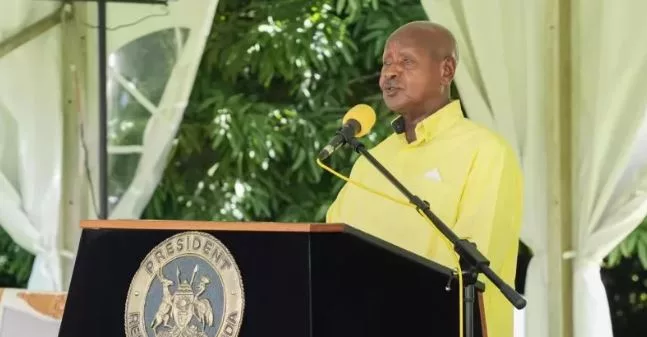
Ugandan President Yoweri Museveni has credited President William Ruto with helping Uganda secure a new petroleum supply arrangement that has significantly reduced the cost of importing fuel. In his 82nd birthday reflections, Museveni revealed that Uganda previously bought petroleum products through middlemen in Kenya. However, a new arrangement involving Uganda National Oil Company (UNOC) and a global energy trader has resulted in lower petroleum import costs.
According to Museveni, the new arrangement was made possible after he tasked the then Energy Minister Irene Muloni with addressing the issue in 2019. The matter was resolved in 2023 when Uganda linked up with a global energy trader. This trader is described as a group with refineries in different parts of the world and a bulk supplier. The agreement, signed on August 18, 2023, has reduced Uganda's petroleum costs.
The price of diesel has fallen from $118 to $83 per metric tonne, while petrol has dropped from $97.50 to $61.50 per metric tonne. Aviation fuel has also declined from $114.25 to $79.25. Museveni expressed gratitude to President Ruto, saying he prevailed over some actors in Kenya who were trying to resist the new arrangement. Kenya's government allows Uganda to pump its products through the Kenya oil pipeline, in which Uganda holds a 20.15 per cent stake.
The changes follow a dispute over Uganda's long-standing reliance on Kenyan oil marketing companies and intermediaries to procure petroleum products. In 2024, Kenya and Uganda signed an agreement allowing UNOC to import refined petroleum products directly from producer countries and use Kenya's infrastructure for their transit. This move aims to strengthen energy security and cooperation between the two countries.
Uganda has continued working with the global energy trader to secure petroleum supplies, sourcing products from alternative markets during disruptions to global supply chains. In May 2026, Uganda's government stated that UNOC and the global energy trader were securing supplies from West Africa, Europe, India, and the Americas amid disruptions linked to the Middle East. This development is part of Uganda's efforts to ensure a stable and cost-effective supply of petroleum products.
Museveni made the remarks in a birthday message, calling for greater African economic and political integration. He believes integrating the continent's common market and strengthening political cooperation will help secure Africa's prosperity and strategic security. The new petroleum supply arrangement is seen as a significant step towards achieving this goal, with Uganda and Kenya working together to enhance their energy security.
The agreement between Uganda and Kenya has far-reaching implications for the region, demonstrating the potential for cooperation and collaboration between African countries. By working together, nations can achieve greater economic and energy security, ultimately contributing to the continent's overall prosperity. Key to this cooperation is the role of leaders like Presidents Museveni and Ruto in fostering partnerships that benefit their countries.
Key points
- Uganda's new petroleum supply arrangement has reduced fuel import costs, with diesel prices falling from $118 to $83 per metric tonne.
- The arrangement was made possible with the help of Kenya's President William Ruto, who prevailed over actors resisting the new deal.
- Uganda and Kenya's cooperation on energy security aims to strengthen economic ties and contribute to Africa's overall prosperity.