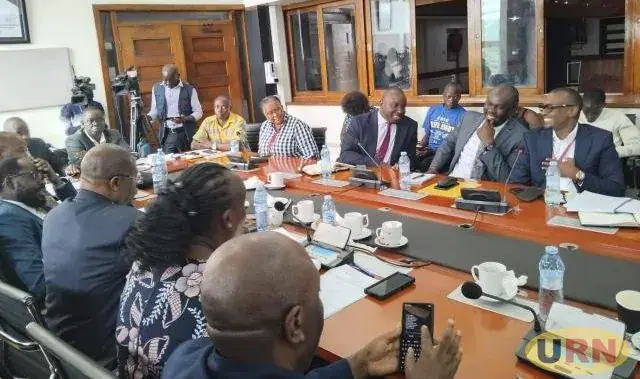
Members of Uganda's Parliament have expressed concerns about the selective enforcement of anti-corruption laws in the country. They accuse the State House Anti-Corruption Unit (SHACU) and other agencies of concentrating investigations on local governments while paying less attention to ministries, departments, and agencies (MDAs) that control a larger share of public resources. This issue was raised during a meeting between State House officials and Parliament's Public Accounts Committee.
The concerns were sparked by the government's intensified campaign against corruption in local governments, led by Minister for Local Government Balaam Barugahara. The campaign, dubbed "Expose the Corrupt", has resulted in the arrest of 267 suspects and the interdiction of 253 officials, with Shs22.7 billion linked to corruption complaints and cases under investigation. However, lawmakers argue that this focus on local governments may not be addressing the root causes of corruption, as central government institutions manage significantly larger budgets.
Samia-Bugwe Central MP Richard Wanyama challenged SHACU to explain why its operations appeared concentrated in local governments, while ministries and other central government institutions received comparatively less attention. Kassanda North MP Patrick Nsamba Oshabe argued that the government could not convincingly demonstrate an effective fight against corruption if investigations predominantly focused on institutions controlling a relatively small proportion of public funds.
Deputy Head of SHACU, Israel Ochwo, defended the unit's focus on local governments, arguing that corruption at that level has a direct impact on service delivery. He cited the theft and mismanagement of public resources in districts, which affect citizens through poor roads, inadequate health services, and shortages of essential supplies. Ochwo also reported that the unit had arraigned 1,005 suspects before courts of law since its establishment, including 461 civil servants and 550 private individuals.
Ochwo disclosed that SHACU had secured 168 convictions, comprising 95 public officials and 73 private individuals, and had 263 cases pending before courts. He described the record as significant considering the unit's relatively small workforce of approximately 11 lawyers, two auditors, and 24 detectives. However, the figures presented did not establish how the unit's investigations were distributed between local governments and central government institutions.
The committee's questioning puts the focus on the reach of the investigations, the institutions targeted, and the consistency with which allegations of corruption are pursued across government. The issue also raises questions about whether the distribution of anti-corruption investigations reflects the level of financial exposure and corruption risks across government or whether local government officials are facing disproportionate scrutiny.
The MPs' concerns have put SHACU under pressure to explain how it selects cases, allocates investigative resources, and ensures that allegations involving senior officials and institutions at the centre of government receive attention. The unit's response will be crucial in determining whether the government's anti-corruption efforts are effective and comprehensive.
Key points
- The Ugandan government has launched an intensified campaign against corruption in local governments, resulting in 267 arrests and Shs22.7 billion under investigation.
- MPs have questioned the selective enforcement of anti-corruption laws, arguing that central government institutions managing larger budgets receive comparatively less attention.
- SHACU has secured 168 convictions and has 263 cases pending before courts, but its focus on local governments has raised concerns about the comprehensiveness of its investigations.
Reporting sources
- MPs question state house on selective anti-corruption fight · The Independent magazine