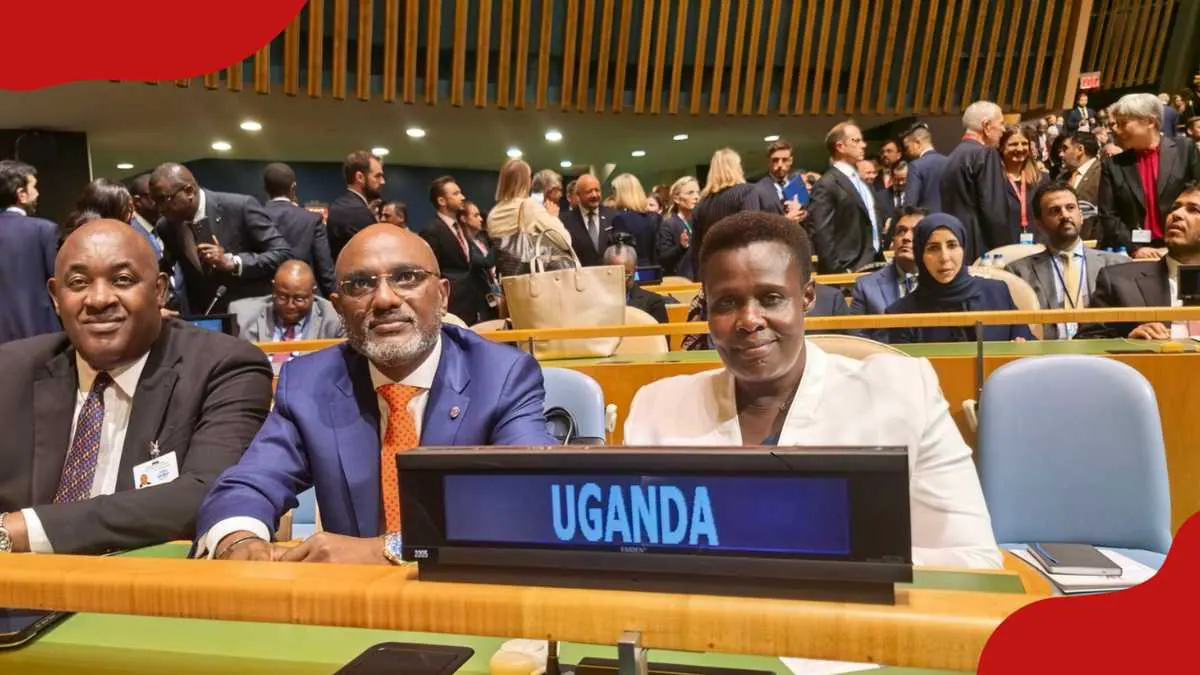
Uganda's Health Minister, Chris Baryomunsi, recently faced intense questioning about the country's stance on LGBTQ rights during a panel discussion at a side event of the 81st United Nations General Assembly (UNGA) in New York. The discussion centered on the treatment of LGBTQ individuals seeking healthcare in Uganda, given the country's strict anti-homosexuality legislation. Baryomunsi, part of Uganda's official delegation to the UNGA, addressed a predominantly white audience on the matter.
During the event, Baryomunsi asserted that Uganda's law on homosexuality is rooted in African values and cultural identity, rather than discrimination. He emphasized that the law confirms African beliefs, traditions, and customs, which, according to him, do not condone homosexuality. Baryomunsi described homosexuality as a learned behavior that contradicts African tradition, culture, and belief systems.
The minister was questioned about how Uganda ensures that homosexuals are not turned away or mistreated when seeking medical care. This concern has drawn international scrutiny since Uganda enacted its Anti-Homosexuality Act. In response, Baryomunsi sought to reassure the international audience that access to public services, including healthcare, remains open to all Ugandans, regardless of their sexual orientation.
Baryomunsi invoked a religious analogy to illustrate the government's approach to service delivery, stating that Uganda uses the principle of Jesus, who, according to the minister, hated sin but embraced sinners. This approach aims to convey that while the government may morally disapprove of homosexuality, it does not deny access to essential services like healthcare to those who identify as LGBTQ.
Uganda's Anti-Homosexuality Act, signed into law in 2023, prescribes severe penalties for same-sex conduct, including the death penalty in certain circumstances. The legislation drew widespread condemnation from Western governments, international human rights organizations, and global health bodies. These critics warned that the law would drive LGBTQ individuals away from seeking medical attention, including HIV-related services, for fear of arrest or exposure.
Baryomunsi's remarks at the UNGA side event reflect the tension Uganda continues to navigate between its domestic legislative framework and international expectations on human rights. The country's stance on LGBTQ rights has placed it under sustained diplomatic pressure since the law came into force. The debate surrounding Uganda's Anti-Homosexuality Act remains a contentious issue, both domestically and internationally.
The incident highlights the ongoing challenges faced by LGBTQ individuals in Uganda and the diplomatic fallout from the country's legislative actions. As international pressure mounts, Uganda's government must balance its domestic policies with global expectations on human rights and access to essential services. The situation remains a complex issue, with no clear resolution in sight.
Key points
- Uganda's Health Minister Chris Baryomunsi defends the country's anti-homosexuality law as rooted in African values at a UNGA side event in New York.
- The minister reassures the international audience that LGBTQ individuals have access to public services, including healthcare, in Uganda.
- Uganda's Anti-Homosexuality Act, signed into law in 2023, prescribes severe penalties for same-sex conduct and has drawn widespread international condemnation.