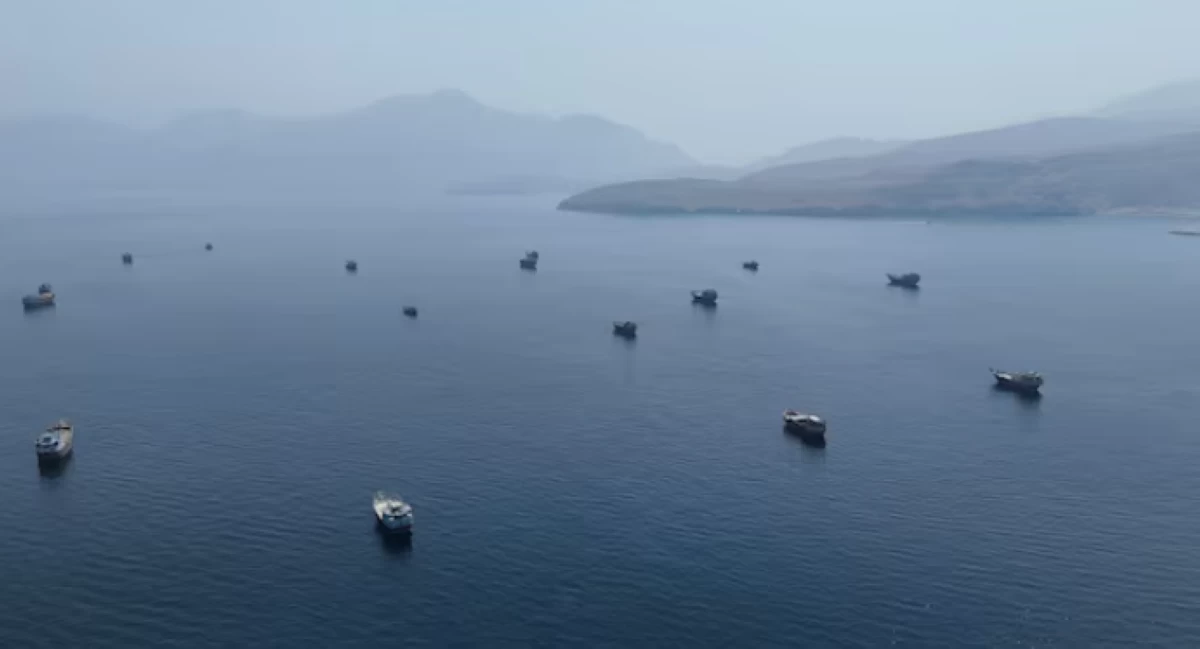
Iran and Oman will jointly determine the new legal status of the Strait of Hormuz, according to Iranian Ambassador to Moscow Kazem Jalali. This development comes as the United States has been pressing for continued access to the strategic waterway. The Strait of Hormuz is a critical passage for global oil exports. Jalali's comments were reported by the Iranian news agency ISNA.
The comments by Jalali come on the heels of a meeting between Iranian and American officials in New York, mediated by Qatar. The meeting was held on the sidelines of the United Nations General Assembly. According to reports, Iran insisted that it would only agree to resume normal navigation in the Strait of Hormuz if certain conditions were met. These conditions include an end to the naval blockade, the release of frozen Iranian assets, and a cessation of hostilities and economic warfare.
The Iranian ambassador to Moscow emphasized that the US must accept the new legal status of the Strait of Hormuz if it wishes to continue using the waterway. This implies that the US will have to negotiate with Iran and Oman to reach a mutually acceptable agreement. The current situation in the Strait of Hormuz has been a point of contention between Iran and the US, with Iran seeking to assert its rights and the US pushing for continued freedom of navigation.
The Strait of Hormuz is a vital shipping lane, with a significant portion of the world's oil exports passing through it. Any disruption to navigation in the strait could have serious consequences for global energy markets. Iran has previously threatened to block the strait in response to US sanctions and other pressures. The country's leaders have been seeking to assert their rights and protect their interests in the region.
The meeting between Iranian and American officials in New York was seen as a significant development in the ongoing tensions between the two countries. The mediation by Qatar was seen as an effort to find a peaceful resolution to the crisis. However, it remains to be seen whether the two sides can reach a mutually acceptable agreement on the status of the Strait of Hormuz.
The Iranian government has been seeking to strengthen its relationships with neighboring countries, including Oman. The two countries have a long-standing relationship, and Oman has often played a mediating role in regional conflicts. The agreement between Iran and Oman to determine the new legal status of the Strait of Hormuz may be seen as a positive development in regional diplomacy.
The US has been pressing for continued access to the Strait of Hormuz, which is critical for its own energy interests. However, Iran has been seeking to assert its rights and protect its interests in the region. The two sides will have to negotiate to reach a mutually acceptable agreement on the status of the strait. The outcome of these negotiations will have significant implications for regional stability and global energy markets.
Key points
- Iran and Oman will jointly determine the new legal status of the Strait of Hormuz.
- The US must accept the new legal status of the Strait of Hormuz if it wants to continue using the waterway.
- The Strait of Hormuz is a critical passage for global oil exports, and any disruption to navigation could have serious consequences for energy markets.