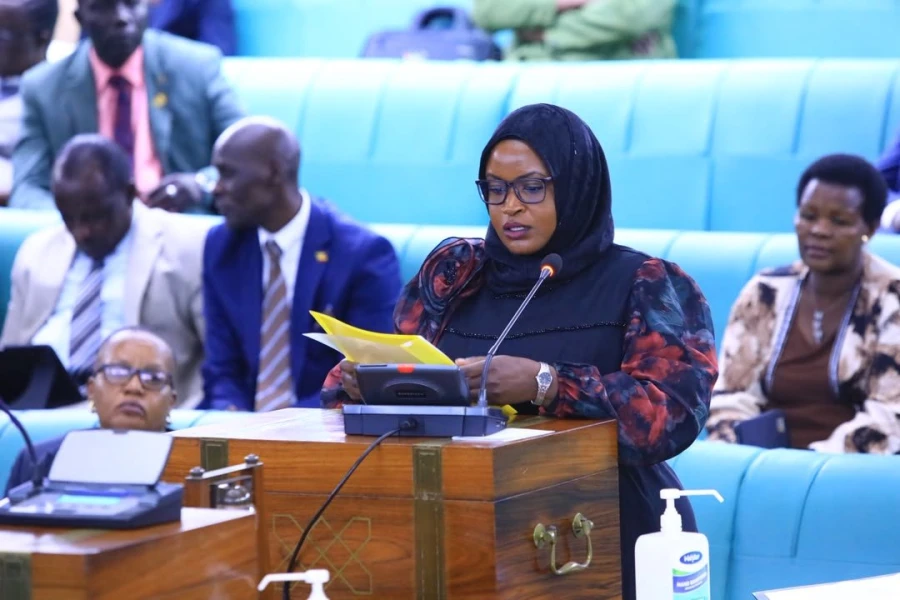
Sironko District Woman Representative Hon. Asha Mafabi Nabulo has urged the Ugandan government to develop and enact a legal framework for the National Smallholder Farmers Transformation and Climate Resilience Programme. Mafabi presented the motion before Parliament, calling for a more structured approach to transforming Uganda's predominantly smallholder farming sector while addressing the growing effects of climate change on agricultural production. The motion seeks to empower smallholder farmers, viewed as a matter of national interest, patriotism, and national security.
Mafabi linked food production to national security, warning that countries that cannot adequately feed their populations remain vulnerable to external dependence. She quoted the saying, "Whoever feeds you controls you," emphasizing that Uganda must invest in its farmers to ensure sufficient food production for itself and the wider region. Mafabi believes that successful implementation of the programme could enable Uganda to feed the whole of East and Central Africa. She drew a comparison between Uganda's role in regional peace and security and its potential to become a major food exporter.
Mafabi noted that significant resources had been invested in strengthening Uganda's security architecture, enabling the country to play an important role in promoting peace beyond its borders. She challenged the country to apply a similar level of commitment to empowering smallholder farmers, aiming to make Uganda the number one exporter of food in Africa. Her argument places agriculture alongside security as a strategic national priority, with food production viewed as an important component of national resilience.
Mafabi's motion calls for a legal foundation for the National Smallholder Farmers Transformation and Climate Resilience Programme, rather than relying solely on policy initiatives and individual agricultural programmes. A dedicated legal framework would provide greater coordination and continuity in interventions targeting smallholder farmers. Uganda's agricultural sector is largely dominated by smallholder farmers, many of whom depend on rain-fed agriculture and are vulnerable to climate change effects.
The proposed programme would empower farmers while ensuring sustainable agricultural production despite the changing climate. Mafabi presented food security as an integral part of national security, maintaining that a country with the capacity to feed its people is better positioned to withstand external shocks and maintain its independence. She urged Parliament and Government to create an enabling environment for smallholder farmers to move from subsistence production to commercially viable and climate-resilient farming.
Mafabi placed Uganda's agricultural potential within the broader East and Central African market, believing that the country can produce enough not only for domestic consumption but also for export to neighbouring countries. Successful implementation of the smallholder transformation programme could enable Uganda to feed much of the region. Her vision would see farmers benefiting from deliberate government interventions while Uganda strengthens its position as a regional food basket.
Mafabi formally presented the motion under Item 6 of Parliament's business, calling for Government to develop and enact a legal framework for the National Smallholder Farmers Transformation and Climate Resilience Programme. The motion was moved and seconded, paving the way for parliamentary consideration of the proposal. The development comes at a time when the Government continues to promote agricultural commercialisation, household income generation, and programmes aimed at moving farmers away from subsistence agriculture.
Key points
- Empowering smallholder farmers is a matter of national interest, patriotism, and national security.
- A dedicated legal framework would provide greater coordination and continuity in interventions targeting smallholder farmers.
- Uganda has the potential to become a major food exporter in East and Central Africa with a comprehensive programme to support smallholder farmers.