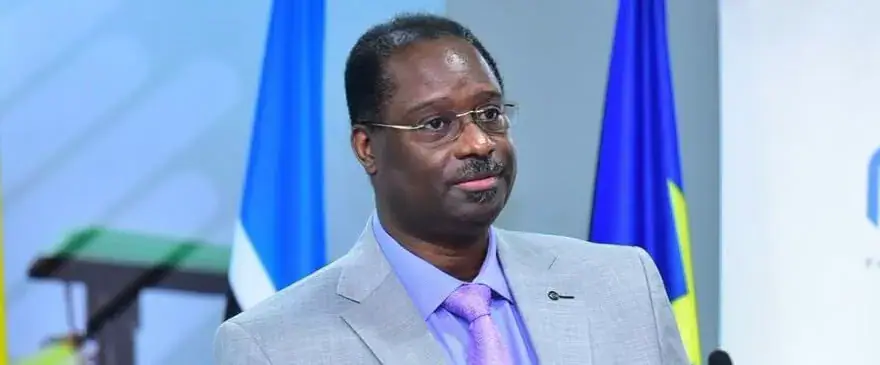
Uganda's ambassador to South Sudan, Brig. Gen. Ronnie Balya, has urged South Sudanese leaders to prioritize national identity and unity over tribal interests. He made the remarks while addressing South Sudanese leaders at the closing of the Inter-Party Political Dialogue in Juba. Balya emphasized that national values and interests should take precedence over ethnic and tribal considerations. He added that the country's common good must guide political decisions.
Balya stressed that national ideology, national identity, national interests, and national survival should be treated as primary. He noted that tribal interests and sentiments can be handled later, but the common good is national. The ambassador called for the development of a national ideology based on principles that should not be compromised, distinguishing between national values and political interests that leaders could negotiate.
According to Balya, national values cannot be compromised, while political interests can be negotiated. He described a national ideology as a political compass and moral compass for the country. His remarks address longstanding ethnic divisions that have shaped South Sudan's political and security pathway, especially after gaining independence in 2011. The country has over 60 ethnic groups, and politicians often mobilize support along tribal lines.
The December 2013 civil war in South Sudan began as a political dispute within the ruling Sudan People's Liberation Movement (SPLM) and quickly acquired an ethnic dimension. Civilians were targeted along ethnic lines, according to Human Rights Watch, which documented ethnically motivated attacks against civilians by forces on opposing sides of the conflict. Although the 2018 peace agreement brought a relative reduction in large-scale fighting, political divisions and intercommunal violence have persisted.
Balya urged South Sudanese leaders to make nation-building a priority, with national identity and interests forming the foundation of the country's political and social development. He also called for genuine reconciliation and warned against superficial efforts that fail to address divisions among communities. The ambassador asked the people of South Sudan to focus on peacebuilding that can lead to genuine reconciliation.
The Ugandan envoy further urged the country to pursue social and economic transformation, describing economic development as the next phase of South Sudan's struggle after achieving political independence. He said the country's 21-year liberation struggle has been driven by aspirations for democracy, freedom, and national unity. Leaders must now focus on improving the economic conditions of the people.
Balya described economic transformation as the country's second liberation struggle, saying political independence should be followed by efforts to build a stronger economy. His remarks came as political parties concluded their dialogue with calls for peaceful political participation, respect for civic freedoms, and preparations for the country's forthcoming general elections.
Key points
- National identity and unity should be prioritized over tribal interests in South Sudan.
- A national ideology based on non-negotiable principles is needed to guide the country's political direction.
- Economic transformation is crucial for South Sudan's development, following its 21-year liberation struggle.