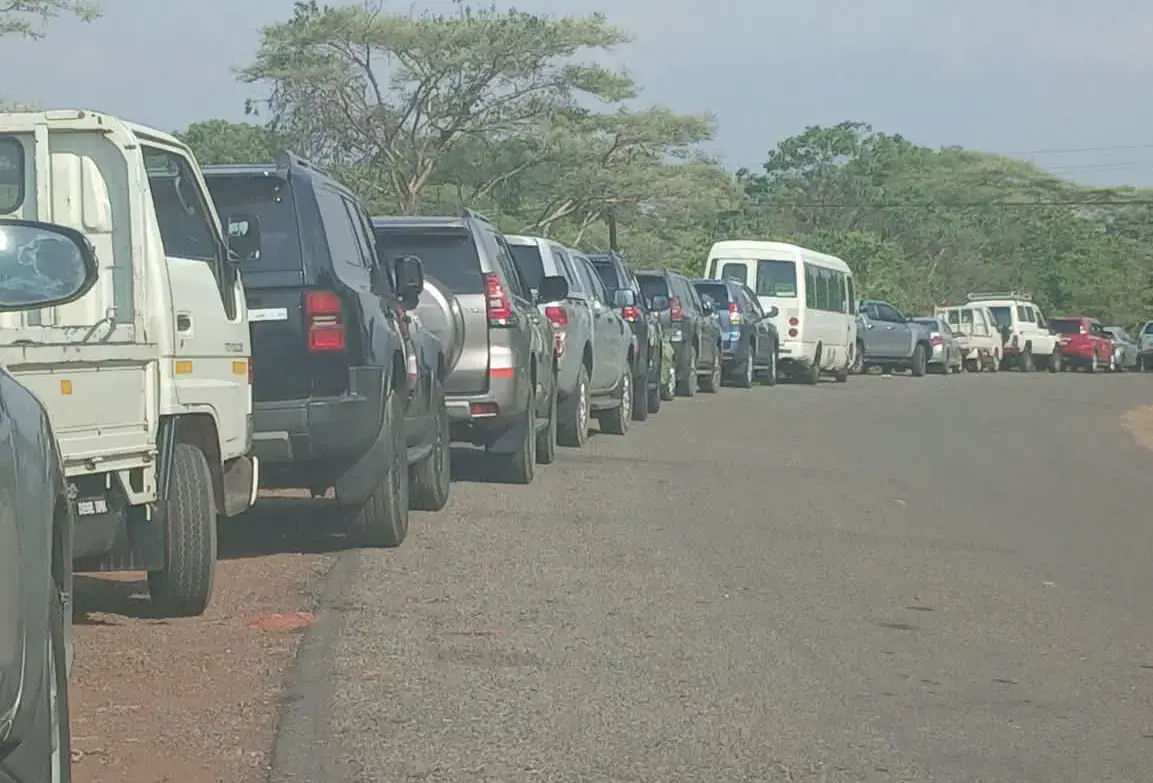
Malawi has been experiencing a severe fuel shortage crisis for 13 weeks, with long queues and vigils at fuel service stations becoming a norm. The country's economy, with an import bill of $3 billion against $1 billion in export revenue, has struggled with fuel supply shortages due to foreign exchange scarcity. This crisis has recurred under President Peter Mutharika, who previously mocked his predecessor for failing to manage fuel logistics during the election campaign trail.
The fuel crisis has worsened under President Mutharika's administration, with erratic availability of fuel, particularly diesel and petrol. Motorists have been queuing for hours at service stations, and people are spending productive hours waiting for fuel deliveries. Despite the root cause of the crisis being foreign exchange shortages, President Mutharika claimed on October 31, 2026, that fuel was available at the border and that bottlenecks had been resolved, but this promise remains unfulfilled.
The fuel shortage has significantly impacted Malawians' livelihoods, with people forced to dip deeper into their pockets for transport as operators raise fares due to sourcing fuel from the black market. The recommended pump prices are K5,863 for diesel and K5,619 for petrol, but fuel is fetching between K10,000 and K20,000 per litre on the black market. The Malawi Energy Regulatory Authority (Mera) has taken the initiative to provide fuel delivery schedule updates to consumers, helping them plan where to queue for fuel.
Mera's fuel delivery schedule updates have been commended, but it reflects poorly on oil marketing companies (OMCs) that they had to take on this responsibility. Ideally, OMCs should have an association to share information and compile the schedule themselves. The OMCs, including TotalEnergies Marketing Limited, Puma Energy (Malawi) Limited, and Vivo Energy Malawi, should also drill their franchise dealers on how to manage queuing and order at service stations.
Some service stations, such as Puma Chichiri and TotalEnergies Marketing's Kambuku, have managed queuing and order efficiently, while others have been chaotic. The regulator can improve the situation by compelling OMCs to indicate estimated delivery times, rather than leaving motorists waiting indefinitely. This would help motorists plan their time more effectively and reduce the economic impact of the fuel shortage.
The fuel crisis has highlighted the need for better logistics and accountability in the fuel distribution system. The shambolic distribution logistics and lack of accountability are worsening the situation, leaving motorists feeling they are getting a raw deal. The regulator and OMCs must work together to resolve the crisis and provide a more efficient fuel distribution system.
As the fuel crisis continues, Malawians are hoping for a swift resolution. The country's economy is already battered, and the fuel shortage is taking a significant toll on people's livelihoods. With the regulator's efforts and OMCs' cooperation, Malawi can overcome this crisis and provide a more reliable fuel supply system for its citizens.
Key points
- The fuel shortage crisis in Malawi has been ongoing for 13 weeks, with long queues and vigils at fuel service stations.
- The crisis has worsened under President Peter Mutharika's administration, with erratic availability of fuel, particularly diesel and petrol.
- The regulator and OMCs must work together to resolve the crisis and provide a more efficient fuel distribution system.
Reporting sources
- Malawians deserve better on fuel delivery logistics · The Nation