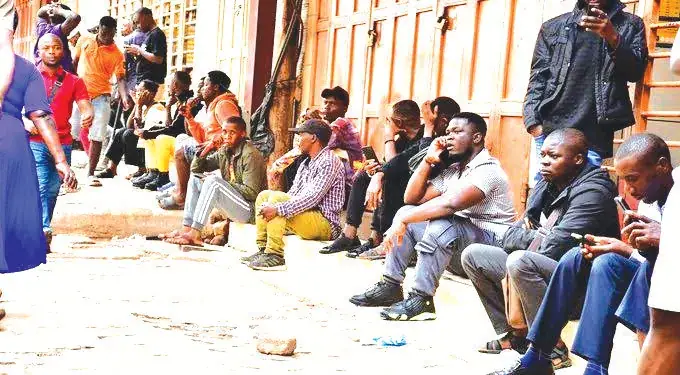
The recent protests, which began on November 17, were led by traders organized under the Kampala City Traders Association (KACITA) and the Federation of Uganda Traders Associations (FUTA). They were protesting a range of issues, including taxes assessed on textiles by weight, the Electronic Fiscal Receipting and Invoicing Solution (EFRIS), delays in customs clearance, enforcement raids, and the seizure of goods. The protests led to the closure of shops in downtown Kampala and surrounding trading areas.
One of the main concerns of the traders is the practice of assessing taxes on imported textiles according to their weight rather than the price at which individual garments are sold. Kalungu East MP Yusuf Kiruluuta Nkeretanyi has questioned the logic of this method, arguing that it is disconnected from how goods are priced in shops. He also challenged the way URA assesses income tax for some informal-sector businesses, saying that officials ask how much rent traders pay when determining their tax obligations.
URA Commissioner General John Musinguzi Rujoki has defended the weight-based assessment, saying that it is prescribed by law. He has placed responsibility for reviewing the rule on lawmakers, stating that if the law needs to be changed, it is up to political leaders to do so. Musinguzi has also pointed out that URA administers and collects taxes under existing rules, while changes to tax policy may require decisions by Cabinet and Parliament.
President Yoweri Museveni intervened in the dispute, asking traders to suspend their strike while government considered their grievances. Meetings involving traders, URA, and relevant ministries took place on November 17 and 18, 2026, and identified the taxation of textiles and garments as the main source of disagreement. Prime Minister Robinah Nabbanja told Parliament that Museveni had requested the traders to suspend the strike until a clear answer could be given after a Cabinet meeting.
The President's position, according to Nabbanja, was that the issue should pass through the institutions responsible for making policy. She added that the policy would be reviewed with the aim of harmonizing Uganda's treatment of textiles and garments with that of other East African Community countries. This process of harmonization could potentially reduce differences that complicate cross-border trade.
KACITA chairperson Issa Sekitto has called for immediate action on consignments awaiting clearance and premises sealed during enforcement operations. He says that traders who cleared with URA should be allowed to receive their goods and that URA should open sealed shops, stores, and traders' offices. URA has stated that goods are already being released, although traders must establish ownership and pay the taxes assessed on their consignments.
The dispute between traders and URA has been ongoing, with similar protests taking place in April and July 2024 and August 2025. The traders are waiting to learn what Cabinet proposes and whether Parliament will need to amend the law. The outcome of the review and potential changes to the tax system remain to be seen, but it is clear that the traders are seeking reforms to make the system more fair and easier to comply with.
Key points
- Traders are protesting a tax system they say is unfair and difficult to comply with, leading to the closure of shops and disruption of businesses.
- The taxation of textiles and garments is a main source of disagreement between traders and URA.
- The President has asked traders to suspend their strike while government considers their grievances and reviews the tax policy.
Reporting sources
- Why traders keep shutting Kampala · The Observer