Ugandan President Yoweri Museveni has announced that his country will move forward with plans to build a small oil refinery. The facility, to be located in Hoima, will have a capacity of 60,000 to 120,000 barrels of crude per day. This decision comes despite the recent groundbreaking of a larger refinery in Kenya's Lamu, spearheaded by billionaire Aliko Dangote. Museveni emphasized Uganda's need for domestic refining capacity.
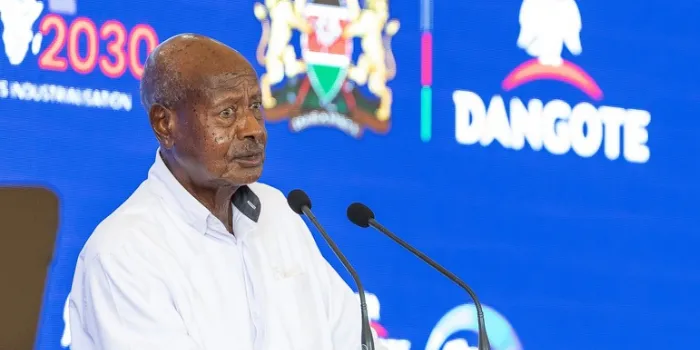
Museveni made the announcement at the Dangote East Africa Refinery groundbreaking ceremony in Lamu, Kenya. He stated that Uganda had previously discussed the project with Dangote and the presidents of Kenya and Tanzania. The Ugandan president expressed interest in discussing the status of a proposed refinery in Tanzania's Tanga with Kenya's President William Ruto and Tanzania's President Samia Suluhu.
The proposed Ugandan refinery aligns with the country's policy of not exporting crude oil without processing it into petroleum products. Museveni noted that Uganda cannot rely on the region's limited existing refineries. The Lamu ceremony drew other African heads of state and business figures, highlighting regional interest in expanding oil-downstream capacity.
Kenyan President William Ruto, speaking at the same event, projected that the Lamu refinery would significantly cut Kenya's annual petroleum import bill of Ksh530 billion. The construction of the Lamu refinery is slated for 40 months. Ruto's statement underscores the potential economic benefits of the project for Kenya.
While supporting the Lamu project, Museveni clarified that Uganda will not invest in the Kenyan refinery at this stage. This decision is pending further discussions with the Kenyan and Tanzanian leaders. The Ugandan government's commitment to its own refinery project signals a strategic approach to meeting its energy needs.
The Dangote East Africa Refinery in Lamu represents a significant investment in regional oil infrastructure. The project has garnered substantial attention from African leaders and business figures. Its success could have far-reaching implications for the region's energy landscape.
In conclusion, Uganda's decision to pursue a small oil refinery reflects its focus on self-sufficiency in meeting its energy needs. The project, combined with regional initiatives like the Lamu refinery, highlights the ongoing efforts to enhance oil-downstream capacity in East Africa. Key regional players continue to explore opportunities for cooperation and development in the sector.
Key points
- Uganda will build a small oil refinery with a capacity of 60,000-120,000 barrels per day in Hoima.
- The project aligns with Uganda's policy of processing crude oil into petroleum products before export.
- Kenya's Lamu refinery, spearheaded by Aliko Dangote, is expected to cut Kenya's annual petroleum import bill by Ksh530 billion.