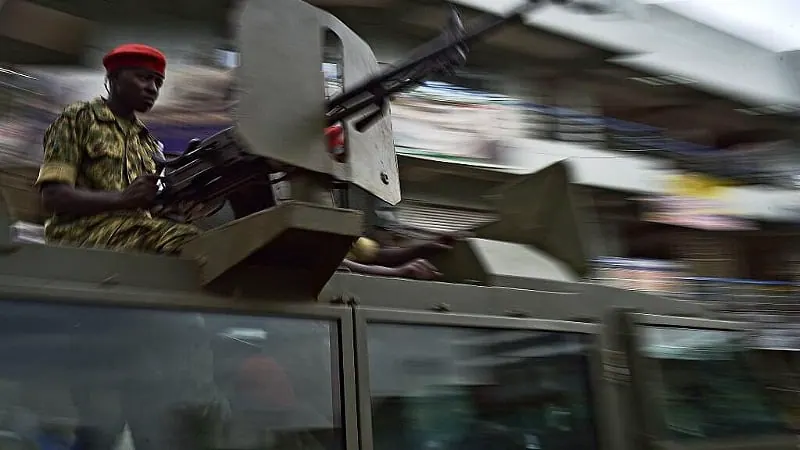
Uganda's armed forces have suspended all defence and military cooperation with Turkey, effective immediately, citing "outstanding issues" that need to be resolved. The move comes amid a dispute over the extradition of Fred Lumbuye, a Ugandan dissident and blogger who lives in Turkey and faces 15 criminal charges in Uganda, including incitement to violence and spreading false information.
The suspension was announced by army spokesman Chris Magezi, who stated that the measure would remain in force until the outstanding issues between the two countries are resolved. The dispute has been escalating, with hundreds of Ugandans affiliated with the Patriotic League of Uganda (PLU) demonstrating outside the Turkish embassy in Kampala, demanding Lumbuye's extradition.
The PLU, a civic and political pressure group associated with Army Chief Muhoozi Kainerugaba, has been vocal in its demands for Lumbuye's extradition, with the group's secretary-general, Fadil Twalla, stating that they are "deeply disappointed" by Turkey's refusal to hand over Lumbuye. Kainerugaba, who is also President Museveni's son and likely successor, has repeatedly clashed with Turkish authorities over the extradition efforts.
In a social media post, Kainerugaba thanked the PLU for their demonstration, stating that they had "proved that they have the spirit of lions." He also warned that if Turkey does not comply with their demands, "life will become untenable for them in Uganda." The dispute has significant implications for defence ties between the two countries, which have maintained close cooperation for nearly a decade.
Uganda and Turkey signed a defence-industries cooperation agreement in 2016, which was broadened under another military training agreement in 2022. The areas of cooperation include military training, arms and surveillance equipment, technology transfers, and cooperation on counter-terrorism and security. However, the military did not provide details of the outstanding issues behind the suspension.
The dispute has also had implications for other areas of cooperation between the two countries, including a $3 billion SGR railway contract with Turkish firm Yapi Merkezi, which has been threatened with cancellation. Additionally, there have been reports that Turkish nationals may be expelled from Uganda. Turkish media reported in June that Kainerugaba had cancelled the contract, intensifying a string of hostile actions and remarks aimed at Turkey.
The extradition dispute has significant implications for Uganda's relations with Turkey, as well as for the country's broader relations with its diaspora community. Lumbuye's posts and YouTube channel about Ugandan politics are viewed by thousands, giving him a unique platform and influence not available to critics at home. President Museveni won a seventh term in office in May, and analysts say his son has already become the dominant force in the country amid a mounting crackdown on critics.
Key points
- Uganda suspends military cooperation with Turkey over extradition dispute
- Dispute centres on Fred Lumbuye, a Ugandan dissident and blogger living in Turkey
- Suspension has significant implications for defence ties and other areas of cooperation between the two countries